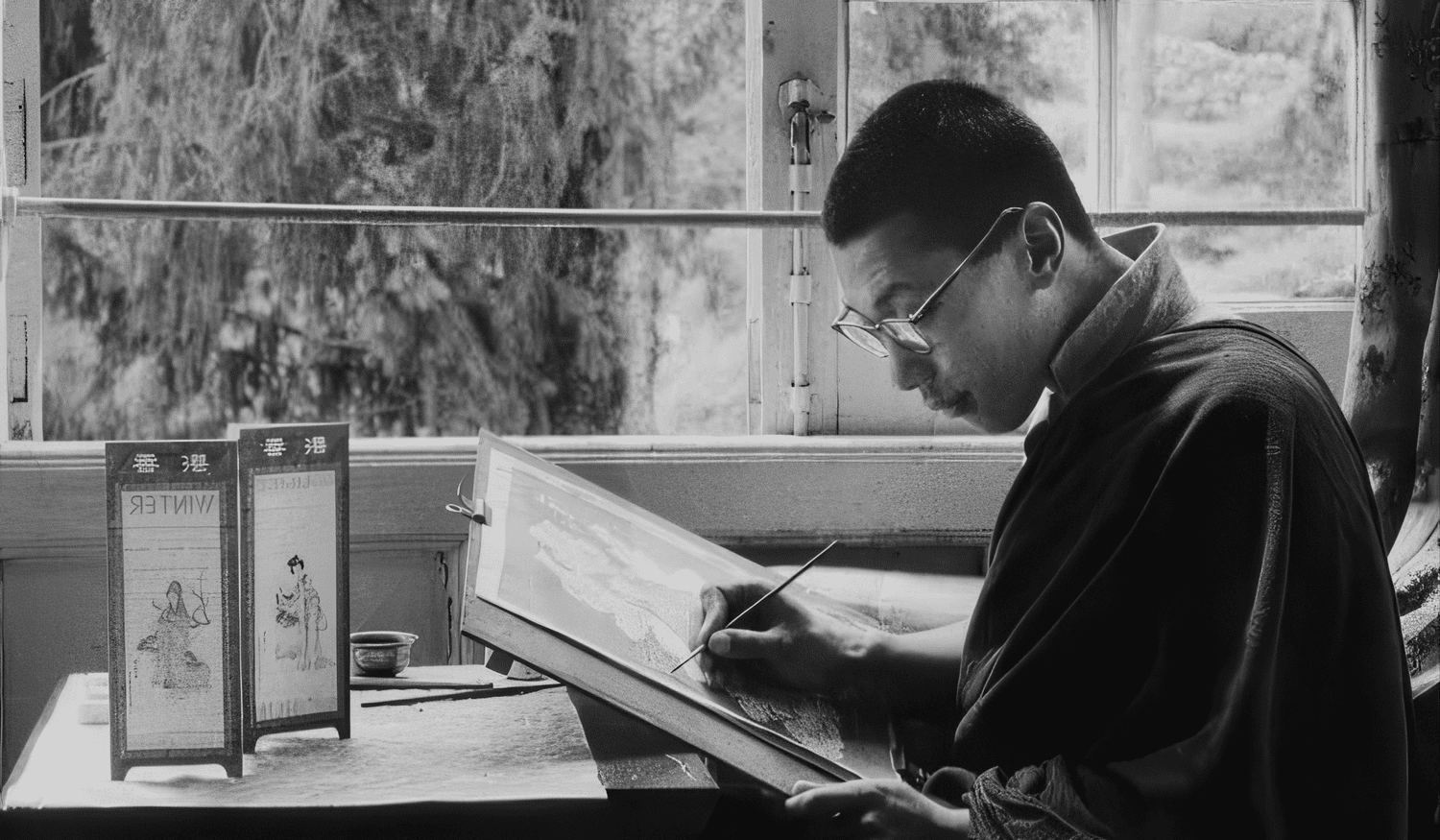
Chögyam Trungpa painting a traditional Tibetan thangkha
Dharma Art refers to any creative work that springs from the awakened meditative state, as realized through the practice and teachings of Buddhism, known as dharma. The term was coined by one of the pioneering Tibetan Buddhist teachers in the West, Chögyam Trungpa Rinpoche, as part of what he called Shambhala Training.
He created this training to offer Westerners the opportunity to practice authentic Tibetan Buddhist meditation in a secular, non-religious context, bringing the core principles and methods of this tradition into the context of contemporary life, including art and culture.
In this two-part interview, Autumn Salon founder Christos Vayenas speaks with Frank Berliner, a psychologist and teacher of Shambhala Training. Christos studied with Frank while attending Naropa University, a liberal arts college founded by Trungpa that offers an education rooted in the principles of Shambhala.
They are joined by Thiago Leão, a psychologist and adjunct faculty at Naropa who's worked closely with Frank for over 25 years. Thiago's work is dedicated to further advancing the synthesis of Eastern meditation and Western psychology.
Together Frank and Thiago are offering an online masterclass based on Frank's book Bravery, The Living Buddha Within You, that offers in-depth guidance and insight into the path of meditation as taught by Chögyam Trungpa.
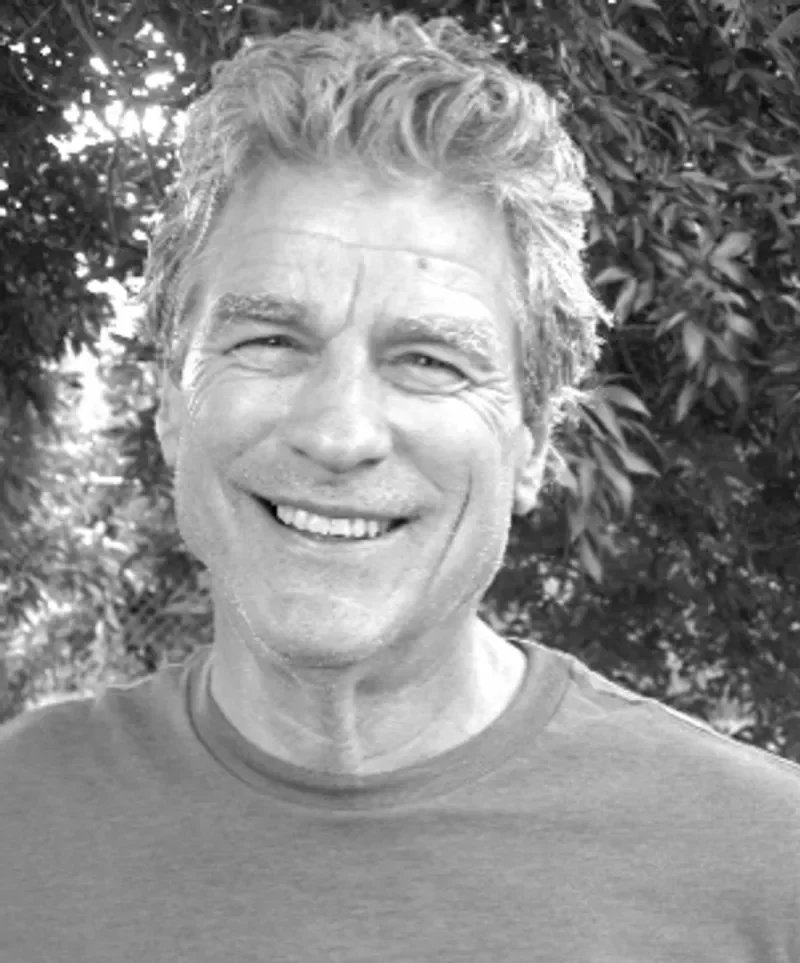

Allowing Space
Frank : Hello gentlemen!
Christos : Hello Frank, I don't know if you remember me, it's been a while…
F: Tell me, did we meet at Naropa?
C: Yes, about 25 years ago. I was a student in those days, and your classes were in many ways my introduction to the world of Naropa and Chögyam Trungpa. Recently I’ve been reflecting on how the spirit of that time is still very much alive in my life and work, and so it felt like a good time to reach out and reconnect.
F: Well I’m honored that you did, and I’m also curious to know more about your path as a musician—were you playing piano before you came to Naropa? Has this been a thread throughout your life?
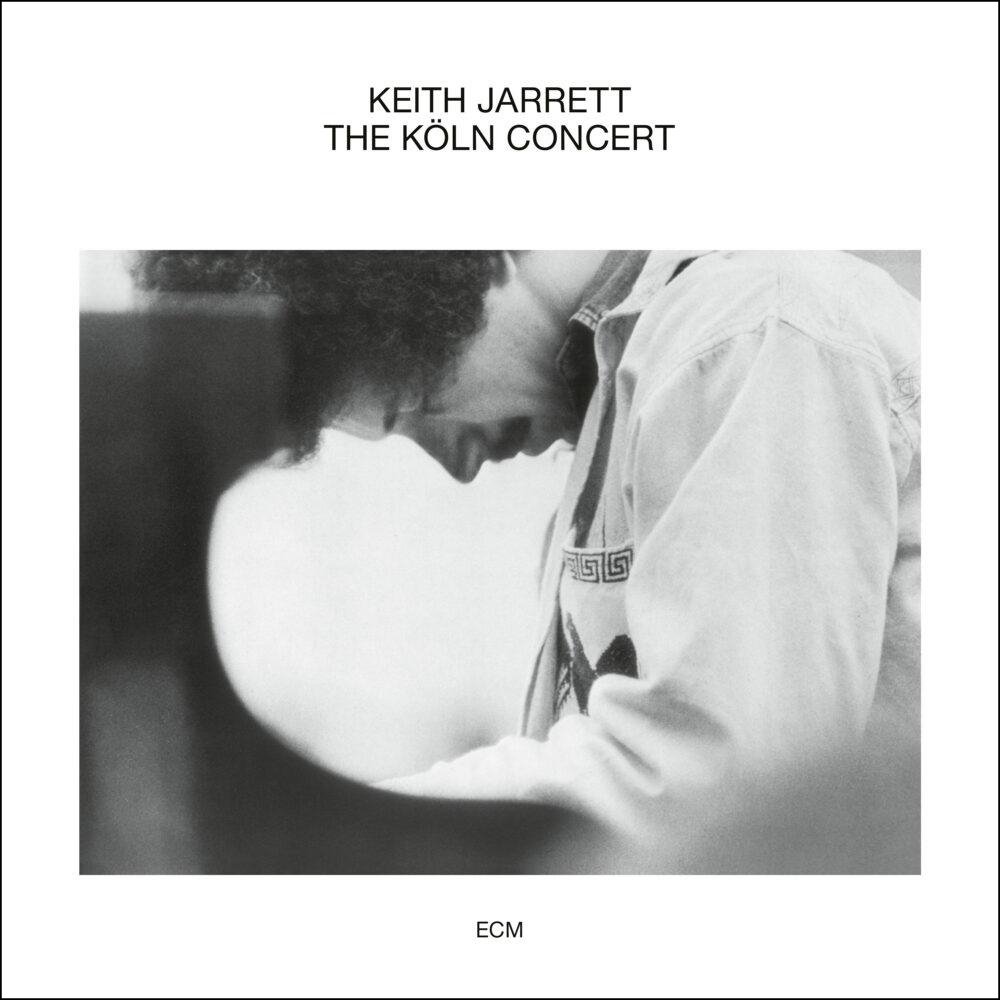
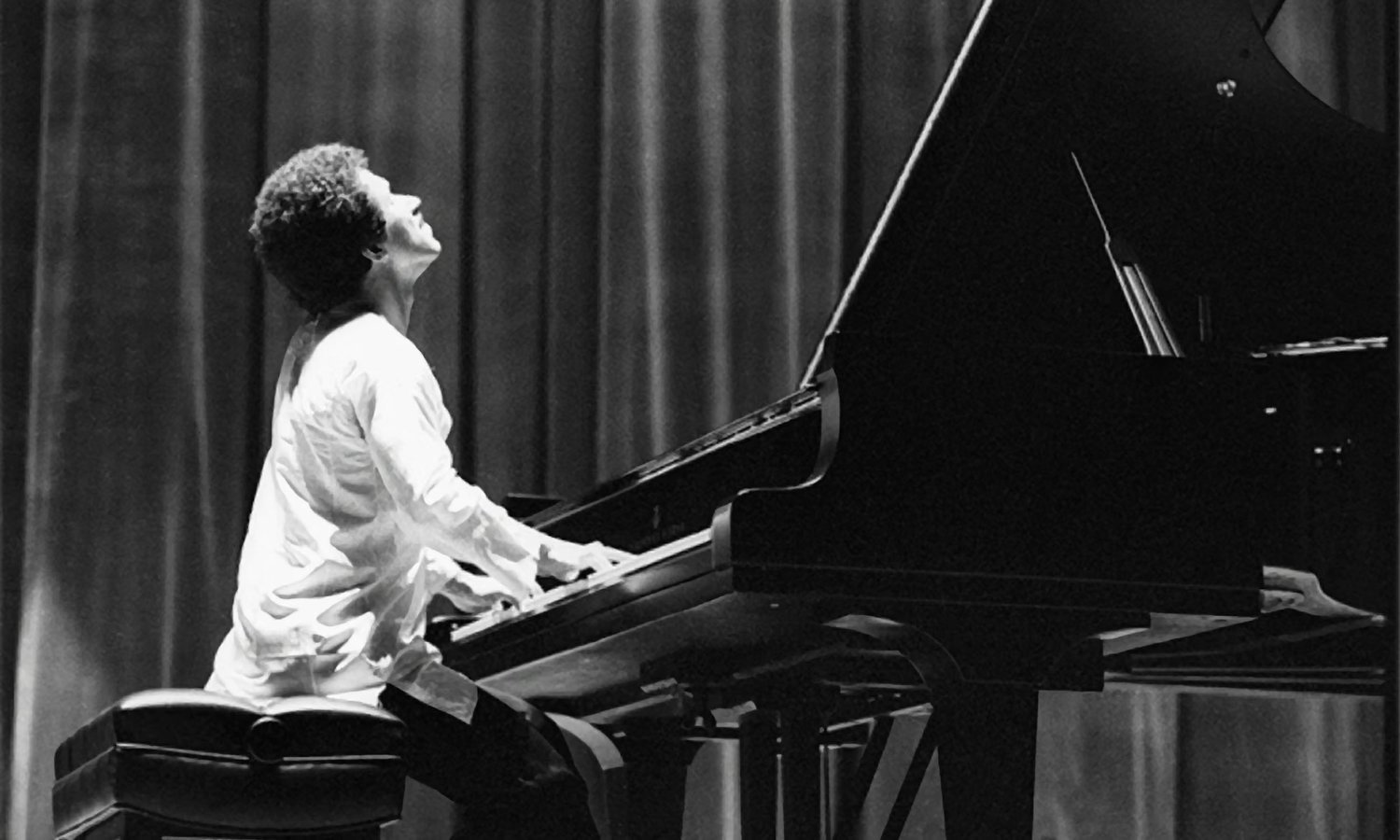
C: Yes it's been a thread, but not a traditional thread by any means. I wasn't classically trained, but was quite influenced by the solo concerts of Keith Jarrett when I was younger, which started me along the path of solo improvisation. In fact, I wanted to say that one time when I was coming into your room for class, I remember you were playing…
F: Oh, hold on, I was playing The Köln Concert!
C: Yes you were playing The Köln Concert, and I remember you saying to the class that the presence of Keith Jarrett’s playing was very similar to the presence of Chögyam Trungpa. And this really resonated with me, as I’d already been listening to him for several years by that time, and of course had also been drawn to Naropa and the works of Trungpa.
F: Wow.
C: And you could say that connection between the completely open and spontaneous state that Jarrett entered into for his improvisations, and Chögyam Trungpa’s vision for what he called Dharma Art, these are the two worlds that I'm trying to bring together and carry on in my own way.
This also includes helping other artists cultivate a deeper, more meaningful relationship to their craft through learning more about these approaches, which is a big part of what I was hoping we could explore together in our conversation today.
F: You know, when I was talking with Thiago about getting together with you, he gave me the link to your website and I watched you play. Then I asked him, have you ever listened to The Köln Concert? And I said to him, there's echoes of Keith Jarrett here… isn't that something?
C: That’s so interesting, I think it really affirms there’s something going on here with these associations that runs very deep.
So, should we get started? I know you wanted to open with a reading from one of your books…
F: Yes! I’d like to open with a reading from my memoir, Falling in Love with a Buddha, because I think it’ll provide fertile soil for everything else we're going to talk about. I’m going to keep coming back to an epiphany that came out of the encounter it describes.
This chapter depicts the first encounter between my mother and Chögyam Trungpa. It took place in 1983 in Berkeley, California, where he had sent me to be the resident Shambhala Training teacher at the time, and to run the Center there.
I’d only been in Berkeley about six months, and was living with my then wife Helen. The encounter took place on my birthday, and it’s one of the more vivid little vignettes in my memoir. I think reading it will say more about how Trungpa Rinpoche taught Dharma Art than anything else.
Excerpt from ‘Falling in Love with A Buddha,’ by Frank Berliner
Chapter 12
Standing in the front yard of the house Helen and I are renting in Berkeley, my mother gives a childlike exclamation of joy.
“I think I'll use these,” she says.
She cuts a few bright yellow tiger lilies in full bloom by the white picket fence. I have lived here for less than a year, sent by Rinpoche to teach the Dharma and guide the Shambhala meditation center a mile down the road.
“Oh, and these!” she exclaims, bending over a lemon bush with fully ripe yellow globes of fruit on some of its branches, and not-yet ripe green ones on others. She snips a few of each, cuts some stalks of fresh, young bamboo by the back porch, and puts all of her trophies carefully in a large white plastic bucket filled with water.
My mother and father are visiting me here for the first time.
And by a confluence of what the Tibetans call tendrel—auspicious coincidence—Rinpoche is visiting the meditation center this same weekend. He is here to teach an advanced intensive training program. And by a further auspicious coincidence, it's also my birthday. This evening our community will greet Rinpoche with an exhibition and performances of artistic work of various kinds—paintings, sculptures, photographs, poetry, music, weavings, and flower arrangements. The entire circumference of the meditation hall is filled with these offerings from his earnest and devoted students.
My mother, though not deeply trained in the art of flower arranging, wants very much to make her own offering for the occasion. She has been an avid and very competent gardener since my early childhood, and is never happier than when working in her garden, her hands in the soil, lovingly planting beds of flowers every spring.
“There. What do you think?” she turns and asks my father.
They are standing together now in the meditation hall an hour or so before the start of the exhibition. The lemon branches and tiger lilies from our front yard are now arranged in rich profusion in a dark green ceramic ikebana container.
“It's fine,” says my father approvingly, but with a hint of impatience. “Don't fuss with it so much. It's fine just as it is.”
My mother moves one of the tiger lilies in the vase again, like a girl brushing hair out of her eyes. She stands back, appraises it once more, then lets it be … “Who did this one?” asks Rinpoche, his gentle, high pitched voice radiating into the hall an hour later. He's been moving from one piece to another, stopping briefly at times, often not pausing at all as he slowly circles the big room. He is dressed elegantly in a dark suit; his tie shines with its pattern of black and gold. As the head of the center I walk beside him, also in a dark suit, feeling more relaxed and at ease than I generally do in his presence, as if he and I are sharing a secret.
We are standing in front of my mother's flower arrangement. He makes a very definite stop there and looks at it, appraising me. How could he have known? Merely a coincidence, I hastily remind myself. Don't make a mystical big deal out of all this.
"I did.” My mother calls out perkily from the other side of the room. Rinpoche turns slowly in the direction of her voice. Now she has her hand up, like a schoolgirl waiting to be called upon to give the right answer. He looks at her without speaking, and then beckons to her with his index finger. She walks over to him, standing now to his left, as I stand to his right.
“Sir, this is my mother,” I say.
“Hello.”
Rinpoche looks at my mother and smiles with disarming warmth and kindness. This is their first meeting in person. She seems to melt a little, and then gathers herself together again to speak.
“Hello. I'm so happy to meet you, Rinpoche. Is it Rinpoche? Did I pronounce it right?” She becomes a little flustered. He smiles again and nods in the affirmative.
“What inspired you to make this?” he asks.
“I wanted to offer a gift for my son and his wife in their new home here, and on his birthday,” she answers confidently. “All the materials for the arrangement were growing right in the front yard of their home.”
“Mm-hmm,” Rinpoche listens, looking at her intently. I can feel her become a little self-conscious again, but she continues gamely.
“California has so many beautiful flowers at every time of year,” she effuses.
“Yes,” he agrees. He turns back to her flower arrangement and studies it for a few moments.
“Do you have any suggestions for me? About the arrangement, I mean,” my mother asks, as if she wants to grasp every possible thread of meaning from this long awaited encounter.
Then Rinpoche turns to me and asks me to bring him the ikebana clippers, which are lying on a nearby table. I fetch them for him. He turns again to my mother.
“May I?” he asks her with exquisite courtesy.
She nods her consent. He turns to her arrangement, clippers in hand. He snips here, then there, then there, maybe half a dozen swift cuts in all. After each one, I catch the severed branch and put it aside. In no more than a minute, he is finished.
My mother looks at his handiwork. Her eyes are wide with amazement. The yellow tiger lilies gleam out into the room, freed from behind their veil. The yellow and green globes of fruit on the lemon branches glow like colored glass balls on a Christmas tree. They too have been set completely free to shine as themselves. Around them the green bamboo foliage rises gracefully up to support them without crowding them any longer.
Rinpoche hands the clippers back to me.
“How did you do that?” my mother asks him. Her voice is charged with wonder and astonishment.
“I think it's just a matter of opening things up a little,” he answers.
“Opening things up?”
“Yes,” he says. He touches my mother's hand tenderly. “Flowers are like children. They do best when you give them plenty of space.”
I can still remember that moment as if it were yesterday.
What I wanted to say in reading it is that the principle of space is, if not the most important, one of the most important principles of Dharma Art.
It’s one of the most important principles of meditation as well, and has many different meanings and aspects. But I wanted to just kind of lay the groundwork there, about the principle of space as fundamental to understanding Dharma art.
And the other thing I would add, before we start going more deeply into this, is that Chögyam Trungpa gave a talk at the first Shambhala Seminary in 1973 at a hotel in Jackson Hole, Wyoming, called ‘Art in Everyday Life.’ It was the first talk on dharma and art that he ever gave, before he even introduced his vision of what we would come to understand as Dharma Art.
The title of the talk is significant in itself, because he didn’t want to present art as a big deal, as something that only artists do, but as something that comes out of a heightened sense of understanding and appreciation. Appreciation of ordinary things, ordinary life, ordinary reality, and that all of us can do it, especially if we train ourselves in meditation. He didn't really talk about space yet, because that was more of an advanced principle he had not yet introduced at that point.
He always said, “Art is non-aggression, art is non-aggression.” So these principles of space and non-aggression, and art in everyday life, seem to be a really good ground or starting point from which to talk about the connection between dharma and art. And again, that little vignette I just read to you was about him teaching my mother about space in that moment; he was not only teaching about an aesthetic principle, but of how to relate to your children.
So art is not just the art of flower arranging, but the art of allowing space in all of our activities, in all of our relationships, which is itself an expression of non-aggression.
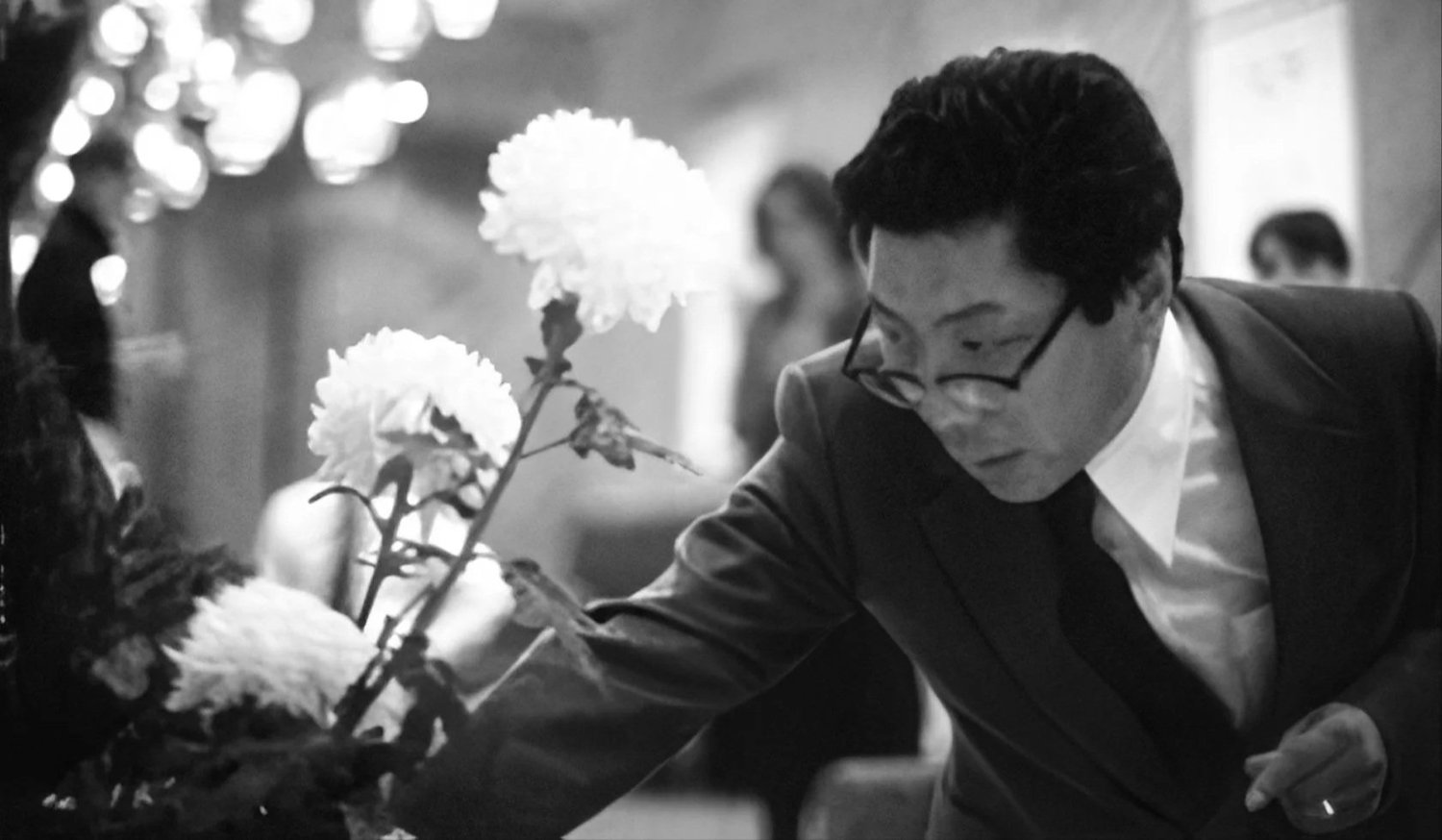
Chögyam Trungpa working on a flower arrangement
Starting with Dharma
C: That’s beautiful, and reminds me of a quote from Trungpa’s later writings on Dharma Art, which says something along the lines of “often we start with art and see if there's any dharma in it, rather than starting with dharma and seeing if there's any art in it.”
F: Yes exactly, we have to start with the dharma, with our lived experience, because otherwise the access to a personal sense of what is meant by space —even if we're only glimpsing the very beginnings of it— without that direct experience the whole thing is just gibberish.
So the need for personal experience is essential. And I think what he's saying in Dharma Art, is that the artist needs to ground himself or herself in the wisdom of actual experience, in what it means to meditate as the Buddha taught it.
And meditation can be a perplexing topic, particularly for us in the West, with our materialism and our need for distraction and all the rest of it. How the Buddha taught meditation is not the same as how it's taught by 90 percent of the people who are peddling it, and that needs to be addressed.
C: I've heard you mention this before, that even now that meditation has become more ‘mainstream’ in our culture, only a small percentage of the population is likely to commit themselves to the authentic practice of it, just as most people are not going to commit themselves to playing an instrument for a lifetime at the deepest level they can.
F: Right.
C: And even for musicians who have dedicated their lives to their art, the environment of classical music can be so competitive that the message they’re given from early on is, “In order to succeed, you have to put competition and self-advancement first.”
So from the Dharma Art perspective, you could say that rather than starting with dharma and looking for art in it, they’re encouraged to start with art and look to find ego in it.
Yet something I’m noticing particularly with the younger generations —many of whom are in their 20s and 30s— is that although they’re putting a great amount of time and effort into the path that’s been laid out for them, they’re beginning to feel like there’s a diminishing return to it all.
Even if they do achieve a good amount of success, they start thinking, “I'm playing in prestigious halls around the world, I’m collaborating with people I used to look up to… why don't I feel fulfilled?”
And this is why I feel like the practice of meditation, real meditation, is something very important to discuss. Because the shift in perspective it offers could help open up a whole new relationship to their artistic journey.
F: What struck me right there was what you said about, “I've gotten to this level, why don't I feel fulfilled?” And in the West, when we don't feel fulfilled we tend to just ramp up our speed, our ambition, our aggression… hoping that will get us closer to what we think we’ve been wanting.
And this is where I think Trungpa Rinpoche was such a genius, in that he managed to infiltrate Western student’s minds in such a way that he could get us to question the very ground of everything.
He got us thinking that maybe we've been holding the wrong end of the stick all along, and that we need to approach it in a completely different way; that perhaps the way to true fulfillment is actually learning to let go of all the stuff we've accumulated, rather than continuing to keep piling it on, hoping that if we expand ourselves enough somehow we're finally going to be fulfilled.
Thiago: This is a fascinating framing of both meditation and art. There’s something between what Frank was speaking to about space and what you brought up about artistic fulfillment Christos, and the question that emerged for me is, does mastery over one’s method deliver true fulfillment?
If the practice of meditation is supposed to deliver you into the space of your own awareness —and I'm conflating the joy of spatial spontaneous awareness with artistic creativity and fulfillment— just as you can learn to play the notes on your instrument perfectly, you can learn to practice mindfulness really, really well… but does that mean that you’re free to be in the deepest and truest sense possible?
I remember Frank teaching this a long time ago during meditation retreats. People would do these retreats and realize, “I've been practicing six hours a day, focusing on technique and doing the proper form per se, but now I realize there’s something that’s been keeping me from letting go into the full space of awareness, of directly touching the energy and aliveness of the present moment.
F: That's great—so from the point of view of space, the purpose of meditation is to uncover. It's not about creating anything, but uncovering an inherent quality of mind. It’s the spontaneous awareness that Thiago was just referring to, that's usually covered up by our habitual patterns, our neurotic speed. True meditation is about revealing something that we’ve hidden from ourselves, rather than producing or attaining something that's going to make us more of an expert in whatever it is that we think we're doing.
So how can we reveal the inherent qualities of that space behind our neurotic speed and habitual patterns, behind our own aggression? This is one of the reasons why meditation can be so daunting, because the nauseating quality of our own neurosis can be so difficult to sit with. Often people think, “Oh, I'm going to meditate, and I'm going to become enlightened.” But then they become frustrated when they encounter their own neurosis, because they don't realize what the process of meditation is actually about.
And what it is about is… there’s a wonderful Christian phrase that says: “If I can serenely bear the burden of being displeasing to myself, then I will be for Jesus a very pleasant place of shelter.”
That's of course theistic language, but it's basically saying that it's all very well to talk about resting in the space of meditation, but the work I must do in letting go of all that I’ve accumulated in order to convince myself that I really exist, that the reputation I’ve built up for myself is real, that who I think I am is real… to actually let go of all of that into a much bigger understanding of who I may or may not be, that requires courage. It requires patience, and a sense of humor.
And one of the main things you start to discover when you let go into this space is a greater gentleness towards yourself. You realize how much of your neurotic speed is actually aggression toward yourself, and how it also manifests in your aggression toward all the people in your life. That's one of the main reasons why we all suffer, because we're just not kind to each other, and we're not kind to ourselves. So to discover that gentleness, we have to uncover and work through all of these veils and habits of being really hard on ourselves, and on everyone we know.
This insight also has another dimension that is a kind of penetrating intelligence, which in the tradition is associated with the term vipashyana, or realizing egolessness. This is a very profound and technical Buddhist term, but in actual experience it means the letting go of the dualistic barrier between ourselves and reality —which we've created mostly out of fear— and seeing our kinship with everything.
How does the saying go, Thiago? To study the Dharma…
T: To study the Dharma is to study the self. To study the self is to forget the self. To forget the self is to be enlightened by a myriad of things.
F: That’s it. So it's about uncovering, removing all the obstacles to feeling gently and seeing clearly what our life actually is, not what we think it is.
Spontaneous Possibility
C: To bring this back through the lens of the artist, I feel that being involved in a performative art can actually serve as a great mirror for one’s neurosis; performing is something a musician returns to again and again, and because it’s such a vulnerable and revealing situation, you can't really deceive yourself too much about what's going on.
I mean, when you sit down to play, you bring all of your neurosis and your insecurity with you. In that moment there’s the music that wants to come through, there’s your technical facility, and then there’s the quality of your present state of mind. And when you play you transmit that quality, and everyone receives it. And whether they’re conscious of it or not, they feel it. If it’s a state of aggression and neurosis, the music will be colored with that aggression and neurosis. If it’s a state of spontaneous openness and inspiration, the audience will feel that openness and inspiration.
And because of what I was saying before about the way classical musicians are often trained to put competition and advancement first, many high-level players can become so bound up in the technical demands of their playing —their ‘method’ as Thiago was referring to it— that it can limit these deeper qualities of gentleness, spaciousness and inspiration from coming through.
This training also includes being taught to build up very specific ideas and expectations about how the music they play should sound, either from a teacher imposing their particular views on them, or them imposing their own views on themselves.
Ultimately this creates a situation where the musician becomes trapped inside all of these layers —from the physical to the mental— rather than feeling the music directly, and allowing space for something spontaneous and inspired to emerge.
So having a deeper level of insight into one’s inner workings through something like the process of meditation can be a huge resource for anyone looking to free themselves from these limitations, and grow beyond mere technical and intellectual playing, to realizing true artistry.
F: What comes through for me when you're saying this is two things: one is that we can't say that learning the actual discipline is not important. In other words, as a musician, I have to learn my craft. I have to learn how to understand what’s written in the score. And I have to learn the mechanics, I have to be technically able to do this.
But then the problem becomes that one, perhaps out of fear, clings to the almost mechanical proficiency with which one has learned it, and the thought of even letting go into a more flowing relationship with that is frightening.
C: Yes.
F: So we're not trying to disrespect all of the methods and supports that we learn from the very beginning, because if you don't learn the basic techniques of meditation in order to tame your mind, then nothing else in the entire tradition and journey of meditation is going to be available to you.
So we have to pay dues to the technical specificity of our craft. But then the spontaneous awareness that Thiago was talking about translated into music is, that you really have to trust that you know it, and that now you can dance on top of that. And that takes courage.
Maybe I’ll hear a pianist that is technically very good, and they play with tremendous proficiency. Technically perfect. But where's the heart? I’m thinking about how people would quarrel with Horowitz for making mistakes, particularly near the end of his life, without taking into account the enormity of his heart, his spontaneity and his power.
Like when he played Rachmaninoff's Third Piano Concerto in 1978 at Carnegie Hall, he was already in his mid-seventies. And he made some mistakes, but his performance was just like… it's immortal. And I listen to it almost every few months, and I’ve been listening for 20 years now.
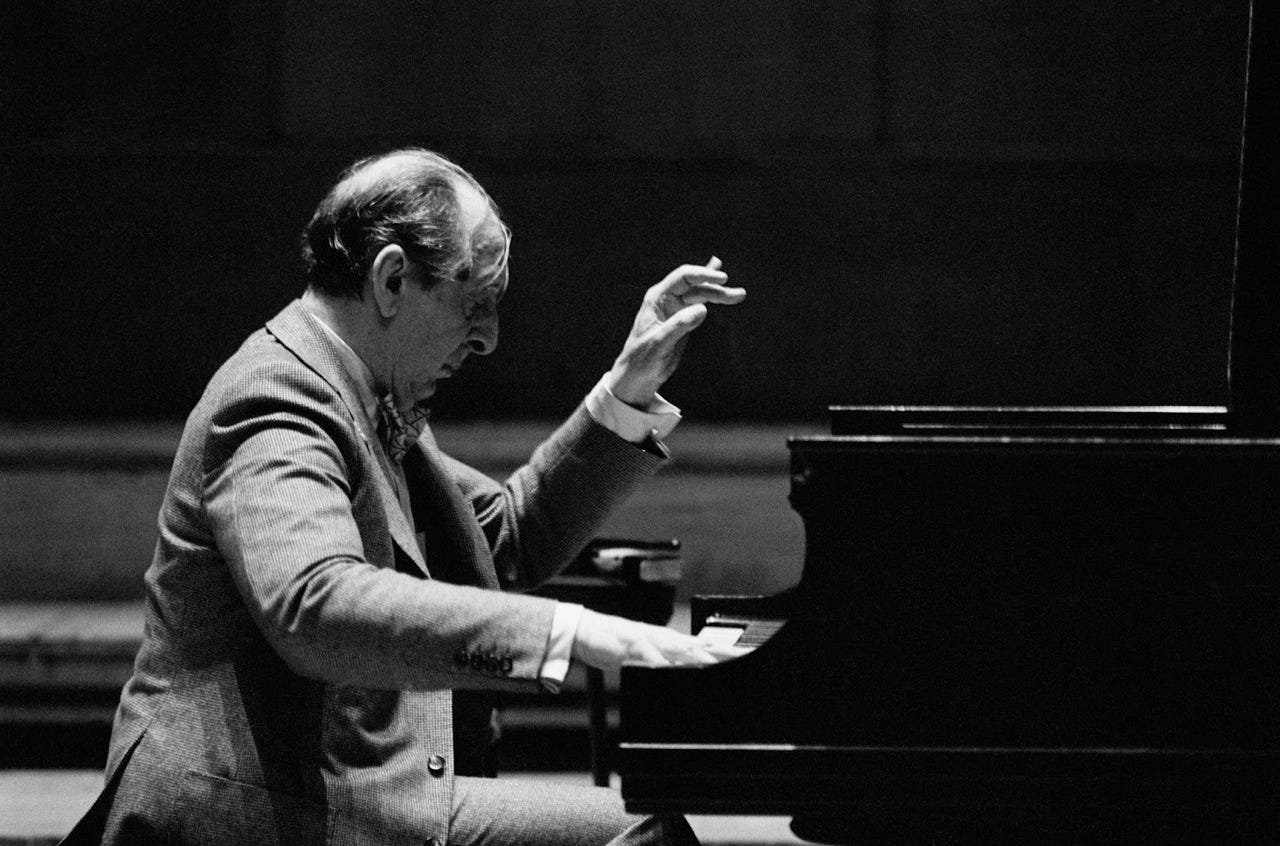
Vladimir Horowitz performing at Carnegie Hall
So I'm just using him as an example, but when I used to watch Chögyam Trungpa teach meditation, or flower arranging, or whatever he would do, it was like watching Horowitz play the piano. This was a person who had learned everything that needed to be learned in terms of the techniques and methods of his tradition, but then he could dance out of that. And I think every artist yearns to have that kind of mastery and freedom. Would you agree?
C: Absolutely. Yet not many players innately have that ability, to go beyond the structure within which they’ve been taught, to where there's a sort of intuitive intelligence at work.. in that situation, it has to be faster than thought.
F: Would you say a little more about faster than thought? I love that expression.
C: Like when I’m playing, specifically in a moment of genuine inspiration, I feel as though something is coming through that I'm not aware of in a conscious kind of way. It's not like I would even come up with the same result if I had the time to think and plan it through… it’s more emergent than that. I feel like you can follow this sense of inspiration, or you can move in the other direction and start to fall into a defined narrative of preconceived ideas and expectations, motivated by the urge to prove your abilities to yourself and to others.
F: So remaining in thought as you describe it, rather than being faster than thought, is when thought becomes a kind of treadmill of habit which deadens the spontaneous possibility of life.
C: Exactly.
F: I think a Buddhist term for that is non-thought. Faster than thought is non-thought. And non-thought doesn't mean that you're stupid, that you don't have any intelligence, you don't have any thoughts… it's before the conceptual mind begins to put things in a box. There's a kind of freedom that you intuitively feel, and that you trust yourself to make contact with. And that takes courage.
T: There's something in what you said earlier Christos that I want to put on an angle, that touches on a recent conversation Frank and I had.
When we’re talking about these tensions between method and spontaneity, if I think about how this applies to meditation, it reminds me of how meditators are trained to work with mandalas, symbols and visualizations that encompass certain meanings, serving as guideposts in one’s practice. These mandalas could be likened to the chords, scales, and other things a student learns in classical music.
Yet in the highest teachings of Tibetan Buddhism, the mandala becomes the very moment that we're in right now. You can't produce it with your intellect, it's spontaneously arranged in every moment.
In that mandala our mind is spontaneously arranged. Our emotions are spontaneous. We’re always already in connection and in contact with the precise boundaries and limits of our reality, our environment, of other people, of all of these things.
And so there’s this filtering experience that comes through when one establishes direct connection with the space around where we are, and it is dictated by the relationship one has with one's mind.
One of my favorite lines of the Sadhana of Mahamudra, an advanced text created by Trungpa Rinpoche for pointing out the nature of mind, begins with the phrase, “Follow the verses of the great leap into the void of panoramic awareness."
The great leap into the void of panoramic awareness. And it begins with the mandala of Mahamudra. What mandala? This one right here, the one that you can't think of. The non-thought mandala. And in that mandala, hopes and fears of achieving and abstaining are all used up.
Entering this state requires you to trust your experience, to trust non-dual wisdom, which I think is what you're pointing to with faster than thought, the speed of non-thought, which is an awesome framing, honestly.
And one more association that came to mind is how in the Zen tradition there are the famous Ten Ox Herding Pictures, which serve as an analogy where your mind is an ox, and you have to learn to relate to the ox. And in the fourth of the ten, you have to grapple with the ox, you have to throw a rope around him and wrangle him.
But if you pull too hard, he's going to pull back, and you're going to lose. It's an ox. He’s too strong. So there's this moment of learning how much tension you must have on the rope… a little give, a little pull. And I feel like this can also be a metaphor for the amount of pressure a pianist puts on the keys, or the amount of tension the cellist transfers to their bow.
In other words, how do I relate with the music, the energy of this moment? Am I imposing aggression through excessive force? Am I yielding too much and losing control? And that dance is incredibly subtle and sophisticated.
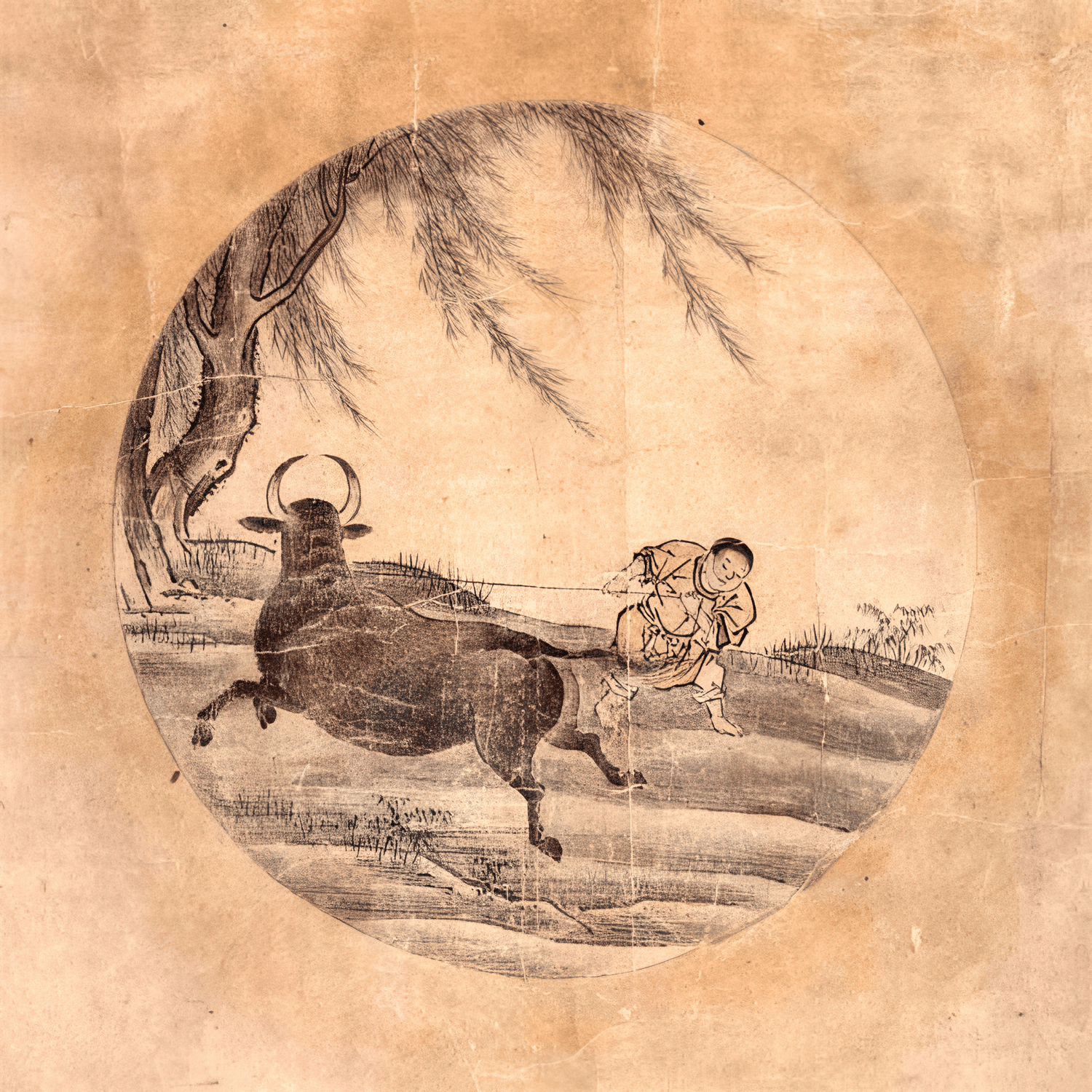
Taming the Ox
Long hidden in wilderness,
Today finally found.
Yet hard to keep up with it wandering off:
Longing for meadows of sweet grass,
Refusing to be broken,
Wild as ever.
To bring into complete accord,
Lay on the whip!
Putting all energy into it, grab the beast.
Yet so strong and stubborn, won’t be broken.
Now taking the high ground.
Now descending into misty depths.
C: We're talking about rather advanced meditative concepts here, but because we're articulating them in a creative context, I don't think it has to be lost on the reader... we're talking about taking a leap, and trusting that leap.
You know, when I’m listening to players —and I've been listening long enough over the years now— I can usually tell what teacher they've studied with, because I can hear that influence in their sound, as if they’re whole approach to music has literally been made in their teacher’s image.
But then there are also those who are riding the wave that we're talking about, that feel truly original. And when I use the word original, I mean in the sense that you can trace something back to its origin; and in this case, we're talking about the original mandala, that open space into which we take that leap.
And when there's something that comes through a player who is leaping into that space, where they're leaning into that place of inspiration and freedom, you feel it immediately. Something shifts, the energy shifts, and then whether or not they sound like their teacher or they sound like something else, it doesn't matter anymore, because you're in the moment with them.
F: That's beautiful. And isn’t that what drew you, and has drawn me, into what's so miraculous about listening to Keith Jarrett? That level of freedom and beauty in his improvisations is just something, it’s almost miraculous. He's on a high wire without a wire. There is such a quality of that freedom, but clearly it has come from a ground of endless practice, endless learning what he has to do on those other levels.
So there's the structure and then there's the freedom that dances on top of that. And that seems to apply whether we’re talking about Dharma Art or even conventional art. It just seems to be, as Thiago was saying, a kind of creative tension between the form and the freedom. It just happens that way.
When I was living in California and I first discovered Keith Jarrett, I had that CD of him and I would just listen to it. When I was driving around, I listened to it for a year straight. That's all I listened to, I never took it out. And I had a similar experience when I first heard Kind of Blue with Miles Davis, John Coltrane, Cannonball Adderley and Bill Evans.
Each of these musicians is so gifted and so individual that you could have this total clash of egos, and I have no idea what happened behind the scenes, but whatever they produced was this amazing sort of mutual resonance of knowing the basic form and then just flying with it and being completely free.
C: Absolutely, that’s another great example.
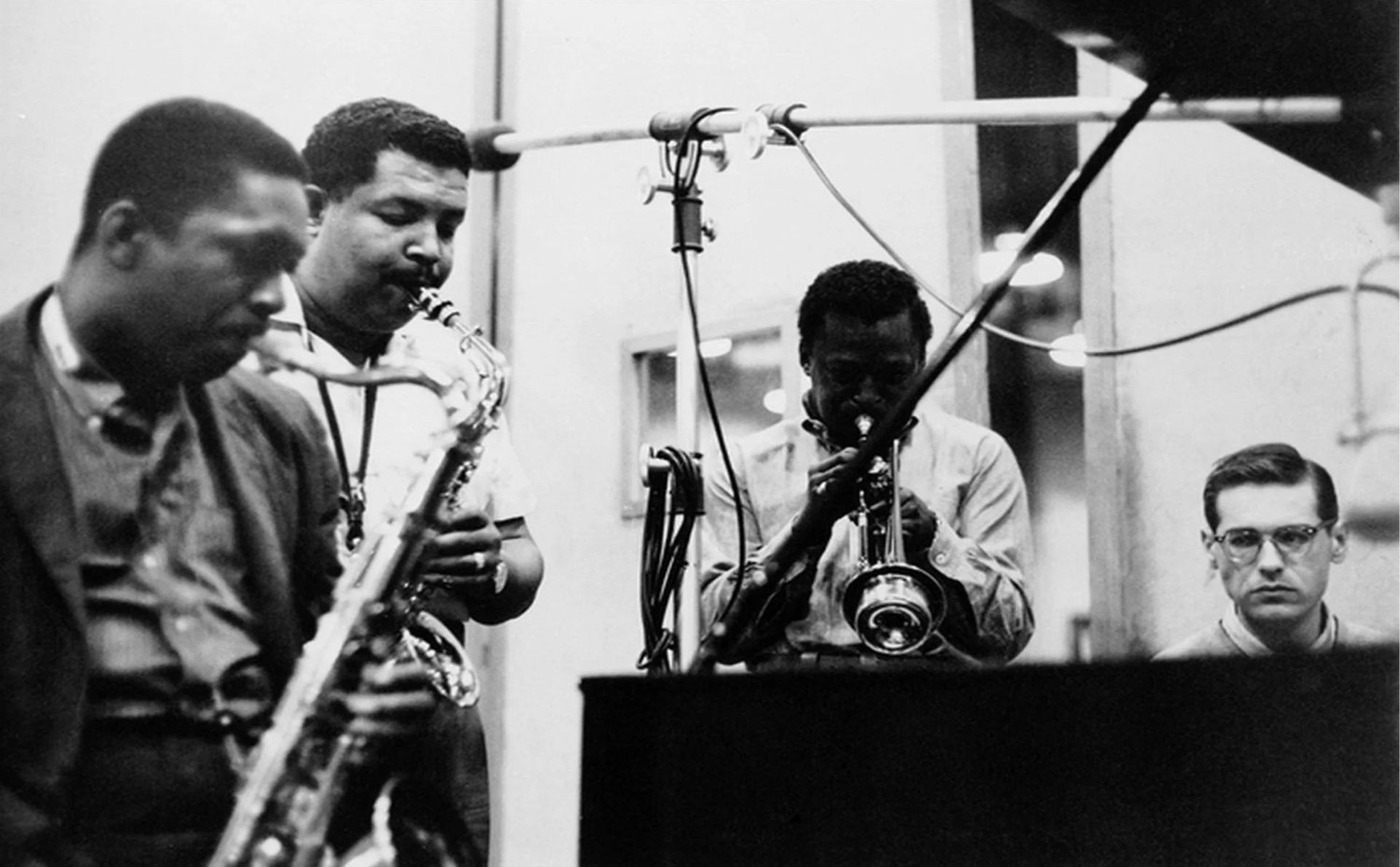
John Coltrane, Cannonball Adderley, Miles Davis & Bill Evans recording Kind of Blue
Extraordinarily Ordinary
So we’ve been talking a lot about meditation, but for those who may need a little more context, could you speak about how the practice of meditation has influenced you personally, in your life’s journey and work?
F: Well, since I was 25 meditation has been everything in my life. There's nothing that it hasn’t influenced. But if I were to look back on the journey I've made, and what it has done, I’d say there are two things: it’s helped me to develop my potentialities, whatever they were in this life, as fully as possible. And it also helped me to heal the wounds of my upbringing.
So both of those things. And a lot of the memoir I wrote was about how Chögyam Trungpa helped me heal my relationship with my father, which was a huge wound.
Of course meditation is not merely about healing wounds, it can also help you develop your own potentialities to the fullest in your life. This has nothing to do with ego, but just has to do with fulfilling what you were meant to do this time. And I'm very much a card carrying Buddhist, and I do believe that it's this time, and that there have been other times and there will be future times. But this time, that's my relationship with meditation, and what I wanted to say here.
Now I grew up with a father in a household where what was prized was how smart you were, how much you could remember, how good a talker you were, and how well you could convince others with your opinions. And my whole upbringing was about that.
Until I graduated from college, and realized that I didn't want to do anything like that with my life. I didn't want to be a doctor or a lawyer, and so I chose to seek out a different path. And even after I began to practice meditation, I still continued to rely on my habitual patterns of being a great talker, a teacher, someone who communicates with words to other people. And obviously I've continued to do that all my life.
But I also realized, both in terms of needing to make a living and also getting in touch with a whole other dimension of myself, that I needed to learn to be a better listener. Because my father, even though he was a very powerful person and influenced me a lot, he was not a good listener. He was a doctor, and he felt that he knew everything. He had very strong opinions, and often they were right, but when they weren’t he just raised his voice a little bit more.
So he was my guru when I was a young person. But to make a long story short, the other thing about my father was that he loved theater, he loved Shakespeare, he loved poetry, he loved Leonard Bernstein, whom he looked exactly like. He loved Western culture and was very well versed in it, and he taught me all these things.
The underlying quality was that it was all very dramatic, whether it was his political opinions or reading Shakespeare to us when we were children, which he did before bed. He would read from Romeo and Juliet, or Hamlet, or King Lear, and this was all about learning how to use language to create vividness, for lack of a better word.
But when I was nearly 50, I decided that I had to go back to school to get a degree to become a therapist, if I was going to survive financially. After being Trungpa Rinpoche’s close student and one of his administrators for 15 years, at the end of that time, he was dead. His successor had died. All the teachers that I had worshipped and idolized, they were all gone.
And there I was, turning 50 with a bad marriage and no livelihood. And the wounds that I experienced in the Shambhala community with other men who were also interested in dominating through ideas, and who had higher positions than I did in the hierarchy, left me really wounded, deeply wounded.
So I decided that I would go back to school to become a therapist, so that I could actually deal with those wounds at the same time as having a livelihood that could actually really help other people.
And what I discovered was that Trungpa Rinpoche’s principles of meditation, of allowing space, of experiencing gentleness, not jumping the gun on what you think the other person needs, not trying to fix them or solve their problems, being completely receptive to who this other person is and letting them unfold… these principles were not only healing for myself, but they did indeed help others as well.
It's like the story of the flower arrangement and my mother: get out of the way, let others be, create that open space. So moving from talking to listening is a simple way for me to express how meditation has influenced my journey, both in finding a livelihood, and also in a way that I could continue to grow in the depth of understanding myself.
Another thing is how meditation has changed my perception about art. And at the risk of oversimplifying, I want to make a distinction between Western art and Asian art. And I want to do it particularly in terms of film.
Coming out of the context of theater, film has always been a real love of mine. Now in Western art, there’s predominantly an addiction to drama and intensity, and so you're riveted by the foreground of the subject and the story.
Whereas a teacher like Trungpa Rinpoche, with his incredible ironic sense of humor, would say things about Western art, or Western music like, “Beethoven made aggression respectable,” or “Mozart made passion respectable.”
And I'm sure that to the degree he was exposed to Shakespeare, if you asked him about Hamlet, he would probably say, “Well, he made both passion and aggression really respectable in that play.”
The point being that in the space of the Buddha's mind, passion and aggression and all these great dramas, which in our whole Western canon are made such a big deal of… the tragic hero, the catharsis… from the point of view of dharma, they are all ultimately full of sound and fury and signifying nothing.
And so this point of view shifts from the heightened drama of the foreground, to the background of everyday ordinariness, of things as they are. And certain Asian directors have been able to reveal this in ways that I feel transcend in profundity anything that Western directors have done.
I'll give you two examples: one is a director named Yasujiro Ozu, whose greatest film was Tokyo Story. And Kurosawa, who did in fact borrow a lot of Western myths like Hamlet and Macbeth and turned them into great samurai films, but he also made very ordinary films.
The one that I’m very familiar with, because I used to show it in class, is called Ikiru, which means ‘to live.’ It's about a bureaucratic Japanese man after World War II who finds out that he's dying of cancer, and realizes that his whole life has been lost in triviality, and he vows to make a difference.
And it's just this very ordinary man who dies at the end, but who discovers his humanity in a way that is just incredibly beautiful and profound. Yet the story is totally ordinary. So the background and the space of ordinariness in which the whole thing unfolds, is a whole different experience of film.
And to go back to Ozu, a technique he often employed was to put the camera in an interior, and then let the characters move in and out of it throughout the film. And the effect was that you were constantly experiencing the background, and the action would take place in the space of this background, which was as much of a presence as the characters in the film.
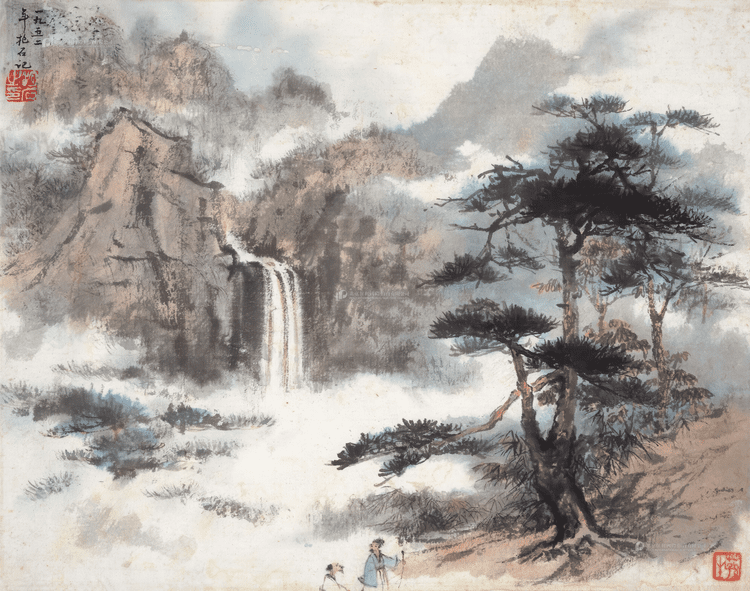
So the background matters as much as the foreground. And that, to me, is another example of how in Dharma Art the space of meditative awareness serves as the background within which everything unfolds. It's like Chinese landscape paintings, where the hermit's hut is just this tiny little speck amidst a beautiful landscape with a great sky; it evokes a sense that reality is much bigger than any human drama. And that’s the actual truth—not somebody's dramatic trip.
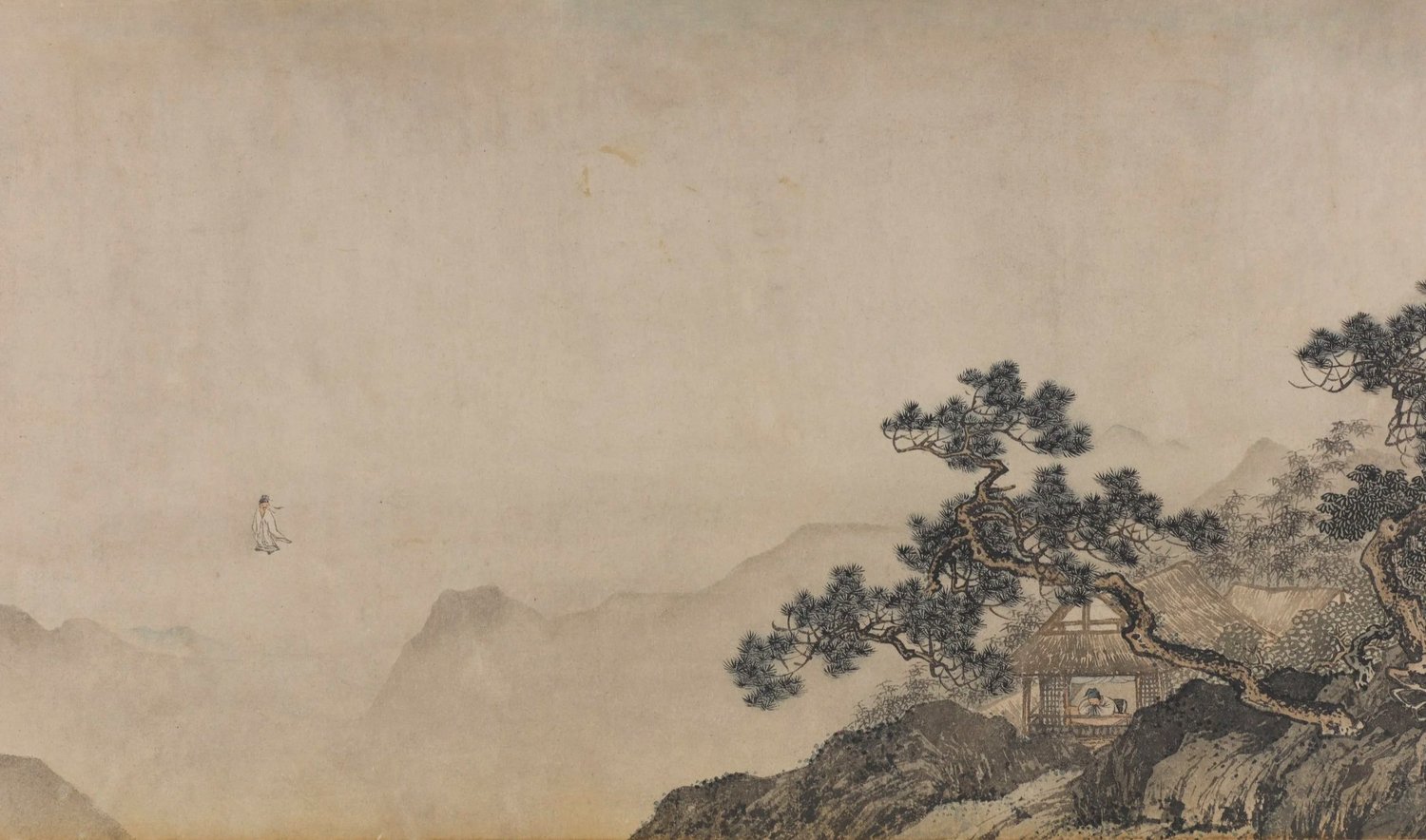
The Thatched Hut of Dreaming of an Immortal.—Tang Yin, 15th Century
C: That’s very poignant, and resonates quite a lot. This ability to bring together the ordinary and the extraordinary, so to speak, is a quality I feel very strongly in Chögyam Trungpa’s teaching style. It’s as if he’s speaking about the most ordinary things, but they're infused with this depth of awareness, which also doesn’t exclude your own uniqueness as a human being.
On the other hand I’ve found this quality almost completely lacking in other Buddhist teachers I’ve encountered. I mean, just seeing him in the 70s, wearing tailored suits instead of monastic robes, hanging out with hippies while speaking fluently in a kind of dignified British accent, fully versed in the popular culture of the time, it’s like he was completely in his own lane.
F: What you're saying is absolutely the case. There are many, many teachers, and some of them are really terrific, but there's also this sense that they’re constrained by the Tibetan tradition, the Tibetan culture, and a strange kind of arrogance about being the ones who possess the most profound teachings.
C: And there’s a parallel here with those same tendencies in some classical musicians, as well as some jazz musicians… really anyone who’s come out of a strong institutional training and continues to lean on that for their confidence and identity. And since I’m mostly self taught, it's actually been quite a journey to find confidence in my own path amidst these judgements and assumptions, and to trust that what I'm doing has its own meaning, regardless of the path I took to get there.
But I find myself surrounded more and more by musicians and other artists who also share this sentiment, and I think it's very empowering and healing for those coming from both institutional and non-institutional backgrounds to come together and speak openly about these things.
This is actually a big part of what I'm doing now —along with my girlfriend Audrey Vardanega, who’s a pianist that has in fact been classically trained at conservatory— together we create environments for musicians to collaborate in a way that encourages everyone to trust themselves and uplift one another. And of course this is very much in line with everything we’re talking about, which in a way is why I personally feel this connection to Trungpa Rinpoche and Dharma Art is still so strong in my life.
Speaking about all of this also makes me wonder how it’s been for you both, in regards to the process of bringing the values and insights meditation has revealed to you into your own lives and professions?
T: That's a phenomenal question. I think for Frank and myself, it's fantastic for the both of us to be here right now, because I believe Frank is one of the people who has really pioneered a lot of this through his work as a therapist.
And I think the deeper question underlying what we’re talking about, is what happens to dharma in the West now? What form does it authentically want to take here?
And, you know, these Tibetan teachers have come. The Tibetan diaspora has occurred. The tradition has been transferred to the West, from the North to the South American continent, and beyond. And there are many different versions of it.
Trungpa’s work represents more of the outsider’s version, the path of ‘crazy wisdom’ as it’s called. And I think what made me want to study with Frank early on is that Frank is also in this lineage of individuals.
Of course he's not alone, but he's got his own unique flavor of working this process out through asking, “What form does the wisdom of the dharma take today, and how do you translate it into a Western psychological approach? What could we call ‘non-dual’ psychotherapy?” So now there's a whole line of thinking, practice and engagement with this that exists, that is new here in the West.
But I think for Frank's generation, the question was, “How can we truly understand the essence of this tradition that’s come from Tibet?” And so for the first generation, the first circumambulation, it was like trying to redo the original form again here.
And then there’s the second generation, which I think in some ways mirrors what historically was the second great phase of Buddhism in the East, what was called the Mahayana, which was a great cultural revolution in Tibet, a grand reformation.
Before this they actually didn’t allow art in the tradition. In the beginning you couldn't create depictions of Buddhist statues, for example. Then the Mahayana allowed for the creation and installation of art, and that was a phenomenal revolution.
So it’s possible that art could also play a major role in depicting what this new phase can look like, and how it can help serve as a way for the essence of a tradition to be transferred and absorbed into another time and place.
And regarding this relationship between tradition and modernity, a major distinction here is that we Westerners have a difficult time with the concept of a guru—of someone who has absolute authority over another in regards to the teaching and the tradition. I think this development is actually a very good thing, because for example from a psychological perspective, the Tibetans didn't know about transference and countertransference, of shadow and projection, and the kind of abuse of power this can lead to.
F: Yes exactly, transference and countertransference are embedded in the traditional guru-student model, which has caused so many of these patriarchal communities to ultimately self-destruct and collapse here in the West.
T: And so I think Frank has been participating in the training of a whole generation of people that are extremely interested in exactly what you're talking about, Christos, of what the manifestation of the dharma looks like in our time and place.
Another interesting development I’m seeing between Eastern and Western disciplines is in the field of neuroscience, which has been researching basic practices like mindfulness and its effect on the brain for about 20 years or so, but are now moving beyond these practices and studying the effects on consciousness associated with more profound practices, such as those we’ve been discussing. And this is great, because there's this whole other thing happening in perceptual experience and the measurement of the brain in relation to these practices that we need to be able to articulate and understand scientifically.
F: Yes in the Buddhist teaching, mindfulness is just learning the scales. And of course, because here in the West we’re very materialistically motivated, mindfulness practice is very attractive because it's easy to access and package and turn into profit. I joke and call it ‘mc mindfulness.’ You know, it’s like fast food.
From Neurosis to Wisdom
C: Can we go more deeply into this distinction between ‘mc mindfulness’ versus a more complete approach to meditation, and how this could help transform an artist’s relationship to their craft?
F: Well I think this brings us back to the whole theme of space. One of the functions of space is that it gives us a way to be free from our own projections and our neurotic speed —and I really want to focus on that term, because it’s something Rinpoche always used that I’ve found to be incredibly powerful— he would look at us and say, you're all just prisoners of your neurotic speed.
So when we first sit down to meditate, as I said earlier, our neurotic speed and our projections are all we see. And there's a traditional Tibetan metaphor for the process of starting there, and gradually coming into a state of calm abiding.
They say that the beginner's mind is like a waterfall. You’re under all of your projections, your thoughts, your emotions, and it’s overwhelming. There's no gap and you think your mind is only this neurosis, and it's very depressing.
And many people quit then and there because they simply can't stand the message of the waterfall, and they don't have the patience, the courage, the faith, whatever you want to call it, to go further.
I think it was actually much easier for me when I started, because I had a teacher who embodied what it was to go beyond that, and that gave all of us a sense of inspiration or faith that maybe we could do the same. But if you don't have that example, and this is the problem with mc mindfulness—you’re just told to follow your breath, etc… and when you encounter the waterfall, you may just quit.
Anyway the next stage is called the brook. At this stage our mind is like a mountain stream that is moving quickly, bubbling along. But there's a sense of liveliness to it, and you're not completely overwhelmed anymore.
So the energy is very present, and at times it's too much for us, but there's a little bit more of a sense of groundedness, and one begins to learn how to work with the energy of mind. And it's not always neurosis. Sometimes we can be very wide awake.
The third stage is the slowly flowing river, the big river. And the image there is that the water is not so turbulent anymore. It marks the beginning of panoramic awareness, and a sense of stability that one has gradually learned how to ride one’s wild and crazy mind. And there's also a sense of calm, more and more calm abiding, like a great beautiful river.
And then the final stage in the accomplishment of calm abiding is the ocean on a calm day, which begins to move toward what the tradition calls samadhi. And the Tibetans teach that the great masters —and this is where you feel really inadequate— that the great masters, even at the time of death, remain as the ocean on a calm day.
Nice work, if you can get it. But the point being that the practice of meditation —and this relates to the artist— is about gradually stabilizing that sense of an immovable kind of stillness. You could call it stillness within movement... as T.S. Eliot wrote in his Four Quartets, “At the still point of the turning world, there the dance is…and do not call it fixity.”
Stillness within movement—that is actually a meditative accomplishment. It’s like learning how to play Beethoven’s Emperor Concerto. Maybe you're not the best in the world, but you can actually play it.
So there's this quality of stability, of calm abiding, which you could call the earth aspect, and then there’s a sense of space, when your projections are no longer getting in the way all the time.
And when the mind becomes more still and is not overly crowded or overwhelmed by the waterfall, of its neurotic speed and its projections, we experience our world with more clarity and integrity. Instead of having a completely distorted and dreamlike experience of your life, you begin to see things as they actually are.
You see that red is red, green is green, blue is blue, yellow is yellow. You hear a sound and it doesn't make you go off into all kinds of discursive thoughts. You actually hear the sound. Then you hear the silence, and then you hear the sound.
It's very ordinary, but it's also very profound. It's extraordinarily ordinary. And I think that experience of extraordinary ordinariness is part of what artistic people, people who want to understand Dharma Art, are particularly drawn to.
The term that Rinpoche used to describe this was ‘first thought best thought.’ He said first you have space, which is the non-thought, and then you have what he called the dot in space. And the dot in space is the first thought. So there's the openness, and then out of that openness, which is not being hemmed in by all your ideas about what you're supposed to do, you simply know what to do. The dot.
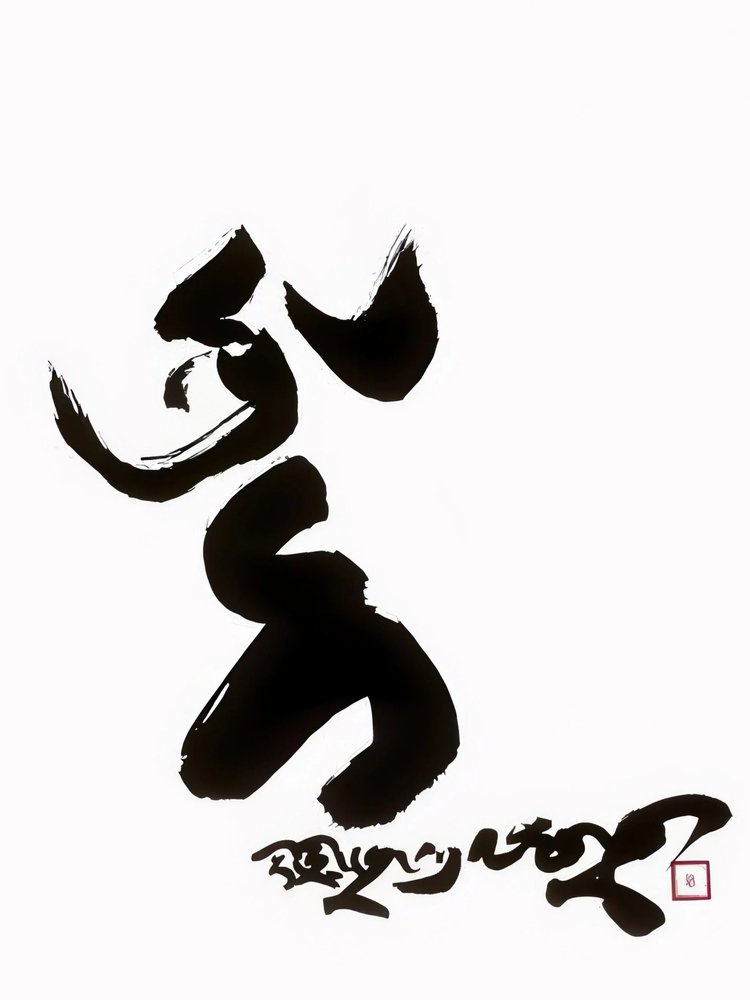
In our training, the dot in space came literally from stroke practice in calligraphy, which was one of the main practices that he gave his students. You learn how to do a brush stroke as a way of making a journey of mind from neurosis to wisdom.
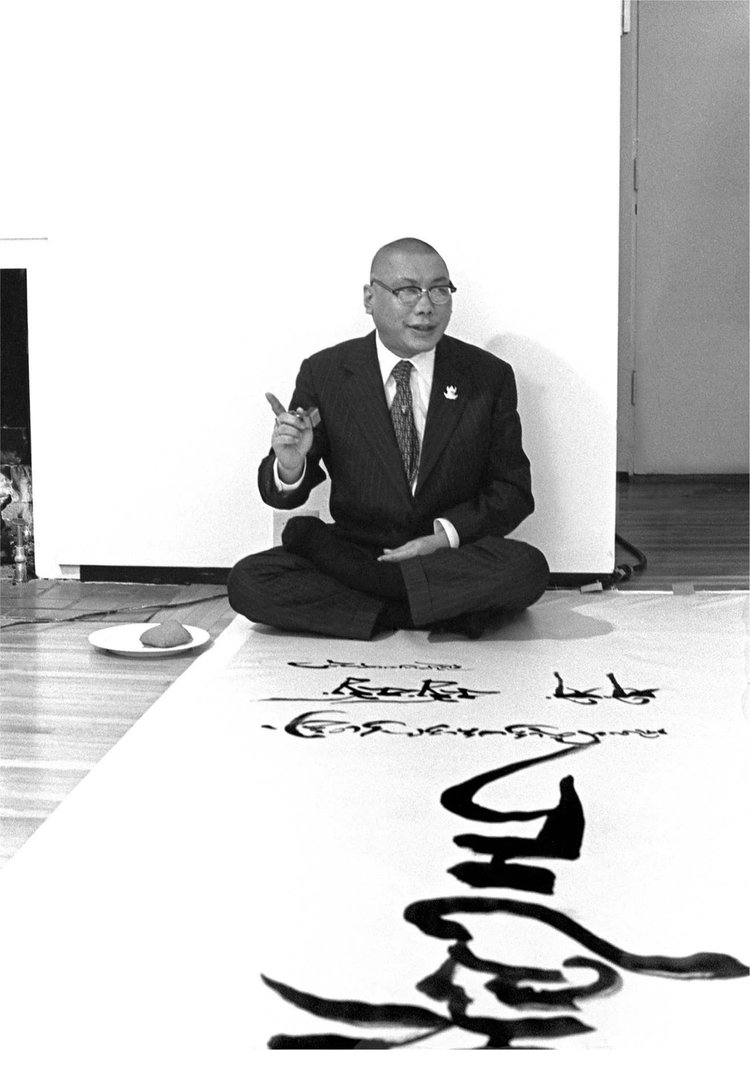
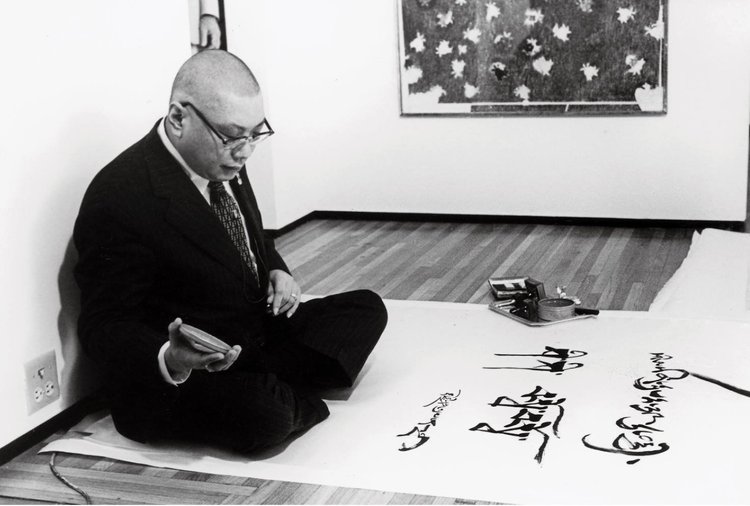
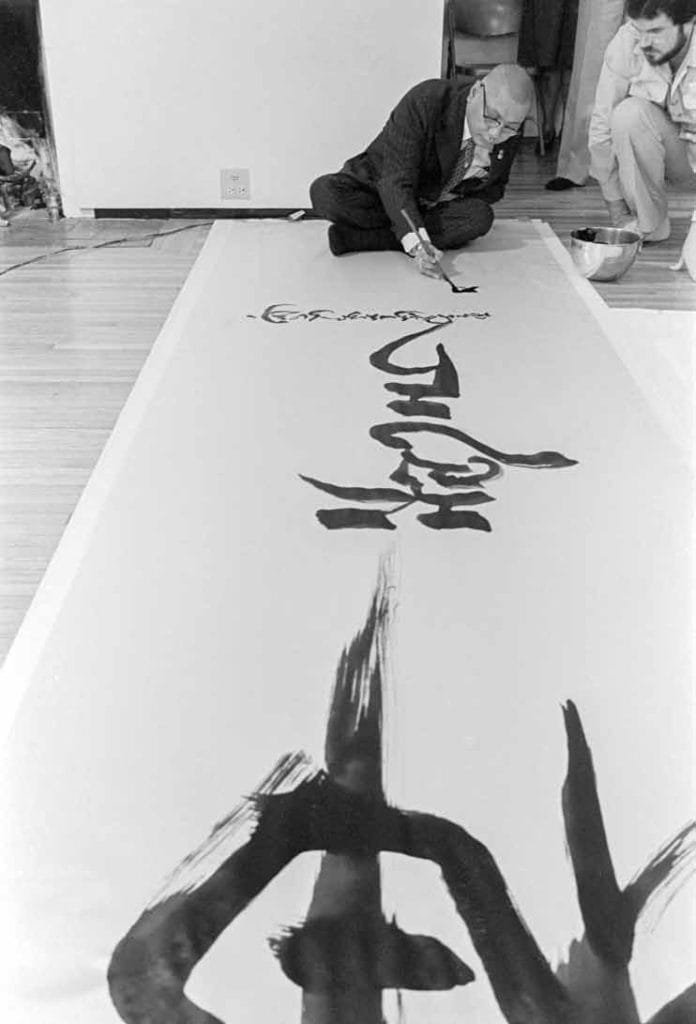
ChögyamChögyam Trungpa with one of his brush calligraphies. Photographs © Andrea Roth.
So the stroke practice becomes a metaphor for every moment of your life, as well as for how to be an authentic Dharma artist. Space. Dot. Space. Dot. Whatever the dot is. Maybe it's the first note on a piano. Maybe it's the first stroke of a painting. Maybe it's the first sentence of a book.
And then the last thing I wanted to say, because it just came to me, is that I wrote my memoir out of a kind of first thought, best thought continuous experience. And what I mean by that is I must have had between a dozen and 20 decisive moments of interaction with Trungpa Rinpoche. Each one was a teaching, and each one, in retrospect, changed the course of my life. And so to write the book, I started by writing out his punchlines.
For example his first punchline was: don't try so hard. Another punchline was to my mother: flowers are like children. And so I would remember these things. Each moment was like an italicized interaction that changed my life. Follow your coincidences was another, which he said to me when I had no idea what to do next.
Anyway the point I'm trying to make is that in the stillness and space of every interaction with this person, who was not like anyone I'd ever met, if I was pushing too hard in my life or if I had stopped pushing, either way, the teaching came. And I realized if I just remembered all of these punchlines and wrote them down, then the book would come out of that.
Another poignant moment in the book was a time when I was introducing him before he was about to give a talk, and he was wearing a military uniform. I was so freaked out that he was wearing a military uniform in front of all these new people, that I just kept introducing him for about 20 minutes. Then I looked over and he looked like he was falling asleep, and the crowd was getting really restless, and so finally I said to myself, “Man I've gotta stop, I’ve gotta pass this over to him,” and so I said, “And now, sir, on behalf of all the apprentices who are gathered here, I request you to turn the wheel of the Shambhala Dharma.” And he looks over at me and he says, “Turn it yourself!”
So those were the punch lines. They were like cosmic punch lines. And I feel in the creation of this memoir, that was what was operating. There was a Dharma Art quality to it.
T: This brings something up for me about finding confidence in space, and emotional regulation. I was thinking about what Frank was just describing about the scene of the talk, and how we often tend to become over-identified with our environment in some way or another in these settings.
Like how in education we go through the training, we get the label, we get the rank, we spend all of this money and time to become official in some capacity, and in the midst of all this there’s a temptation to become more invested in our self-concept.
Yet part of my experience of getting a PhD is that it doesn't really mean anything. I mean, you've acquired a method and of course there's something to be said for that, but along with that comes this fantasy that it means something special about who I am, about the quality of my character, and so forth.
So through over identification with your environment you can get caught up in this game of who you think you are, and become territorial about the whole thing.
And this is where, as Viktor Frankl said, that existential freedom —which could be thought of as dharma freedom here— is found in the space between stimulus and response, if you can learn to tolerate it. That's where the training of meditation comes in. It reveals to you that when you don't want to sit on the cushion, it's not about what you want. It's not about you liking it. It’s not about ‘you.’
F: It’s about enduring it.
T: Correct. Which trains you to endure your environment, so that you can learn to rest in non-reactive space and regulate the energy of your emotions, rather than getting caught up in the neurotic speed of your environment. And that's very hard to do. To just be. It's not a very popular thing.
F: It’s a life-long training.
T: But if you can stay present with that, you can allow for the dot to emerge.
F: There are two things I want to say about that. First is in regards to education, and what you were saying about how you have all these labels and so forth, and I remember Trungpa gave one of his most famous talks early on that was titled ‘Buddha Dharma Without Credentials.’ So I feel that captures this sentiment very well.
Also when he escaped Tibet and was coming to the West, and he didn't know if he was ever going to get here, he wrote a poem called Stray Dog. “Chögyam is just a stray dog wandering, eating food wherever he can find it…” it’s a powerful example of how he stripped himself down completely.
Secondly, what you just described about stimulus and response relates directly to meditation, in the sense that the power of meditation is learning through experience over time what our triggers are, so when they come, we know them. And not only do we know them, but as the state of calm abiding becomes more and more a part of our psychosomatic inheritance, we don't jump when they come. We don't jump at them and blindly continue.
C: In the context of musical performance I’ve been calling this ‘responsiveness versus reactivity.'
Meaning that a reactive performance is coming from the speed of neurosis. It's an impulsive reaction triggered by the energy of your inner and outer environment—the judgements, preconceived ideas, etc. These impulses create a chain reaction where your playing becomes an expression of neurosis, of insecurity and aggression.
In contrast, when we're being fully open to the moment —not following those impulses of reactivity— we’re able to empathetically respond to the energy of the music, rather than being drawn into our neurosis.
So I suppose the point is that meditation makes you more available to be as authentic and true an artist as you can. And in those moments of true responsive playing, everyone’s authentic presence, including the audience’s, is affirmed.
And to me that is also the spirit of Trungpa’s transmission, in a way.
F: There’s no question.
That makes me think of a clever saying, which uses the two words react and create. Both are made of the same letters, but in react the C is embedded deep within it. And in create you put the C first. So if you ‘C’ first, you don’t react.
C: That’s great.
F: So to summarize, meditation brings a certain quality of presence of mind and body that enables one to ride one's life, rather than being ridden by it.
And this gets into a whole other topic about the nature of fear, which is a great conversation in itself, and I think an important one for everyone, whether you're an artist or a therapist or anything else. So I'm hoping we can pick that up in the second part of this interview.
I look forward to seeing how this will continue to unfold. It's off to a delightful start, and I'm really excited to continue. So we'll leave it at that. It’s been a great pleasure speaking with you both, thank you so much.
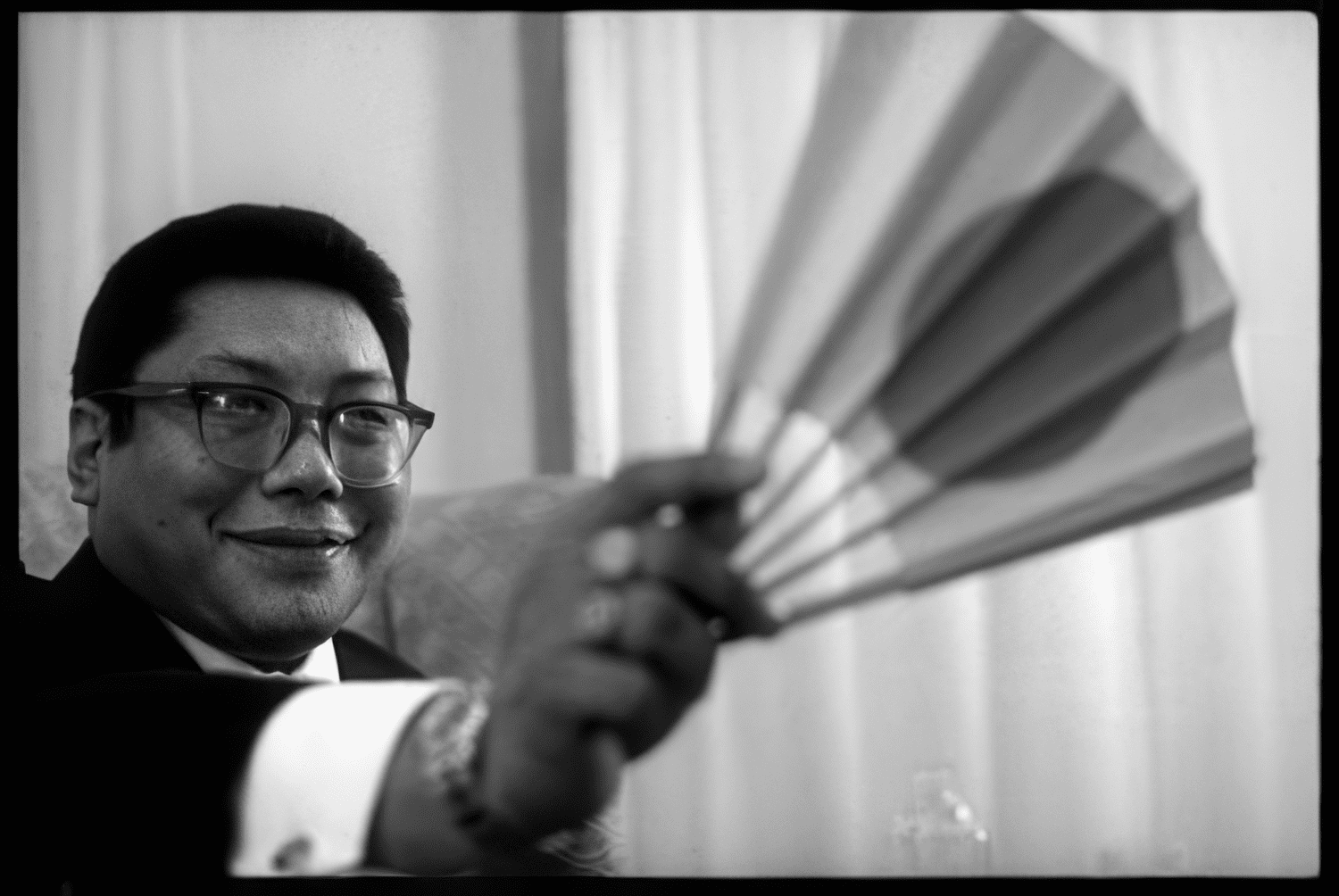
Trungpa Rinpoche using a fan during a talk to illustrate "closed fan, closed mind", "open fan, open mind".
— Learn more about Frank and Thiago’s masterclass HERE —