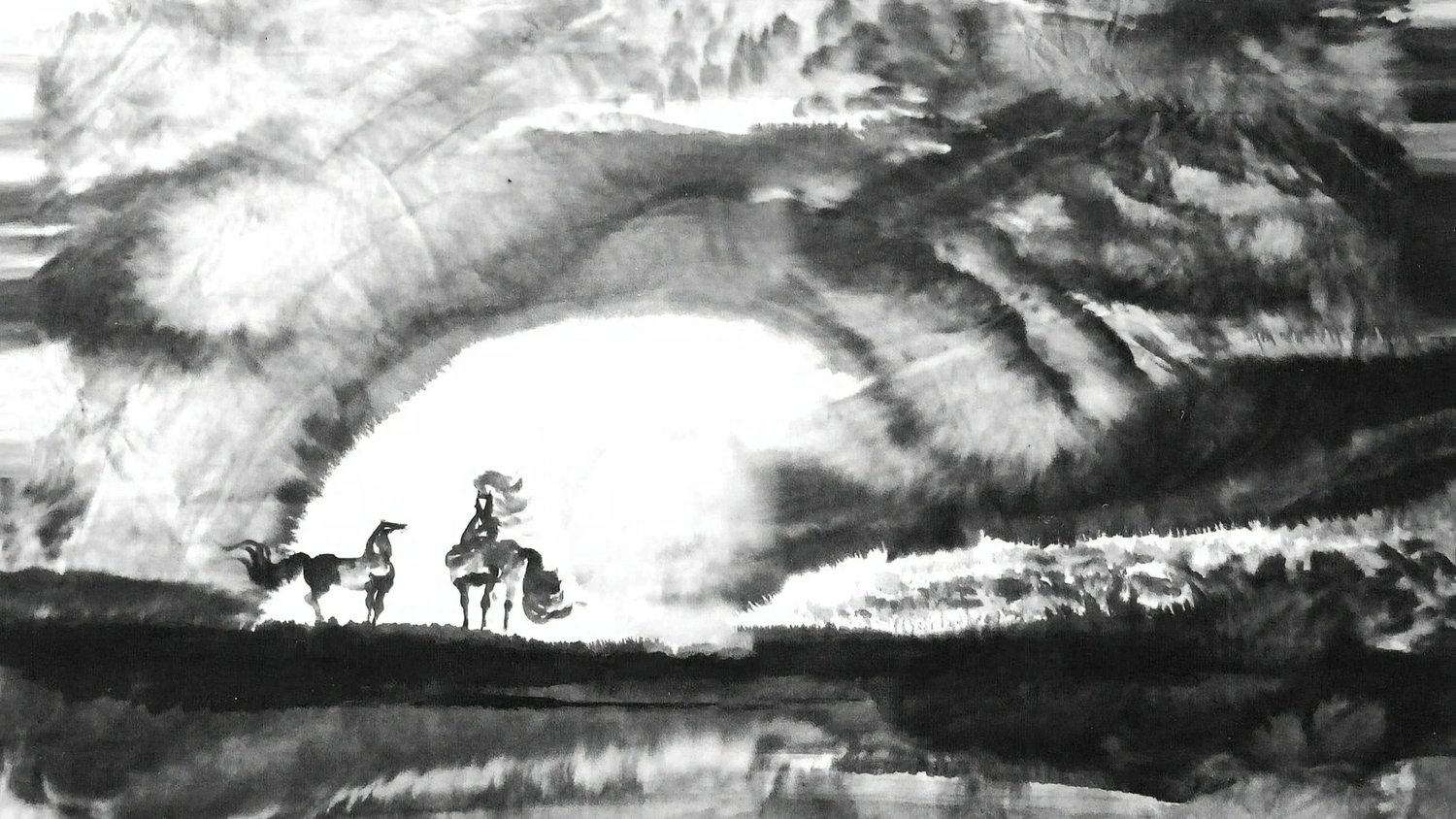
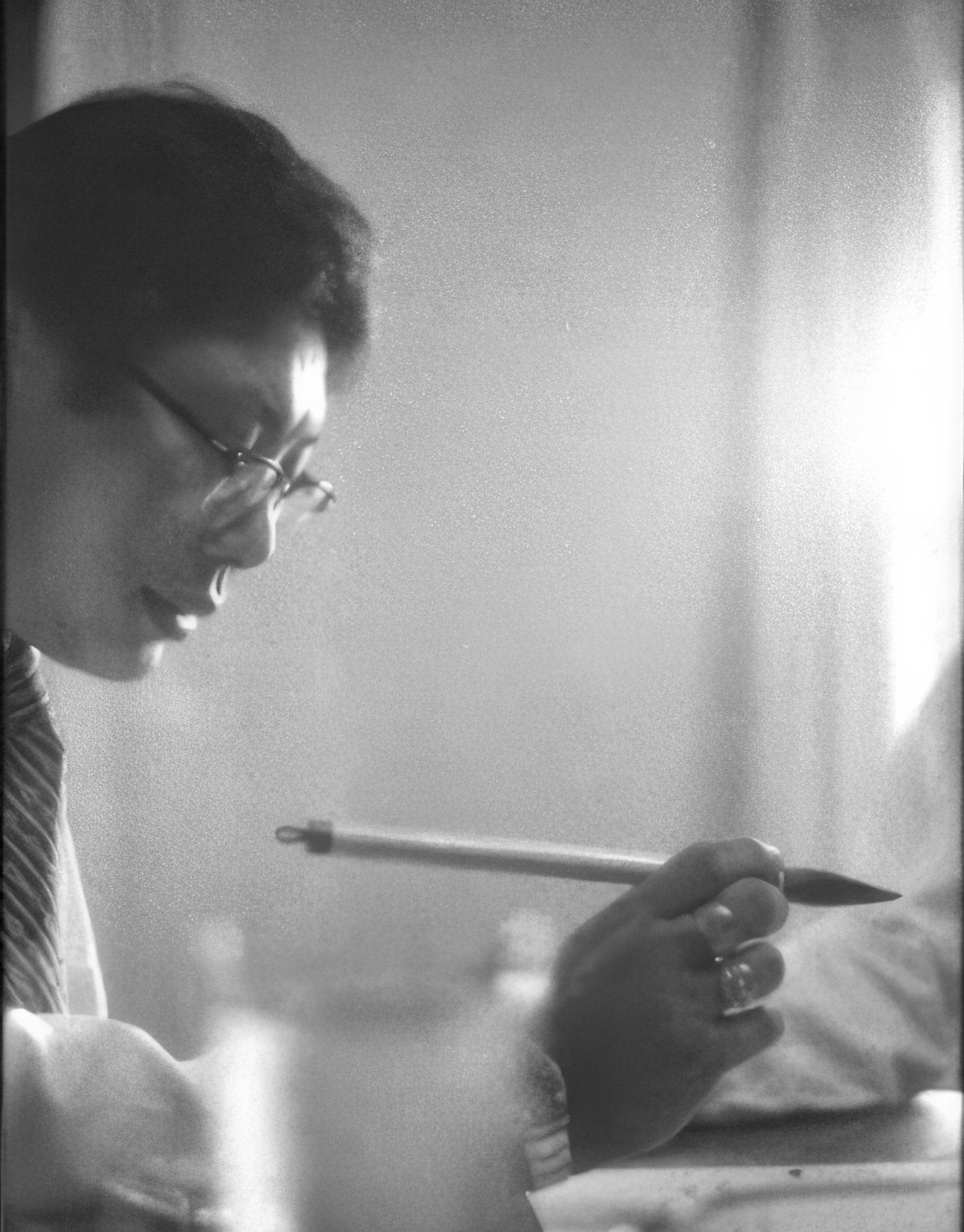
‘Horses meeting’—by Jin Weixin
Dharma Art refers to any creative work that springs from the awakened meditative state, as realized through the practice and teachings of Buddhism, known as dharma. The term was coined by one of the pioneering Tibetan Buddhist teachers in the West, Chögyam Trungpa Rinpoche, as part of what he called Shambhala Training.
He created this training to offer Westerners the opportunity to practice authentic Tibetan Buddhist meditation in a secular, non-religious context, bringing the core principles and methods of this tradition into the context of contemporary life, including art and culture.
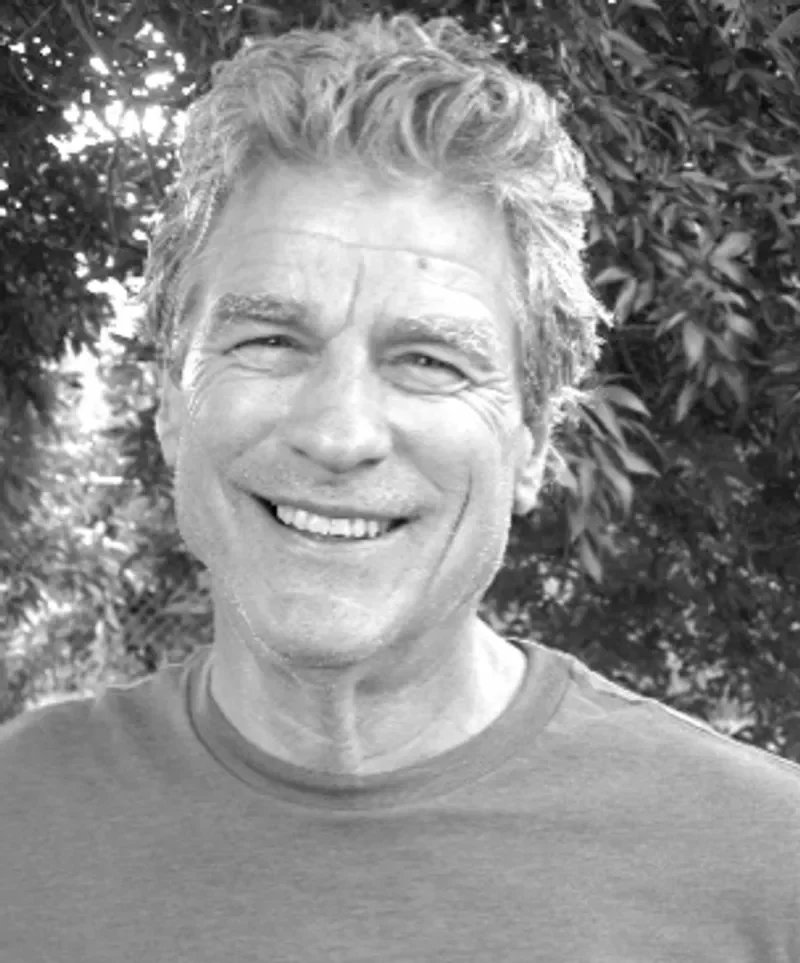
In this two-part interview, Autumn Salon founder Christos Vayenas speaks with Frank Berliner, a psychologist and teacher of Shambhala Training. Christos studied with Frank while attending Naropa University, a liberal arts college founded by Trungpa that offers an education rooted in the principles of Shambhala.
They are joined by Thiago Leão, a psychologist and adjunct faculty at Naropa who's worked closely with Frank for over 25 years. Thiago's work is dedicated to further advancing the synthesis of Eastern meditation and Western psychology.
Together Frank and Thiago are offering an online masterclass based on Frank's book Bravery, The Living Buddha Within You, that offers in-depth guidance and insight into the path of meditation as taught by Chögyam Trungpa.

The Fire of Nowness
.Christos: Welcome back gentlemen, how would you like to begin today?
Frank: Well, as you remember I read from my memoir last time, which was published back in 2008. And about four years later, I published another book titled Bravery: The Living Buddha Within You, which I’d like to read from to help set the tone for our conversation
I wrote this book three years before I retired from Naropa, and it’s based on transcripts from classes I’d taught to BA psych students for almost 20 years. I’ve chosen to read this particular chapter because it addresses how meditation relates to the themes of fear and bravery, which gets right to the heart of what the book is about.
It’s placed about mid-way through the book, after I've introduced the basic meditation practices of mindfulness and awareness, so relative to those chapters it covers a more advanced, subtle understanding of what happens when we meditate.
Excerpt from ‘Bravery: The Living Buddha Within You,’ by Frank Berliner
Chapter 14: Touch and Go
From the Buddha’s point of view, the existentialists only had it partially right. The sources of insecurity they describe—about death in the future, about aloneness and love, about meaning and the lack of meaning—are all ultimately bundled together into a much more immediate insecurity: that you are not quite real in any way that you can maintain securely in the face of constant change.
It is because of this unspoken fear that you experience the sense that your survival is at stake, even when it isn’t. Even a situation that does not actually threaten your physical survival can initially provoke the same visceral reaction as one that does. Furthermore, maintaining your project of constantly making something out of nothing requires a tremendous amount of energy. This is part of the energy that moves through you when you practice meditation. It is your actual life force, but it is in the service of your efforts to constantly try and protect yourself.
Sitting in the Fire
When you meditate, you stop trying to escape this unease and you stop trying to protect yourself from this energy. Instead, as my teacher put it, you "use survival as a stepping stone." Rather than trying to ignore it or transcend it, you use the energy of this anxiety as a stepping stone to being more present, and more fully awake. In this way, the practice of mindfulness incorporates and makes use of your survival instinct. To understand this fully is to understand accurately what we mean by "developing peace" in shamatha meditation.
Somewhere along the way in your path as a meditator, you stop trying to manufacture an experience of peace that will somehow shield you from the unpredictable energies of life. You are no longer trying to be peaceful. According to the Buddha, manufacturing peace in this way would create a kind of spiritual ego—a safe haven in which you can hide and make your spirituality into a cocoon. Doing this cuts you off from your life force; it’s like trying to stop your heartbeat entirely so you don't have to experience it racing.
Instead, like a skillful rider on a wild horse, you stay right with the energy of your struggle, and gradually tame it. To use another analogy, you do not try to put out the fire that you fear will consume you. You learn to sit right in the middle of it, because you realize that it was you who lit the fire in the first place. Therefore only you can eventually bring the flames under control.
Practicing Touch and Go in Nowness
Engage fully with whatever comes up in your practice. Let your struggle itself be the object of mindfulness; you don't look elsewhere for your spirituality. The method for engaging the energy of your existential panic is called touch and go. This method addresses your instinct to survive very directly, as it meets your ego—that is, your habitual tendency to grasp and fixate on your experience—right at the moment it reappears.
When you practice touch and go, remember the first instruction for working with mental processes in shamatha—don’t suppress them as they arise, and don’t chase them as they go. What follows here is an expansion of this early instruction, down to the subtlest detail.
“Touch” challenges your instinct to evade the intensity of what is too threatening. When you “touch” an experience, you actualize your willingness to stay in contact with its rawness in the present moment of meditation, no matter what it is. When thoughts and especially emotions come up in practice, it is their energy you experience first. You actually experience it in the body before you have a clear consciousness of their content. By not suppressing this experience, you allow it to touch you. You stay with it, and accommodate it.
“Go” challenges your habit of holding onto your stories about what is happening in order to reassure yourself that you’re still there. There is a crucial distinction here between the energy of your experiences, and the storylines you create about them. This distinction is a vital instruction for all levels of Buddhist meditation.
The experience of energy happens before you can articulate or conceptualize the meaning of what is happening. You communicate this meaning to yourself as a narrative, or storyline. One of the main discoveries you make in fully engaging the practice of shamatha is that you spend most of your waking life telling yourself stories. Not only that, but these stories have a repetitive quality, which reinforces their power to create emotional fixation.
When you “go”, you don't cling to or cherish the storyline of any experience; rather after you have fully made contact by touching, you disown the experience and let it go. Because as thoughts and emotions become more fully developed, it is not their energy but their storyline that hooks you, makes you lose your mindfulness and give in to distraction. It’s as if you are watching a movie and you forget it’s only a movie, and then become so absorbed in the story that you even forget that you’re sitting in a theatre. By letting go of the storyline being played out on the screen of your mind, you come back to yourself again.
Familiarity Breeds the Cocoon
Your ego is equally adept at fixating on pleasurable and painful experiences alike. This is how the cocoon we discussed earlier is constructed. The reason for this is that, from the perspective of the cocoon, it is familiarity, not pleasure or pain in themselves, that is most vital to keeping it alive. Painful narratives have as much power to create fixation as pleasurable ones—if not more. Be it ever so painful, there’s still no place like home.
My teacher once said that we spend our lives making mountains out of molehills, and that meditation turns those mountains back into molehills again. The practice of touch and go dismantles the cocoon, one thread at a time. In the process, we learn that the stories we tell ourselves are not so solid and real as we believed them to be, but begin as mere sensations, thoughts, and emotions that arise and pass away in nowness in shifty and dreamlike ways. Moment after moment, with gentleness and precision, we cut through our fixation on these stories, like popping soap bubbles with a feather.
Then we might even make the startling discovery that our pain is not a threat, and our pleasure is not a promise. Each stands nakedly by itself in nowness, without an echo of past or future, hope or fear, and then passes away.
So that chapter was intended to address certain aspects of meditation that work with the energy of the fearful mind.
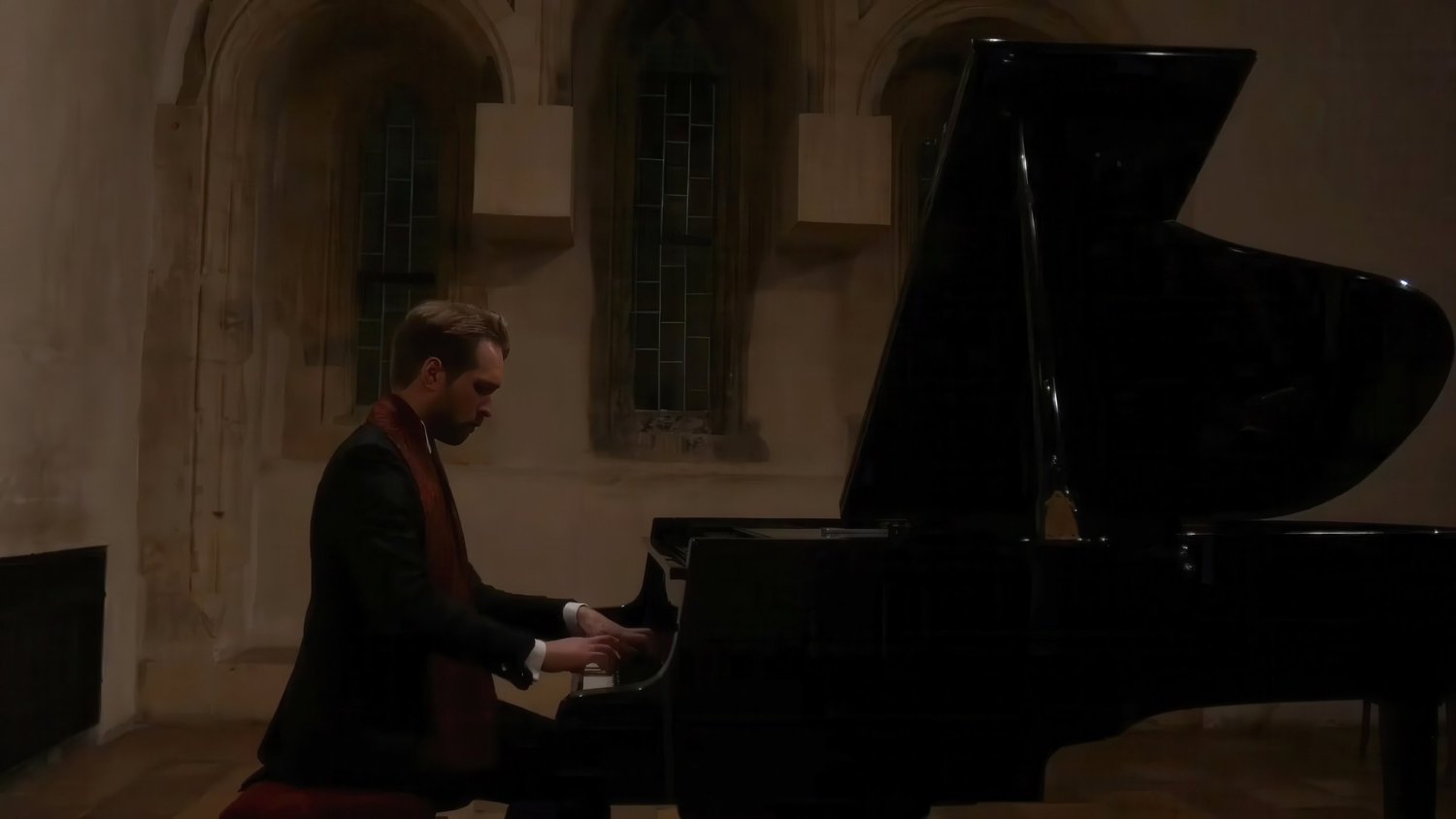
C: Thank you for sharing that—I love the theme of ‘sitting in the fire,’ which reminds me of the fact that by being a musician, whether you’ve realized it or not, you’ve signed up to step into the fire every time you walk on stage to perform. In that space you’re totally naked and raw, whether you allow yourself to fully feel and be present for that or not. And cultivating the ability to lean into that space in the way you just described, is why I believe meditation can be a very powerful resource for any performer.
Anytime you see a performance —and specifically something like a classical performance— right before a musician begins to play, they’ll intuitively try to focus and collect themselves in a way that actually resembles the practice of meditation. In that moment there’s an intuition that something important, something special or even sacred is about to happen, and they want to gather themselves to the best of their ability before undertaking it.
Then as the performance begins, all kinds of things can arise in a musician’s mind, which are a direct reflection of how much they’re resisting or embracing the ‘fire’ of that moment. Whether it be thoughts of doubt and self-criticism, or moments of confidence and inspiration, the quality of the musician’s state of mind is present in a more vivid and heightened way, because they are ‘on the spot.’
F: So every time a musician sits down to perform, in a sense what they are performing is either the object of their meditation, or not. In other words, either they can completely merge and be at one with their material, or not. And in a way that is the same as staying with your breath in mindfulness practice, just more complex.
C: Right, and the practice of ‘touch and go’ is a perfect way to relate to that process, because in every moment you must be available to ‘touch’ the music, to let go, and to meet the moment again.
F: So a kind of direct, energetic parallel between being a performing musician and sitting in the practice of meditation is that it’s always surfing impermanence. It's moving in time. You're constantly riding that touch and go energy when you sit down to perform a piece. That's what I'm hearing you say.
C: Yes, and whether you’re improvising, which is a very raw version of that process, or allowing a Chopin Nocturne to flow through you, it's always a matter of remaining present and riding the current of the music, which is always greater and deeper than any self-concept of how you think it should go.
So as you said, the object of meditation becomes the music, becomes that moment of creation. And you must relinquish your self-concept in order to be fully available to receive and respond to what wants to come through, which will be different every time, even if you’re playing the same piece over and over again.
Christos Vayenas in performance
On Being oneself
F: I’d like to further address what it looks and feels like when fear comes up in the midst of this process, and how it can cause us to retreat into our cocoon.
One way in which we retreat is through the constant compulsion to compare ourselves to others, as well as compare ourselves to a past version of ourselves. Both have the quality of comparison and measurement, which brings anxiety, and is the pure expression of what ego is and does.
There are two quotes I love that relate to this. One is by Oscar Wilde, which says, “Be yourself—everyone else is already taken.” And the other is attributed to Cary Grant, who when at the height of his fame as the golden man of Hollywood, said in an interview, “Everyone these days wants to be Cary Grant—even I want to be Cary Grant.” I always thought that was so witty.
So ego operates through creating and re-creating this fixed idea of ‘me’ by constantly checking our own reflection in the mirror, constantly obsessing over comparison and measurement, whether it's with others or with ourselves. And it's very crippling.
And when that anxiety arises, either in performance or on the meditation cushion, whether or not we retreat further into our ego will depend on if we can respond to the energy of that moment, or if it’s something that’s going to actually take us down.
C: One example of comparison and measurement that comes to mind is how sometimes when musicians are practicing they’ll record themselves on their phones, and then play back the recording to critique themselves, and then record again, and then critique, over and over.
And obviously listening to your own playing from time to time could be helpful if you're not attached to it, because it gives you another perspective that you wouldn't necessarily have access to otherwise. But there's also the danger of that developing into a fixation, an obsession with self-criticism that becomes so present in your mind that when you sit down to play, all of those judgements and ideas of how you think you should sound are right there with you.
This can even happen on the highest institutional level. There’s an organization that presents here in New York, which is considered by many to be the true north of chamber music in America, and for the past many years the directors have been doing this on such an extreme level that it borders on the dictatorial.
When programming a particular piece for example, they’ll play what they consider to be the ‘perfect’ recording of that piece to the musicians and tell them, “You have to sound exactly like this. If you don't, you have to go back and listen and try again until you do. And if you’re not willing to sound exactly like this, then you’re not going to play in this ensemble.”
And for the musicians who give themselves over to this, although they might succeed at meeting this expectation, it’s often done so at the expense of their own sound. Meaning, when you hear them perform again on their own, outside of that ensemble, apart from retaining their technical abilities it’s as if they don't know what they're doing anymore. It’s like they’ve lost touch with their own sound, their own sense of how the music should go.
F: It sounds like it would be dead.
C: Yes, musically it just doesn’t say anything.
F: You keep perfecting it until it’s a perfect cocoon…
C: That’s right, and it's a cocoon that’s being imposed from the outside. It's not even coming from the musician at that point, they don’t even want it. But to further their career and reputation, they accept it. It's institutionalization in the truest sense of the word.
F: And as I said before, part of what motivates us to weave our cocoons is to protect ourselves from the unpredictable energies of life; but once you’ve perfectly woven the whole thing up, there’s no room for any sense of freshness or aliveness to enter.
C: And when you present music to the listener from that place, ultimately it doesn’t feel relatable or genuine, because it's not real. It’s a fabrication.
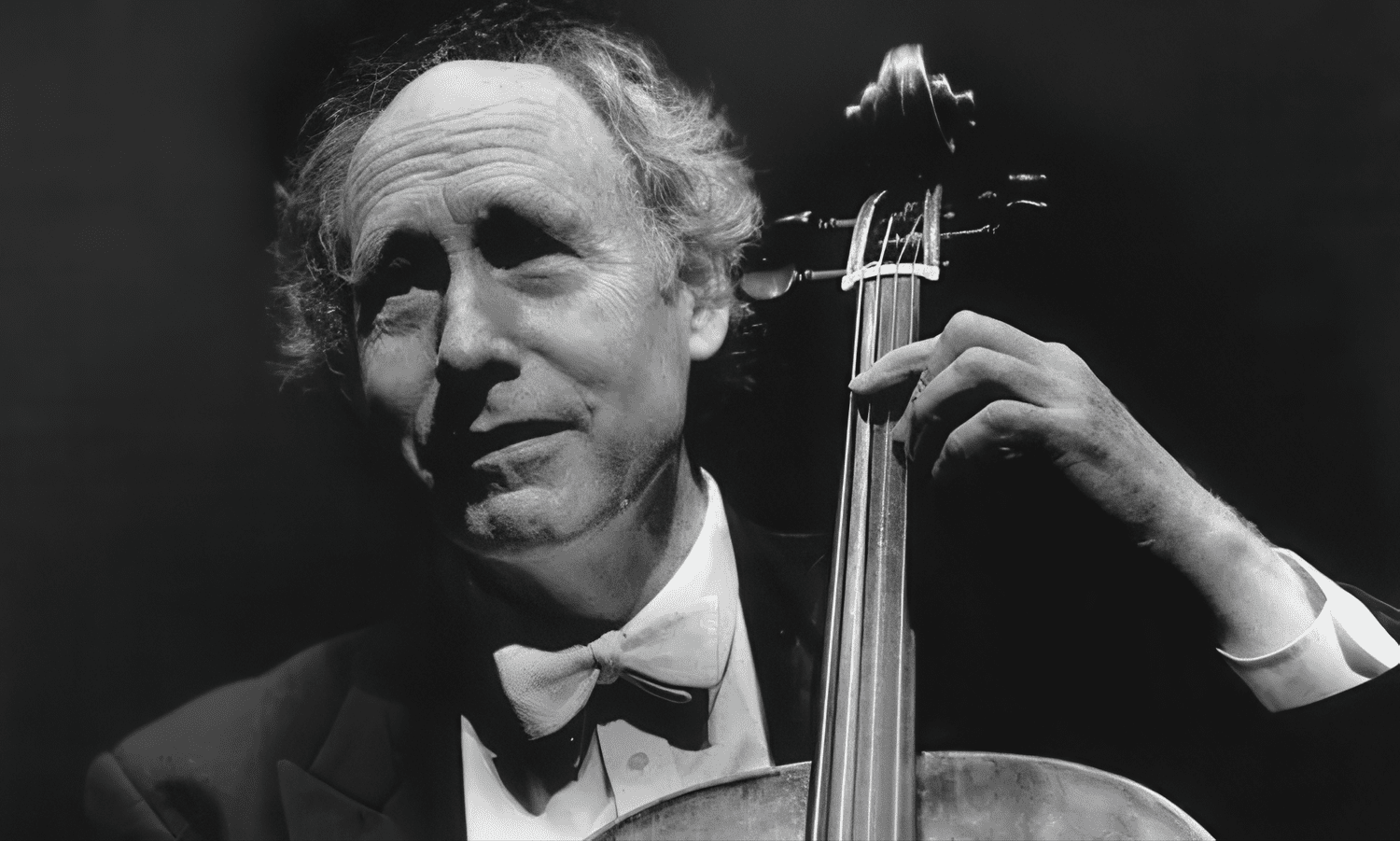
There was a renowend cellist named Anner Bylsma who once said something along the lines of, “I don’t like playing from preconceived musical ideas, because it feels like I'm excluding the audience—I don't feel I'm actually honoring the audience, and inviting them into the music.”
Anner Bylsma
Thiago: This reminds me of an experience I had a while back that actually involves riding horses—when I was growing up, I had many friends who owned horses, from which I learned to ride. These were horses that went to competitions, so they were very light on the reins, very good horses.
Then later on I went to a place here in Colorado with a friend who herself was learning to ride. I got on this huge mare named Hollywood and started riding, and the trainer looked at me and said, “Thiago, do you want some feedback on your riding? And I said yeah, absolutely. She said, “You have perfect riding technique.. but now feel the horse.”
And I was caught by that. I actually got off the horse, played around with him a bit, and eventually got back on and kept riding. Then she looked back and said, “ah, there it is.”
So that reminded me of what you just said, that rather than being isolated in a cocoon of method or technique, we have to step out and meet those around us —whether humans or horses— in a mutual space of openness and connection.
It also brings to mind a quote by Sartre: “A being in itself cannot be for itself.” It's like what Frank said about looking at yourself in the mirror—am I trying to be that person in the reflection? Am I that Cary Grant?
If you’re pursuing the project of trying to be an it, a thing, a concept of yourself, you can't actually be the ‘you’ you already are. You’re not free to participate in your actual lived experience, because you’re trapped in the institutionalization of attempting to be something; which is a bizarre thing that humans do, yet we tend to do it all the time.
F: So we could say it’s the activity of trying to create yourself as an object —an object for others, as well as for yourself— and in that process, losing the kind of ineffable and utterly profound subjectivity that you actually are.
T: And it sounds like what you’re talking about Christos with that organiation in New York is that you must become a concrete object, otherwise, get the fuck out of here.
C: That’s exactly right. And it's terrible. It's so destructive, and frustrating to think that this is going on at what’s considered the top level of the profession.
F: It’s quite depressing to hear that.
C: Well, the good news is there are others that recognize the whole thing needs to absolutely change, and that the educational component is extremely important in all of this.
There’s a musical colleague and good friend of ours who was actually a protégé of Anner Bylsma, and she told me that during their lessons he’d say things to her like, “Forget everything I just told you. Don’t listen to me, I can't even stand listening to myself! But that moment 15 minutes ago, when suddenly something clicked with that phrase you were working on… the lesson ended there. Just go home and work out what it is you discovered in that moment."
And I feel this is very special, and very rare, that a musician playing at his level had the selflessness to put his ego aside and affirm when his student was inhabiting themselves and discovering something emergent in that moment. It’s the exact opposite of ‘sound how I want you to, or else!’
After working and speaking with artists across many different fields, I feel this tension between the objectifying tendencies of the institution and the creative path of the individual is pretty universal, with classical music being one of the most extreme examples I know of.
F: I’m thinking of a term I’m sure you’ve both heard many times, called ‘the male gaze.’ To give an example, historically the role of women in Hollywood has been based entirely on the male gaze —the objectification of women according to a particular standard— and this has gone on for many, many years.
And going back to my earlier reference to Cary Grant—what was so refreshing about him was that he saw how he himself was also being subjected to the male gaze. And so here male means not only the men who ran Hollywood, but speaks to the desire to completely objectify the other, to negate the other’s subjectivity.
And in the practice of meditation we have to meet all of these ways in which we’ve been objectified, as well as how we’ve objectified ourselves. And that can be a very difficult process, which is why it can be so hard for people to stay with the practice.
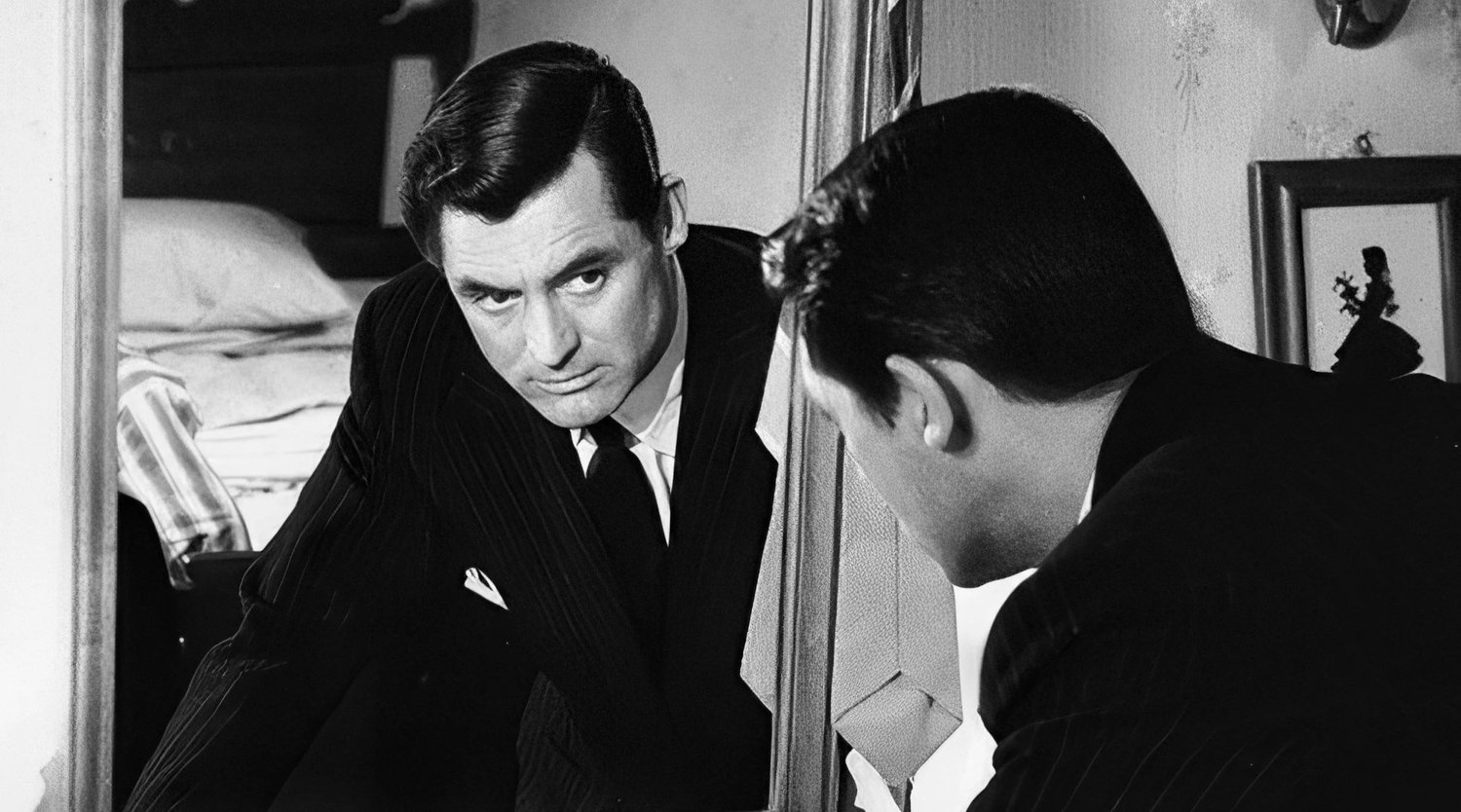
Unless you're willing to get to that point where, no matter how ‘successful’ others may see you, you can stay in the fire by letting go of those objectifications and continuing to ask, “Who is this really who's doing this practice?” …unless you can do that, you'll quit. Or you'll turn your practice into another form of objectification, another cocoon.
T: I think an important point to emphasize here is that to remain in the open space of awareness is the ultimate antidote to the objectifying impulse, because that space is pure subjectivity; it simply cannot be objectified.
F: Yes, to rest as open awareness is the simplest kind of meditation instruction, yet it's also the most difficult—because there are so many ways in which we don't really want to sustain it. The lure of the cocoon, both the safety and the deadness of it, is an offering, constantly.
T: Right, remaining that open and raw requires a level of distress tolerance that can be very daunting for the average person. Normally we want to get rid of that experience, to shut it down, not get closer to it! I think that’s where learning to strengthen the confidence we have in our own true nature is very important—to learn to put our trust in that, rather than the self-concepts we construct, or those that are constructed for us.
F: Absolutely. Chögyam Trungpa would always say, “The whole thing is a matter of confidence.” He said, “Your basic goodness is no different than mine. Mine is not better than yours. Just because I'm a Tibetan and I’m bringing these things here, doesn’t mean anything. Our minds are exactly the same. The only difference is that I have confidence, and you don’t have that confidence yet.”
So it's all about developing confidence, rather than trying to emulate some imagined idea you have about what your teacher is experiencing, or what you should be experiencing. Which I think goes very much to what Christos was saying about a teacher who really allows a student to be themselves.
C: That’s right. And you know, there’s a very singular quality I’ve noticed in the musicians who do choose to remain in that fire, and encourage others to do the same, which is that they love music more than anything else. They just love it. They’re obsessed with it. More so than any concept or desire to be seen as more talented, more powerful, more anything.
F: They love music more than they love themselves.
C: Exactly. But I think somewhere along the way, some of these people started loving themselves —loving their egos— more than music.
F: So I have a question—do you feel that someone like Leonard Bernstein loved music more than he loved himself?
C: Interestingly I saw a documentary not too long ago where Leonard Bernstein was compared to another famous conductor, Herbert von Karajan. And in it one of their colleagues remarked, “Both were genius artists. The difference between the two is that Karajan made music, and Bernstein was music.”
And that's sort of an interesting distinction—perhaps you could say Bernstein leaned completely into the energy and dynamism of the music, whereas Karajan rested in the silence and space behind the music.
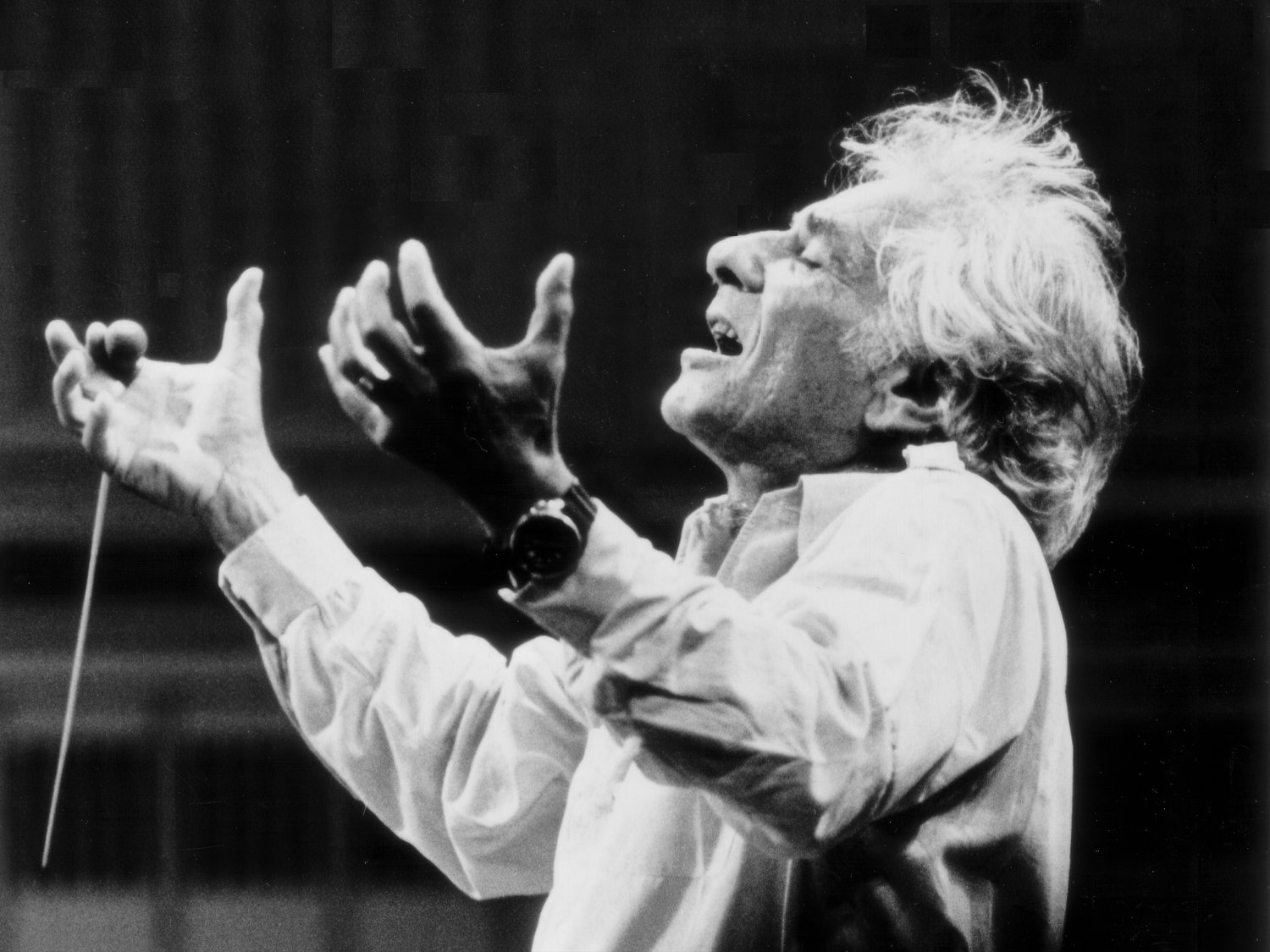
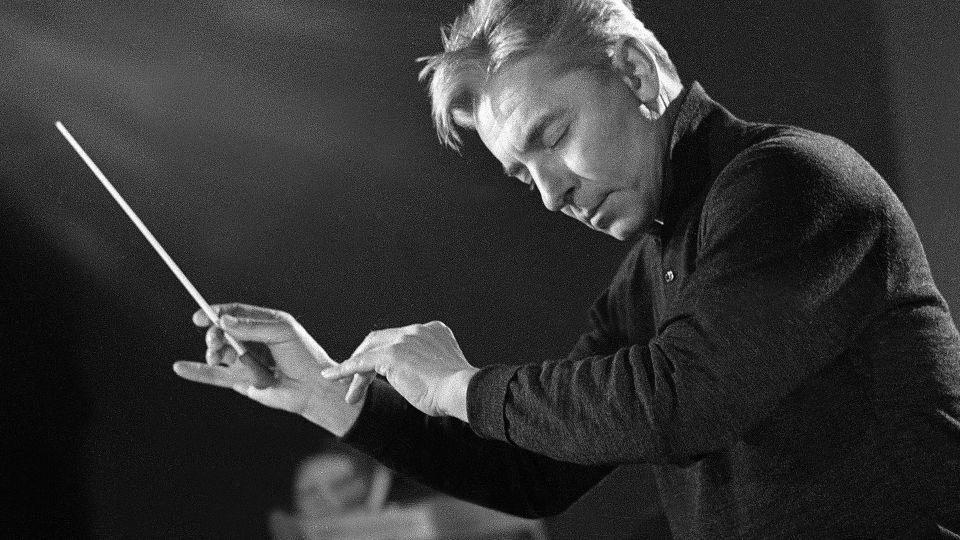
Either way they both had big personalities —and at times big egos— but it’s also very clear that they both loved music profoundly.
I also remember watching a clip of Bernstein himself saying, “there’s two things in the world that I love, and I don’t know which I love more, and that’s music and people.”
F: Thank you, that was a great answer.
Getting back to the theme of fear and bravery, I wanted to go into a bit more detail about how our reaction to fear can manifest when we’re under its control. Generally, it can either manifest as a form of paralysis, or as a kind of impulsiveness—which is a sort of ungoverned attempt at breaking through that energy.
Over time through the practice of meditation we can learn how to find a middle way between the two, which is all about riding the energy in meditation through what Trungpa called windhorse.
Windhorse, in my estimation, is the most important and revolutionary contribution to meditation that Trungpa Rinpoche left behind. Whereas the other practices of meditation we’ve been discussing offer gradual ways to learn to make friends with the energy of existential anxiety, windhorse is a way of harnessing it immediately.
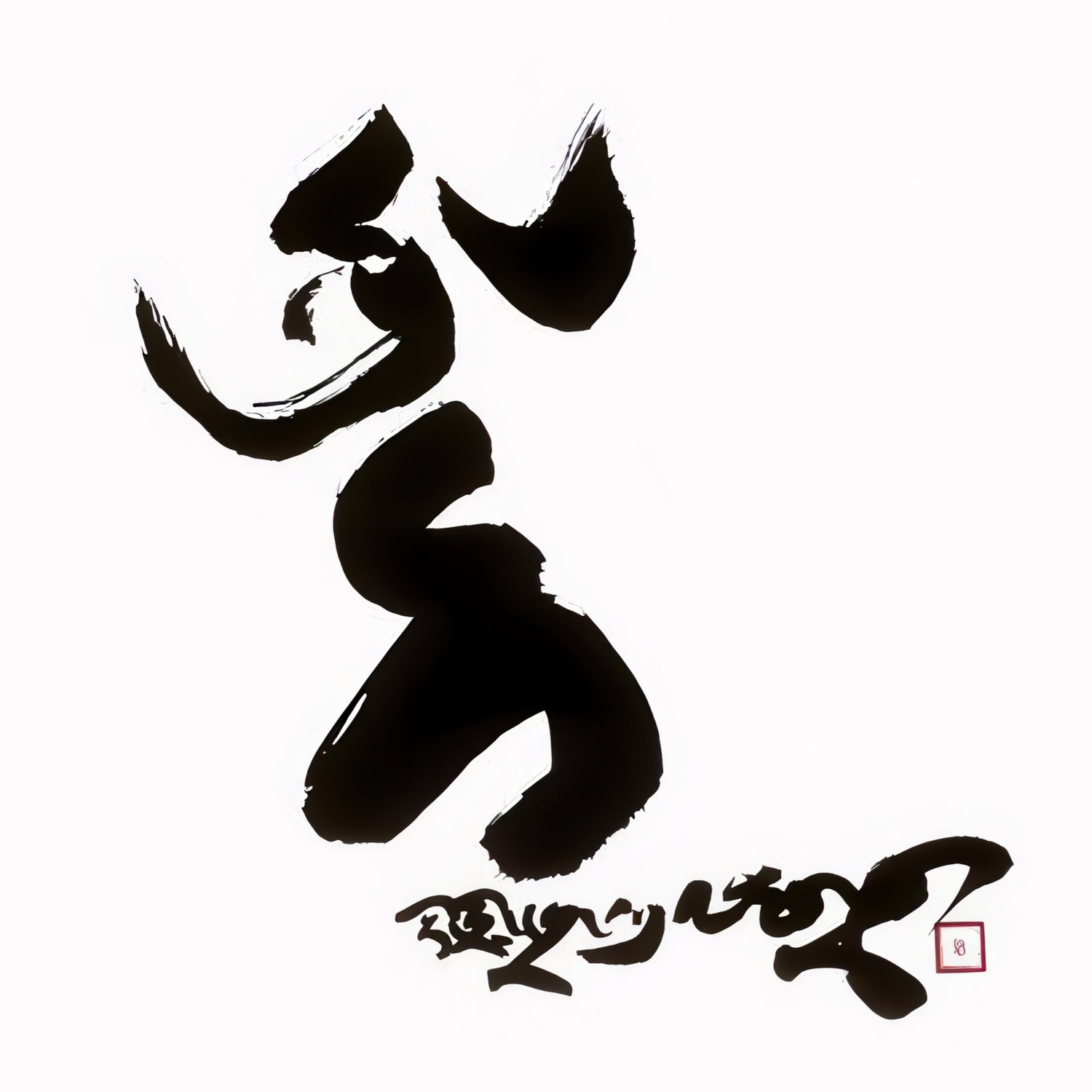
And so there’s what’s called the gradual path, and the sudden path. And the course that Thiago and I have put together has a curriculum that offers students both of these approaches: first we introduce the gradual path, and then the sudden path.
C: Perhaps now might be a good time to speak more about the course?
T: Well, Frank and I have had a long standing mentor-student type of relationship, and what I’ve noticed over the years is that when Frank teaches, sometimes he hits this stride where he's just manifesting the dharma, similar to how you were just describing Bernstein as ‘being music.’ It's been my experience that if you get Frank going in the right key and in the right environment, something very spontaneous and fresh starts to come out.
Of course his books reflect the depth of his knowledge and teaching experience, but what they don’t capture is this more sudden, spontaneous type of energy that comes through when you get Frank going on these topics.
It can happen when a student might frustrate him or ask him the right thing in the right way, and then he launches off into something. And then he goes, and goes, and goes… and then he'll stop. And at some point there's this silence, and everybody's just completely attuned. And he says, “Am I just a raving lunatic? Is anybody getting this?” And everybody’s like, “Uh, yeah!”
It’s a form of spontaneous transmission that’s emerging in the moment, and I had the desire to try and capture that through this course. And because of the relationship we have, I felt I could sort of key him in the right way for that to emerge.
So the course captures the experience of what it’s like when you have someone with Frank's knowledge and background elaborating on these topics in a very natural and improvisatory way.
F: We were both improvising—each time we started, we didn't confer about a chapter before we launched into it. Thiago may have had some ideas he jotted down, but he didn't prep me about that. We just went with it, and let the energy flow.
So it's very fresh, very alive. I like to think that the book is very lively too—but there's something captured in our back-and-forth that's really unrepeatable. We could have done it a few months later and it would have been a completely different group of videos. But they became those videos at that moment, and there's nothing canned about them.
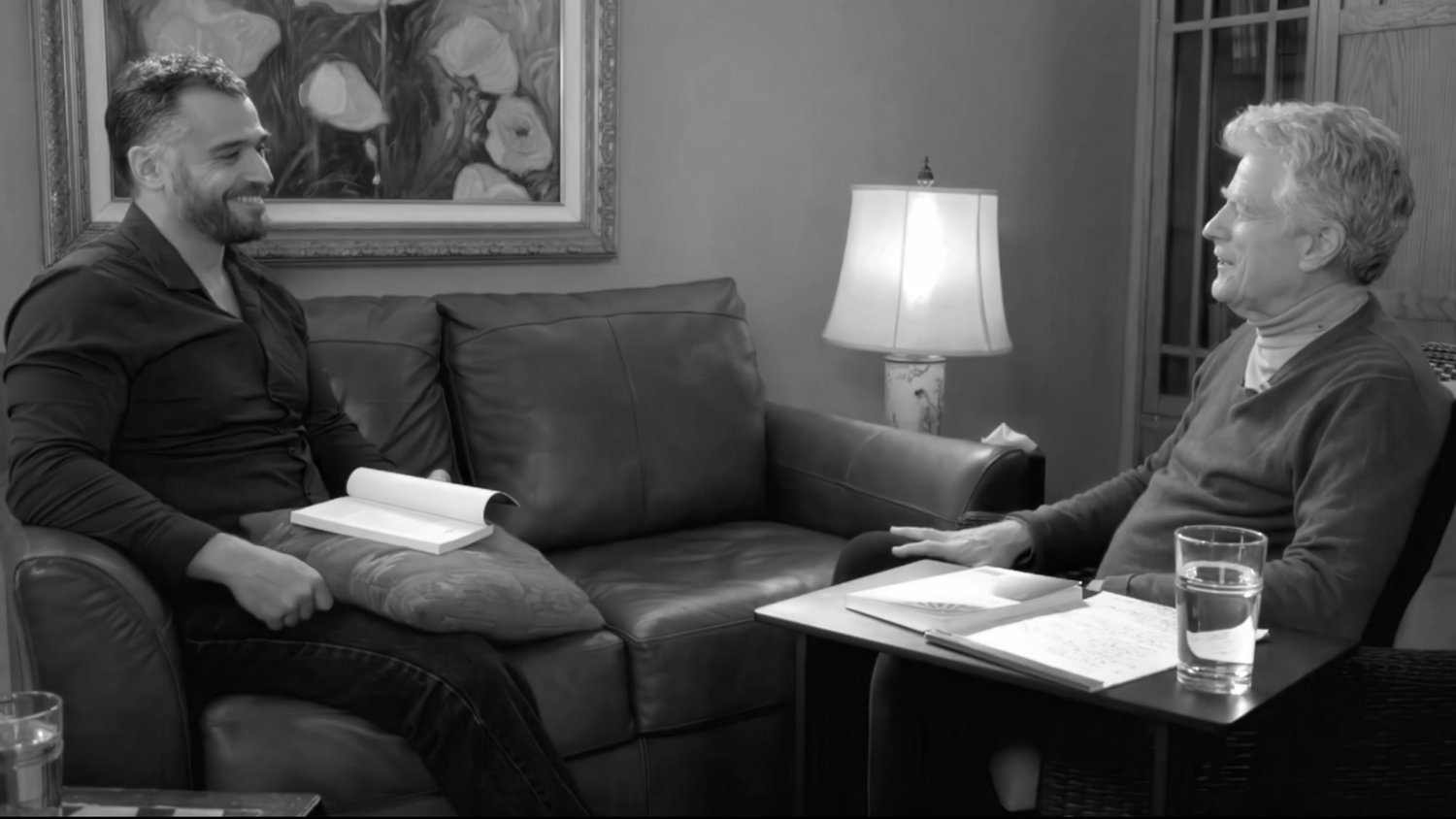
Frank and Thiago in conversation
I’m so happy Thiago even had the vision and then the exertion to actually put it all together.
T: It captures the teaching. And I wanted to keep it for longevity, as a way to preserve the opportunity for people to have access to seeing Frank teach like that.
C: It makes me think of how in those classic Buddhist texts there's always a written verse followed by a commentary and elaboration on that verse—and in this case it’s like having a living, spontaneous transmission of the commentary.
I think it's incredibly important that it’s been captured in a form that others can experience and interact with, because that’s the memory of what my time in your classes was like—having the opportunity to learn how all of these practices and teachings unfold in the context of a living, shared experience.
I’ve wished I could give that experience to the artists I work with, because many of them went to highly competitive conservatories or other institutions, and never had the opportunity when they were say 19 or 20 to go to a college where they could sit down on a cushion and learn to meditate, to ask questions, and gain a deeper psychological understanding of themselves and everything else we’ve been exploring in this conversation.
And so from the artist’s perspective, what we're talking about here is a course that offers the opportunity to learn how to more skillfully ride the energy of the moment —both in music and in life— through these teachings and practices.
F: Yes, and one last aspect of windhorse I would like to mention is: “suddenly free from fixed mind.”
In some ways this is the most quintessential line of everything Trungpa Rinpoche taught. Because he was so completely steeped and accomplished in his practice, he was totally free to improvise all the time.
So improvisation springs from our freedom from fixed mind; which is going beyond the known, beyond the cocoon, beyond the ego. And that freedom can manifest in a performance, in a conversation, in a moment of teaching… It's that magic, that ordinary magic that I think we offer in this course. And I feel we offer it in a completely unique way.
T: I think it's unique partly because of the relationship that we’ve built together. We're both Westerners, and we're also both psychologists; Frank has a background in literature and English, and I have a background in philosophy and psychoanalysis. And it's interesting to see what emerges when all of these different perspectives converge.
F: And because we both share this grounding in Western existential psychology and psychotherapy, it always informs the conversation, and keeps it from becoming ‘dogmatically’ Buddhist.
C: Speaking to that point, I think one of the things I most resonate with in Chögyam Trungpa’s work is his ability to communicate so lucidly and directly to a totally different world than the one he came from. Through somehow downloading and adopting so much of the culture and the language of the West, he transmitted his teaching in such a natural and relatable way.
And while I was reading Frank’s memoir I felt a similar quality, in the sense that I noticed these were the writings of someone who’s sensitive to aesthetics, who’s quoting T.S Elliot and Oscar Wilde, and now we’re talking about Bernstein and existential philosophy...
I feel this all embodies a special kind of transmission that’s in the style and spirit of Trungpa, where we’re working to communicate the dharma through free associations, outside of traditional Buddhist terminology. And this allows the reader to relate to what’s being presented in a way that doesn’t exclude their own experience, their own point of view.
F: I’m not sure if you know this, but right before Trungpa founded Naropa in 1974, he asked Alan Watts to help create it with him. He and Watts were drinking buddies for the first 3 or 4 years that he was here in the United States, and they became very close friends. And you know, Watts had that incredible kind of sophistication and Renaissance man understanding of many different things, and Rinpoche told him, I want you to help me found this school. And then Watts died in November of 1973.
So that never happened, but when Rinpoche founded Naropa, the kind of impetus for it was that there needed to be a place where East can meet West and the sparks can fly. And so Naropa came out of that.
So I was very much at home at Naropa because I knew in that environment, people who had been well trained in many disciplines in the West could find common ground with Buddhism, or at least find ways in which studying the dharma could help them go deeper than using a purely Western approach.
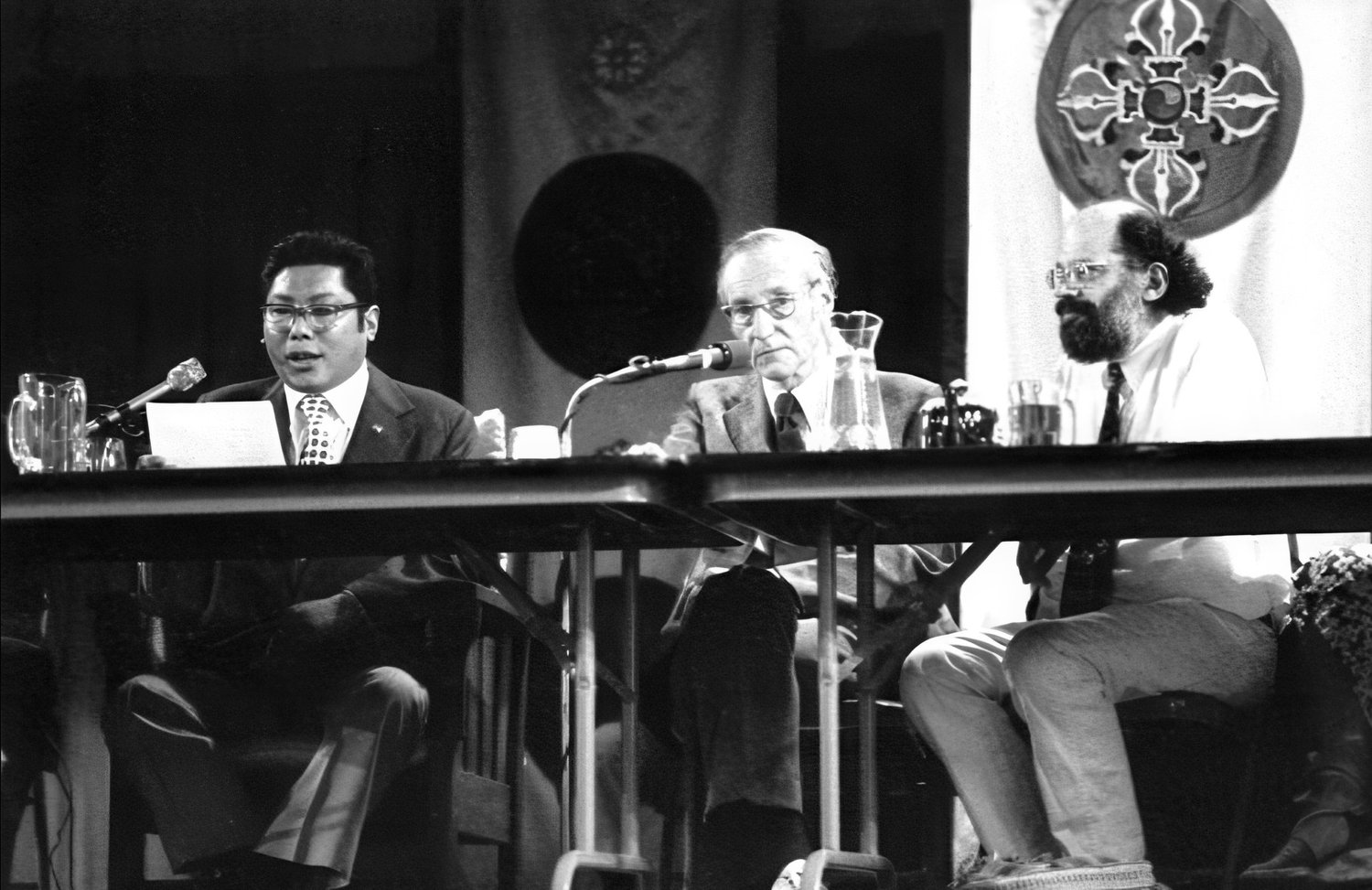
Chögyam Trungpa with writers William s. Burroughs and Alan Ginsberg at Naropa
That environment has always been very creative and very alive, and it still is for both of us. And I think that comes out in the course, particularly in the videos. Wouldn't you agree, Thiago?
T: That's the feedback we’ve been getting from the people who watch it; that they get something different about the dharma from these exchanges. It's not about how good Frank is or I am, or anything like that. It just actually delivers what it was meant to.
F: Another thing I want to add —because it's very important in understanding what it is that students will receive— is that there’s an electronic version of the book that’s paired with the 28 videos, one for each chapter, and that’s basically the structure and the outline of the course.
But for all of this to truly come alive, we need to have real time interaction as well. So we will also provide person-to-person meditation instruction, and there will be opportunities for students to meet on zoom regularly to interact with both of us, and each other. So it will basically be an online class and a meditation practicum, as well as a study of Buddhist psychology.
And this is what really interests me the most, because the book's already written, and the videos are out there—we've been there, we've done it. But to actually be working with people in real time who are inspired, who want to learn what these practices are all about, this creates a whole new dimension of aliveness.
T: All of this wasn't even part of the original plan, but it's been the evolution of it. And it’s an amazing evolution, because it enables Frank to continue to teach.
F: Yes, it will keep me alive! I won't just become more and more mummified as my 80s proceed crawling toward the grave. You know, I want to go out with a certain level of windhorse, and well, I'm not going to get it by watching my old videos!
C: Seriously though, I think one of the advantages of our current technology is that it creates a very wholesome way to transmit these teachings that was simply not possible before.
F: It's endlessly interesting, and I think that Trungpa Rinpoche in a way laid the groundwork for this—he had tremendous foresight about how dharma could survive and thrive in the West, not as religion in the way it did in Tibet, but as psychology, as art.
As I said this was his inspiration with Naropa. And most of the students who come to Naropa come to it either because of some artistic bent, or some interest in the psychological process. And this course could also resonate with those same people—it’s not a religious class, and that's really important for people to know.
C: I think so, because it offers an authentic path of meditation that’s also free from those constraints.
This actually makes me think of an interaction I had with a Tibetan teacher who was giving a talk—I remember I was trying to engage him in a more spontaneous dialogue outside of the Buddhist doctrines and terminologies he was speaking from, but he just wouldn’t really go there. I mean I could see him trying to go there a bit, but then I realized, “Wow, he's just like a classical musician who's been indoctrinated by this whole system and he can't improvise, he can't get out of it.”
It gave me a similar feeling to what Anner Bylsma was talking about with not wanting to exclude the audience—that ultimately this is a false position, a cocoon, because the teacher is not riding the energy of windhorse to meet the uniqueness of that audience, of that moment. He was hiding behind this canon of information and training and sure, it can lead you to a certain place, but it’s not this place—where we can relate in a way that feels like a living performance, a living presence, a living art.
F: Well, Tibetan Buddhism is a religion. And Trungpa Rinpoche took the religion out of it. And he put the existential immediacy into it. And he always said, “This is non-theism. If you try to turn this into a religion, you're completely missing the point.” And his students took him to heart.
So we started with that, because he made it clear right from the beginning.
C: Well, after knowing and watching so many teachers over the years who often fail to step out of their cocoons, or impose their own objectifying impulses on others, it’s nice to speak with people who are authentically connected to the dharma, and are offering their wisdom in a way that benefits others.
F: I just want to say how fresh and delightful it's been to talk to you.
C: The same to you both, I'm really grateful that we were able to have these conversations. The spirit of Dharma Art that Trungpa brought into the world, I feel very close to that spirit in this conversation.
F: Likewise. It’s really been delightful to riff and improvise with you.
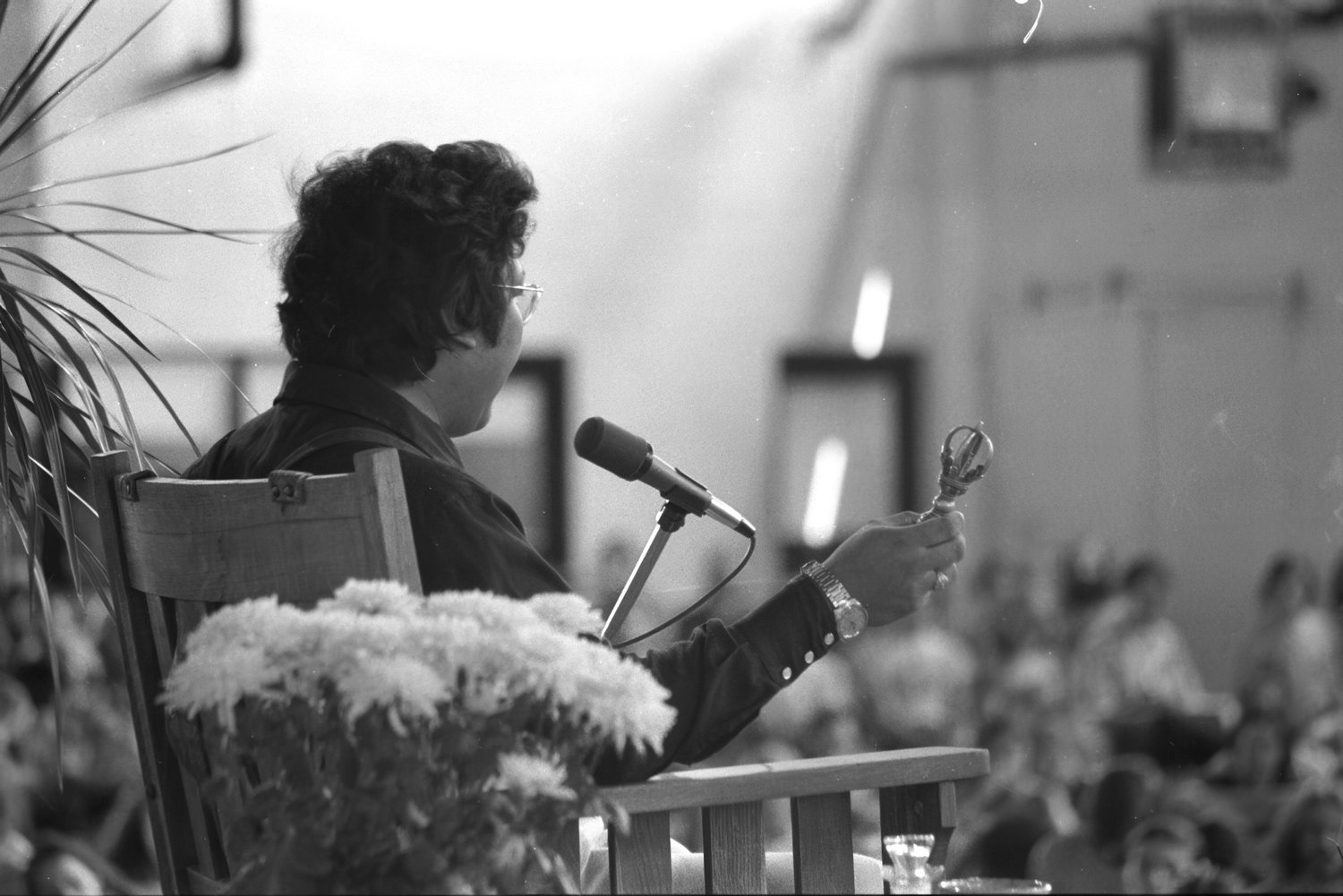
Chögyam Trungpa at Naropa
— Learn more about Frank and Thiago’s masterclass HERE —