Exploring Vibration in Speech
Amidst the vast and mysterious display of phenomena we encounter over the course of our lives, the most fundamental way we learn to ‘make sense' of this infinite gradient of experience is to perceive it in terms of opposites: warm and cool, dark and light, big and small, loud and soft, bitter and sweet… all other distinctions we make rest upon this fundamental sense of polarity.
Polarity in Speech
Take a gentle inhalation, and as you exhale, say the word ‘mama’, and notice how it feels in your mouth. Try it a few times, paying attention to the different physical sensations: mama…mama.. the vibrating /mmm/ in the mouth, the resonating /aahh/ in the throat, the rolling gesture of the lips as they shape the sound,
Now take another inhalation, and say the word ‘papa’. Notice we are using the same vowel as we did before, the open /aahh/. But here we use a different consonant: /p/. Noting this simple change; what feels similar? What feels different?
Many people would say that the first word, mama, feels more inward moving. It feels as if the gesture expresses a sense of gathering, a ‘yin’ quality, similar to the actual feeling of the mother; a nurturing presence the infant is drawn back to, through the desire for nourishment and safety.
Papa, on the other hand, could be said to have the opposite feeling: a sense of moving outward, an external ‘yang’ quality, spoken in a manner that projects, like calling out to a father as they arrive and depart.
Now alternate between the two words... ‘Mama. Papa. Mama. Papa.’ Drawing inward, pushing outward. Your body has known the feeling of these words long before your mind grasped the meaning behind them.
Whatever words feel natural for naming what you just felt — gathering and projecting, inward and outward, drawing in and pushing out, settling and releasing — all of these words are true. Similar to tasting an elegant wine, or smelling a resinous perfume, the reality is first found in the embodied experience itself, followed by whatever words we feel may best describe it.
These polarities appear everywhere in our lives, once we learn to notice them. They show up in music, in poetry, in color, in ritual, in healing modalities, in every art form and every contemplative tradition humans have ever created. And the reason they appear everywhere is that they are deeply embedded within the human experience itself.
Complex Polarities
Now say these two words slowly in succession, voicing each one and noticing how they feel: Moon... Mine… Moon... Mine.
Both begin with the gathering hum of /mmm/ and end with the gathering hum of /nnn/. The consonants are doing the same thing in both words. But what happens between the consonants is completely different.
In moon, the body gathers deeper — the lips round, the tongue retracts, the jaw lowers, the whole word draws inward into the deep /ooo/ vowel. In mean, the body shifts in the middle of the word from the gathering /mmm/ into a projecting vowel — the lips spread, the tongue raises, as the bright /eye/ sound flows outward.
Voice each word slowly several times. Moon... Mine… Moon... Mine. Feel how the gathering consonants stay the same while the vowel changes the entire felt direction of the word. The vowel is deepening the sense of polarity between the words, although the consonant frame holds steady.
This exercise demonstrates something subtle but important: that within a phrase or word, the consonants and vowels can represent different polarities simultaneously. The consonant frame can be entirely gathering (nasals at both ends), while the vowel projects.
Let’s take a moment to explore a similar quality of polarity in another auditory medium, that of music. The following audio sample presents two musical chords that behave in a similar way as the moon and mine example above. Just as moon and mine both have gathering consonants (/m/ and /n/) but differ in their vowel quality, major and minor chords both have the same root (bottom note) and the same fifth (top note), but differ in the middle note that sits between them. The middle note is where the polarity lives. The rest of the chord is held constant.
In the clip you will the major chord first, followed by silence, and then the minor chord. See if you can hear and feel the difference between the two middle notes.
The quality of major third chord opens and lifts. With the minor third, the chord settles and draws inward. This is exactly what you felt with mine and moon. The /m/ and /n/ were doing the same gathering work in both words, just like the top an bottom notes of the chord. The vowel between them was what shifted the felt direction, just like the middle note in the two chords.
To further deepen our perception of this sense of musical polarity, below are two piano pieces written in major and minor keys; their distinct qualities will be heard in a more sophisticated form compared to the chords above, yet will share a similar contrast, unfolding over time.
Does one piece sound darker, introspective, peaceful? Does the other sound brighter, uplifting, outwardly expressive? Notice if you can feel the difference, and what words you would use to describe how they both feel in your body.
Listen to music you already love with these polarities in mind. Notice when the music projects — when chords brighten, when melodies rise, when energy releases outward. Notice when the music gathers — when the chords settle, when the melodies fall, when the energy holds inward. Notice that good songs almost always do both, often moving between them. The bidirectional polarity is doing structural work in almost every piece of music you have ever responded to.
Sound and shape
Now let’s look at one of the most well-documented studies of language and visual perception. In 1929 the psychologist Wolfgang Köhler showed people two shapes — one rounded and curvy, one sharp and angular — and asked them to match each shape with one of two nonsense words. The experiment has been repeated many times since, in many languages and cultures. The results are remarkably consistent. The great majority of people — across cultures, across languages, even young children before they have any cultural context for these specific shapes or words — match the same word with the same shape. The two words most commonly used in modern versions of the experiment are bouba and kiki. Look at the shapes below. Without thinking about it too much, ask yourself which one is bouba and which one is kiki.
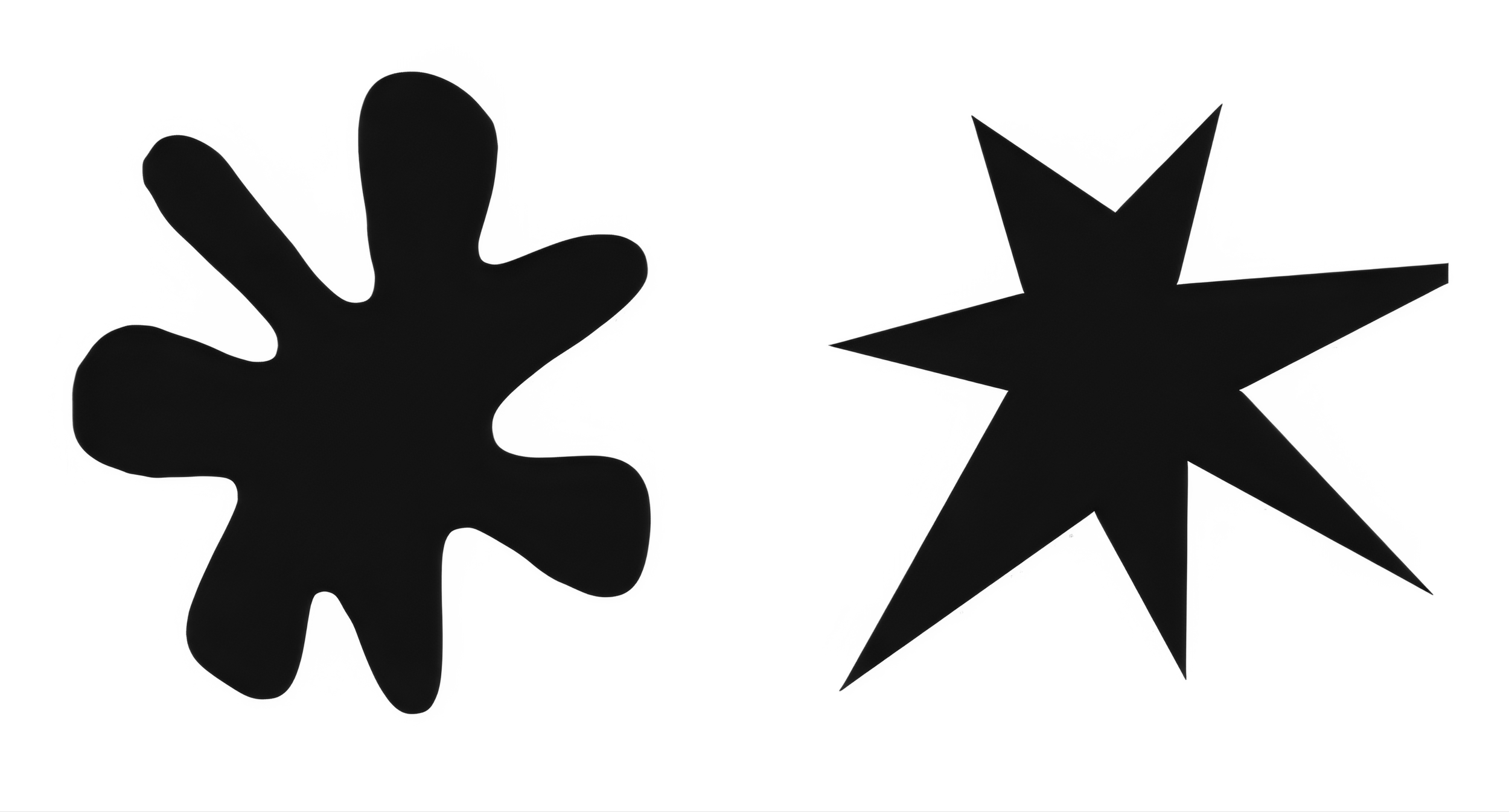
To most people, the rounded shape on the left feels like bouba, and the sharp shape on the right feels like kiki. The matching is so consistent that it seems to bypass interpretation entirely — the body simply knows which name belongs with which shape. What is interesting is to notice what your body is actually doing when it is making the sounds for each shape.
Notice first that bouba and kiki are both projecting outward at the consonant level. Both begin with plosive releases — the /b/ at the lips for bouba, the /k/ at the back of the throat for kiki. Both project breath outward in their initial articulation. So the matching cannot be explained by the basic gathering-versus-projecting distinction you felt earlier with mama and papa. Both bouba and kiki are on the projecting side of that fundamental polarity.
What’s happening here is a finer textural discrimination. Within projecting articulation, the body distinguishes soft rounded projection from sharp edged projection. Bouba is soft rounded projection — the gentle /b/ rounding outward through the lips, with dark held vowels. Kiki is a sharp edged projection — the forceful /k/ bursting outward at the back of the throat, with the bright high front /i/ vowel. The shapes show the same differentiation visually. The rounded blob is projecting in the sense that it occupies space outward from a center, but its texture is soft, rounded, organic. The angular star is projecting in the same outward sense, but its texture is sharp, pointed, edged.
When the body matches bouba to the rounded shape and kiki to the angular shape, it is recognizing a correspondence of polarity at this finer textural level — soft projection matches soft projection, sharp projection matches sharp projection. The body produces and recognizes a vast gradation of polarities across ever-finer textural distinctions, and these finer distinctions can be found across all sensory mediums and modalities. The bouba/kiki matching is simply one instance of what the body is doing all the time — making textural recognitions that connect articulation, vision, and every other domain of perception.
You can clearly sense these distinctions directly in the feeling of your own articulation. Not all projecting feels the same. Not all gathering feels the same. The point is not to learn a new chart of correlations, such as ‘this vowel relates to color,’ or to memorize categories. The point is to notice what your body is actually feeling — the same way a wine taster, after years of attention, can distinguish many qualities within what an unexperienced taster might call simply red wine. There are infinitely many subtle textural differences; we are only pointing at a few, as a way of inviting your attention into the richer landscape your body is always already traversing.
These textural variations come from where in your mouth the articulation happens and how your breath is shaped. The four corners of the mouth — front and back, high and low — give natural orientation points for noticing where different textures arise. But again, you don't need to memorize anything. You only need to notice that within each direction of the polarity, the body produces a rich landscape of felt qualities.
Try several different projecting sounds and feel the differences. Make a sharp ka! ka! ka! at the back of your throat — notice how edged and cutting it feels, how the energy bursts outward with sharp force, like the kiki shape made audible. Then try ba! ba! ba! at your lips — still projecting, but rounder, softer, more spacious, closer to the bouba quality. Then try wo! wo! wo! — projecting through rounded lips, with a lifting quality. All three project. But each has its own texture. The sharpness of the ka, the rounded fullness of the ba, the rising quality of the wo. Your body knows the difference.
Now try several gathering sounds. Hum mmmmm at the lips again — soft, settling, drawing inward gently. Then try a sustained ll, with the tongue tip against the alveolar ridge — gathering, but with a more flowing quality. Then try a held grrr or rolled r — still gathering in the sense that the energy is held and contained, but with density, texture, even roughness. All three gather. But each has its own texture. The softness of the m, the flowing quality of the l, the dense roughness of the r. Your body knows these differences too.
Try sustained vowels. Sing a long aaaaa as in father — open mouth, dropped jaw. Then sing iiiii as in see — spread lips, raised tongue. Then ooooo as in moon — rounded lips. Each vowel resonates in a different part of your body. Some feel grounded and warm, some feel bright and forward, some feel deep and concentrated. The vowels don't just sound different. They feel different. Notice the felt landscape. This is what poetry has always worked with — not just what the words mean, but where in the body the sounds resonate.
Notice the same thing in speech, in the rhythms music, or simply a good conversation. Some moments project — sharp consonants, bright vowels, rising pitch. Some moments gather — soft consonants, dark vowels, falling pitch. Both are necessary. Speech that only projects becomes overwhelming. Speech that only gathers becomes withdrawn. A balanced expression of polarity always moves through both.
Poetry as Vibrational Attunement
A poem is a small structured arrangement of phonemes that, when read aloud, produces specific felt qualities in the body of the reader. Skilled poets across all cultures have always worked with these felt qualities, choosing words not just for what they mean but for what they do in the body of anyone who voices them. Reading a poem aloud with attention to the somatic textures of its sounds is a practice of the foundation in its most concentrated form.
Three short examples from English-language poetry, with somatic guidance for each, can illustrate what to notice. None of these examples requires special training to appreciate. The poems do their work directly in the body of anyone who reads them aloud with attention.
A Gathering Poem
From William Wordsworth's "A slumber did my spirit seal":
A slumber did my spirit seal;
I had no human fears:
She seemed a thing that could not feel
The touch of earthly years.
Read these four lines aloud, slowly, two or three times. Notice how few sharp consonants there are. The /s/ sounds are soft and flowing rather than cutting. The /m/ and /n/ hum at the lips and behind the teeth. The /l/ flows from the tongue tip. The vowels are held and rounded — slumber, human, could, touch, earthly. There are almost no plosive bursts at all. Even the /t/ in touch and the /ch/ in earthly are buried among soft fricatives and nasals, gentled by what surrounds them. The whole stanza settles. Your mouth has to slow down, your breath has to soften, your body cannot help but quiet itself to produce these phonemes. The poem describes a kind of stilling, a deep inward surrender, and what you feel reading it is the same stilling the poem describes. The somatic experience of voicing the lines is, again, the felt quality of the lines.
A Projecting Poem
From Gerard Manley Hopkins' "Pied Beauty":
Glory be to God for dappled things—
For skies of couple-colour as a brinded cow;
For rose-moles all in stipple upon trout that swim;
Fresh-firecoal chestnut-falls; finches' wings...
Read these lines aloud, with energy. Notice how different the somatic experience is from the Keats. The projecting consonants are everywhere — the /g/ of glory and God, the /d/ of dappled and brinded, the /c/ and /k/ of couple-colour and brinded cow and chestnut, the /t/ of stipple and trout and chestnut, the /f/ of fresh-firecoal and finches. The vowels are bright and varied — short /i/ sounds, sharp /a/ sounds, the staccato rhythm of stippled and dappled. Notice that the lines move quickly. Your mouth has to work hard, projecting consonant after consonant, releasing breath in short sharp bursts. The poem evokes exuberance, praise, energetic celebration of variousness, and it does this through what your body does when you produce these sounds. The felt quality is not separate from the articulation. It is the articulation, felt from inside.
A Poem Moving Between
From Robert Frost's "Stopping by Woods on a Snowy Evening":
The woods are lovely, dark and deep,
But I have promises to keep,
And miles to go before I sleep,
And miles to go before I sleep.
Read these four lines aloud, slowly. Notice that the first line gathers — the deep dark double-d of dark and deep, the soft /l/ of lovely, the long /ooo/ of woods, the open vowel landscape that holds the reader in stillness. Then the second line shifts. The /b/ and /p/ of but and promises and keep introduce projecting consonants, the rhythm becomes more decisive, the felt sense moves from the gathered woods toward the obligations of life. The third line continues the projecting motion — miles, go, before — but with the held vowels of go and sleep beginning to gather again. And then the famous repetition of the fourth line, identical to the third except in the silence that follows: the same sounds, but now we have heard them twice, and the gathering of going to sleep has grown deeper. Within four short lines, the poem has moved through gathering to projecting back to gathering, and the somatic experience of reading them is the experience of that movement.
These three poems are samples of what evocative poetry has always done with polarity. Skilled poets in every language and every tradition draw from the felt qualities of phonemes to deeper their verses in a way that semantic content alone cannot do. Reading poems aloud with attention to what the body experiences as it produces the sounds is one of the most direct ways to cultivate our sensitivity to polarity. The poem does not need to be well known or complex; any poem you find yourself drawn to can be approached this way. The question to ask while reading aloud is simple: what does my body do when I voice these sounds, and what felt qualities am I experiencing?
The Body and the Landscape
Notice something the three poems above already point at. Each one is, among other things, an evocation of an environment — Keats' autumn, Hopkins' varied creation, Frost's winter woods. And the felt qualities the poems produce in the body through their phonemes are continuous with the felt qualities those environments themselves carry. This is not coincidence. The body and the environment are not as separate as we sometimes see them.
A landscape carries its own felt quality, and the body responds to it the way it responds to articulation. Soft rolling hills under low gray clouds, the slow movement of a brook through grass — the body recognizes the gathering quality of this environment, the way it slows breathing and softens attention. Storm-tossed seas with jagged cliffs and cracking thunder — the body recognizes the projecting quality, the way it sharpens the senses, alerts the muscles, brightens awareness. A still desert at dawn or an empty winter field carries something else again, that quality of timeless presence near the gathering edge of the gradient. The body knows all of these without instruction, the way it knows which shape is bouba and which is kiki.
This is why poetry that evokes natural environments works on the body. The language uses the same textural qualities the environments themselves carry. When Keats writes of mellow fruitfulness he is not just describing autumn but reproducing in your articulation the very texture of a soft autumn afternoon. When Frost writes of woods that are dark and deep he is bringing the gathered stillness of those woods into your mouth. The poet's craft includes the recognition that the body and the environment communicate through the shared textural family the language brings into the reader's articulation.
There is no real boundary between the felt qualities of articulation and the felt qualities of the environments your body has lived in. They are aspects of one continuous textural landscape that all bodies inhabit. The hum of mmmmm and the soft rolling hill, the sharp pa! and the cracking thunder, are not different things to which we apply similar adjectives. They are different expressions of the same bidirectional polarity, recognized by the body wherever it appears. This is part of why being in certain landscapes feels like a kind of homecoming, and why poetry that evokes those landscapes can do similar work without your having to leave the room.
This kind of reading has a side effect worth naming. Once you have read poetry this way for a while, ordinary speech becomes audible in the same register. You will start hearing the somatic textures of how people speak — when their voices are gathering, when they are projecting, when they are stuck in one register or moving healthily between them. You will also notice the textural qualities of the spaces you walk through, the rooms you enter, the weather you stand in. This is not a critical posture toward speech or environments but an attentive one. It is hearing and feeling the foundation operating in everything around you.
Waves
Another way to work more deeply with the vibrational properties of language is to work with four basic wave forms, each varying in shape and texture as they oscillate through time.
Sine Wave
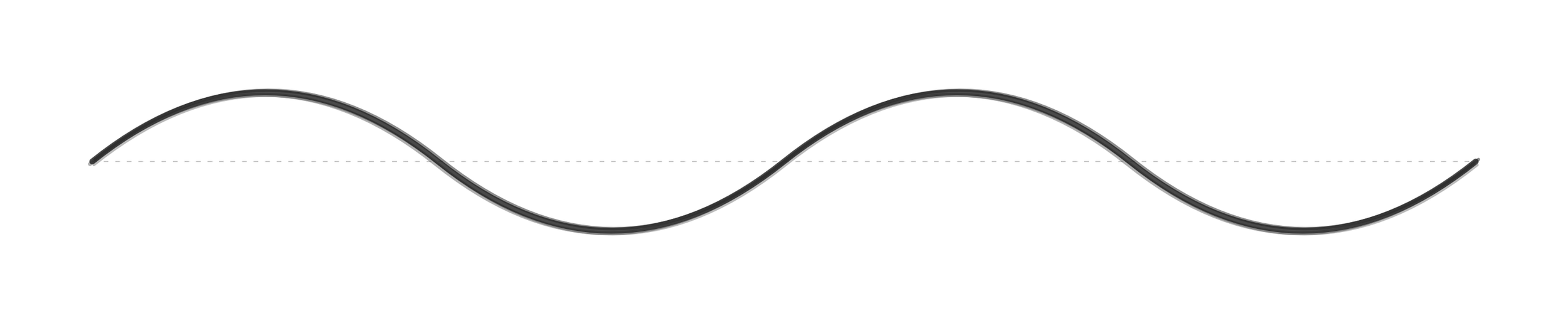
— the sine, smooth and continuous, rising and falling without edges
The sine is felt in the body as a continuous resonance — the sustained hum that vibrates the chest, the long breath that does not pause at its top or bottom, the drone that holds steady through changes. In the world, it is the swell of a long wave, the wind moving through a stand of pines, the held tone of distant traffic.
In the mouth, the sine has both a spectral and a gestural anchor. The vowel ahh sustained on a single long breath carries the spectral sine: open, balanced, the closest a vowel gets to a single fundamental. The consonants m, n, l, w carry the gestural sine: continuous, flowing, no edge. Try them together — mmmmmm — ahhhhhhh, then nnnnnn — ahhhhhhh — the consonants flowing into and out of the sustained vowel, nothing cut. The breath flows through, and the body is sounded continuously. Notice how this feels — what slows, what softens, what eases in the chest and shoulders.
Triangle Wave
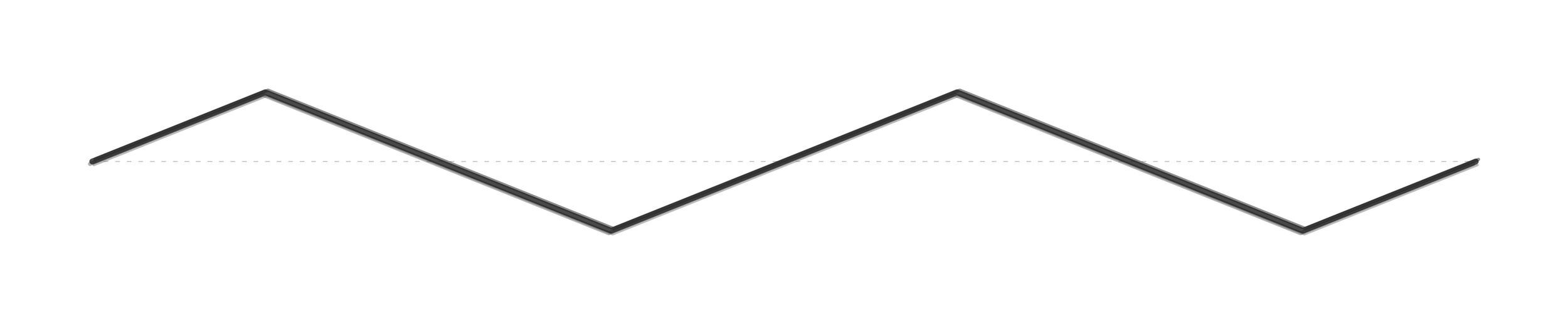
— the triangle, a balanced ascent and descent, moving evenly between two limits
The triangle is felt in the body as a balanced oscillation — the swing of an arm walking, the steady alternation of breath in and breath out, the pendulum of attention moving between two poles. In the world, it is the cicada's song, the sway of a hung lamp, the alternation of light and shadow under a moving canopy.
In the mouth, the triangle has both anchors. The diphthong aye, sounded slowly enough to feel the vowel shape change from open to bright, carries the spectral triangle: a tone that literally moves between two positions. Patterns of alternation between paired sounds carry the gestural triangle: back-and-forth in even rhythm. Try them together — eye — eye — eye — eye, the diphthong oscillating again and again, both the vowel-movement and the rhythmic alternation producing the triangle in two registers. Notice how this settles attention into a steady cadence.
Square Wave
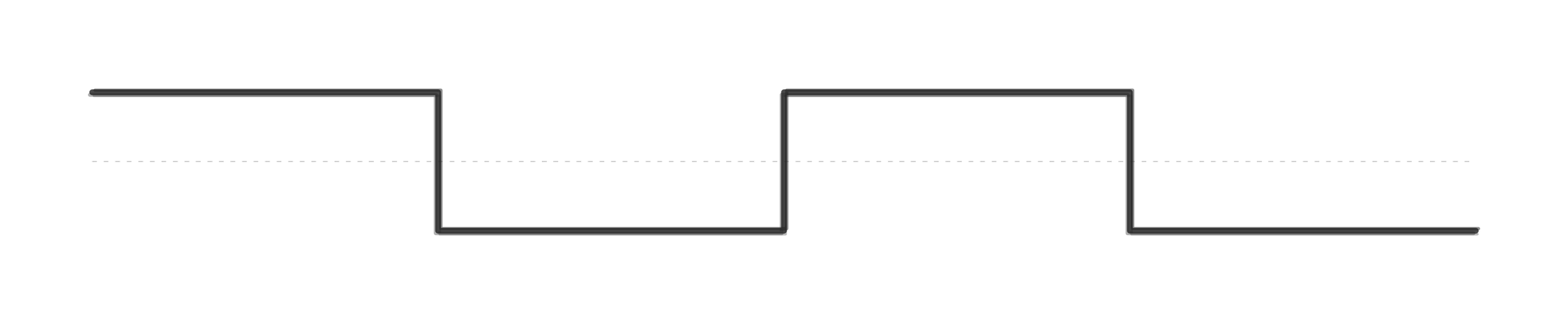
— the square, abrupt and steady, on and off, a clear line crossed and held
The square is felt in the body as a planted pulse — the heel striking the ground, the hand on the table, the heartbeat sensed in stillness. In the world, it is the knock at a door, the drumbeat in music, the regular footfall of someone walking through an empty hall.
In the mouth, the square has both anchors. The vowel eee, with the lips slightly drawn back, carries the spectral square: bright, edged, with strong high-formant content. The hard stops k, t, p, b carry the gestural square: abrupt cuts, discrete events. Try them together — kee — kee — kee, the bright vowel cut by the hard consonant, both registers sounding at once. Each is a small, sharp, complete event. Notice how this differs from the sine — what becomes alert, what sharpens, where attention gathers.
Sawtooth Wave
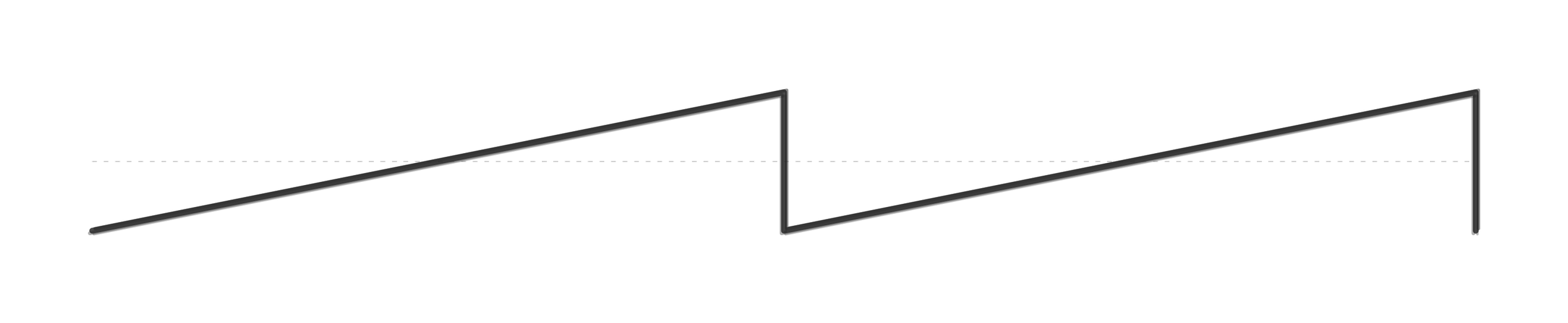
— the sawtooth, a slow build that breaks at its peak and begins again
A rising sawtooth wave showing two cycles, with each cycle gradually building to a peak before dropping sharply, drawn in layered charcoal-pencil strokes.
The sawtooth is felt in the body as a rising tension that breaks — the in-breath that catches, the long stretch released suddenly, the climb of attention through an unfolding question. In the world, it is the siren that rises and drops, the wave climbing toward its crest, the spark of a fire flaring and collapsing.
These are not categories the world arrives in. The world arrives in a rich tangle of all four, often at once, and any single moment will hold several of these qualities simultaneously. What we are doing is not classifying experience but learning to feel the qualities — to notice when something has more of the slow continuity of the sine, when something has the planted abruptness of the square, when something climbs and breaks like the sawtooth, when something oscillates evenly like the triangle.
A reminder before continuing: these qualities are always layered. The cicada's song has a triangle quality at one timescale and a sawtooth quality at another. The breath has a sine quality in its smoothness and a triangle quality in its alternation. The practice is to feel the layering, not to choose between waves.
Vowels and Consonants
Speech is one of the densest sites where these waves meet, because every sound we make holds both a spatial quality — the spectral character of the cavity that produces it — and a temporal quality — how it begins, sustains, and ends in time. Vowels and consonants are doing different things, and the four waves show up in each of them differently.
Vowels carry the spatial-spectral quality. Each vowel has a different harmonic profile, audible when you sustain it: the ahh of father is balanced and full, closest to the sine; the eee of see is bright and edged, closest to the square; the aye of day is a diphthong moving between two positions, closest to the triangle; the err of her is rhotic with built-in friction, closest to the sawtooth. Other vowels fall somewhere among these as nearer or further variations.
Consonants carry the temporal-gestural quality. Their character lies in their shape in time: nasals and liquids (m, n, l, w) flow continuously without edge, gesturally sine; hard stops (k, t, p, b) cut the breath cleanly, gesturally square; fricatives and trills (s, sh, f, rolled r) build friction that gathers and releases, gesturally sawtooth; alternating patterns of paired sounds, back-and-forth in even rhythm, are gesturally triangle.
A line of speech therefore carries the four waves in two registers at once. When the vowels and consonants reinforce the same wave, the line takes on a particularly clean character. When they cross, the line carries a layered texture — one wave in the spectrum, another in the gesture, both at once. With time, the noticing becomes faster and more precise.
A Simple Beginning
The practice opens most easily with the body alone, in quiet, before being brought to anything else.
Sit comfortably and let the breath settle. Begin by sounding the four vowels that anchor the four waves. Sound a long ahhhhhhhhh — the open vowel of sine, full and balanced. Hold it for as long as the breath lasts, then let it go. Then eeeeeeeeee — the bright vowel of square, edged and forward. Then errrrrrrrrr — the rhotic vowel of sawtooth, with its built-in friction. Then a slow ahhhhyyyyyy — the diphthong of triangle, moving between two limits.
Then explore the consonants that carry each wave gesturally. Mmmmmm — ahhhhhhh — the sine in both registers at once, vowel and consonant flowing without edge. Kee — kee — kee — the square cut clean. Sssssss — errrrrrr — the sawtooth gathering and releasing. Eye — eye — eye — the triangle oscillating between its two limits.
Notice that each vowel is a different place in the body, and each combination is a different felt shape moving through time. There is no right way for these places to feel. The work is only to feel them.
When this has become familiar, attend to the waves of your own speech as you move through the day — when the words you use are mostly soft and flowing, when they are abrupt and percussive, when they are climbing toward a release, when they are oscillating evenly. There is no right or wrong wave; the practice is only to notice what is already there.
Then, gradually, listen for the same qualities in the world around you. The drone of bees in a summer meadow is a sine. The shutting of a door is a square. The breaking of a wave on stone is a sawtooth. The alternating calls of frogs at nightfall are a triangle. Most moments will hold several at once. The practice deepens through feeling the layering.
Four Short Poems
The four pieces that follow lean into each wave across all three of its dimensions — the resonance of the vowels, the articulation of the consonants, the rhythm of the meter. They are not pure (English does not allow that), but each pushes toward its wave with deliberate density. They are best read aloud, slowly. After each, sit for a moment and notice what the body has done.
Sine — The Long Resonance
Slow as a held tone wandering the room, the moaning of the wind among the pines, the murmuring of streams in mossy stones, the long sustained becoming of the moon.
Now nothing more than what is being heard, the morning air remembering itself, the room remaining where the room remained, the warm low humming under all the world.
Even the silence hums beneath the hour, the slow remembering of the morning's song. What was the moan among the leaves before becomes the lull within the listening.
Read aloud slowly. Notice how the breath sustains without break, how the consonants flow into each other rather than cutting. The mouth stays soft; the jaw releases. Like a singing bowl, rung once, ringing through. Feel where the resonance lives — chest, back of the throat, the soft palate. Sine, sustained, has no need of cycles; it is felt as one held tone.
Square — The Edge of the Field
Stone fence. Sharp shadow. Six o'clock. The sun stops at the threshold of the wheat. The air is split: this side is shadow, that side, light.
Stop. Look. Stiff stalks, stiff ranks. Each thing distinct. Each shape a fact. Salt frost. Steel sky. Strict edge of birch.
The flock cuts past, then settles. Sharp. Then still. Each blackbird sits exactly where it sits. Stop. Look. The fence ends. Field ends.
Sky and stubble. Stone and ice. This. Not that. The shadow strikes the edge, strict at the line where shadow strikes.
Read aloud and notice the breath sharpen. Each phrase is its own discrete event, the silences between them as essential as the words. The jaw firms; the articulation deliberates. Feel where the body becomes alert — front of the mouth, the eyes, the readiness in the shoulders. Each line is a small categorical act of attention, complete in itself.
Sawtooth — The Storm Building
The pressure builds. The pressure builds. The pressure builds and breaks: the gust, the gust, the great gust cracking the dry beech-branches, the quick crack, the kicked-up dust, the dropped pail.
Up the steep track, the broken cart, the crow's quick startled cry, the sharp split-second pause before the panic of the pheasants up, explosive, into the dropping pressure-drop.
The dog drops to his haunches. Hold and break. Hold and break. The black sky bears down, builds, breaks. The boy drops the bucket, runs, the ducks scatter, the gust cracks the beech-branch, breaks.
Read aloud and feel what happens through the body. Tension gathers, releases, gathers again. The breath quickens. Each cycle of build-and-break completes, then begins again. Notice when the release lands — what changes? Where does the body rest, however briefly, before the next gathering begins?
Triangle — The Slow Gathering
Light begins arriving in the trees, gathering along the lower branches, on the lichen and the older leaves remembering yesterday, slowly entering the longer afternoon.
What was held away returns. The air, warming, brings the rolling murmur of the river nearer, brings the wallowing of cattle near the willows, all the wandering of evening filling, more and more, the gradual valley.
The light grows nearer to its leaving, lower, warmer in the wandering air, the willows rolling all that long arrival into rest.
Read aloud and feel the long arc. The breath gradually deepens through the buildup, gradually relaxes through the descent. Nothing is hurried; nothing is broken. Like a pendulum at slow tempo. Where the sine poem holds and resonates, the triangle accumulates and integrates — one large completed cycle staged across the whole reading.
Two Scenes
In the world as it actually arrives, the qualities mingle. The two pieces below are written as composite environments. The rural scene leans toward sine as continuous ground with triangle arching above; the urban scene toward square as continuous ground with sawtooth arching above. The two are structural inverses. Read each aloud and notice how it lands in the body.
Walking Home Through the Long Field
The lowering sun is melting in the willows, slow on the slow leaves, slow on the slow water, warming the lowing of the homing cattle, warming the meadow in its evening yellow.
The wind has long since fallen. Now the cooling air is moving over the lengthening barley, murmuring among the long roan-coloured grasses, gathering the gathering of the long evening.
The river softens to its evening sounding, the willows lean and listen, leaning lower. The wandering owl is waking in the larches. The lowing of the herd is heard, and lowering.
Now nothing more remains than what is heard: the long warm lowing, lengthening and slowing, the murmur of the meadow under evening, the long arrival of the unhurrying night.
Read aloud slowly. Notice how the breath slows and deepens across the four stanzas. The body settles. By the closing line you may find yourself breathing the long slow rhythm the nervous system produces under genuinely restorative input. This is what a regulated environment feels like in the body.
Crosstown at Six
Stop. Walk. Stop. The crosswalk clicks. Stop. Walk. The taxi cuts the corner. Brake-squeal, horn-blast. The light flicks red. Stop. The crosswalk clicks. Walk. Stop. The light flicks green. Step off the curb. Walk.
Office doors crack open. Quick steps. Quick steps. The escalator clatters. Up. Down. Up. Down. The cab door slams. Bus brakes shriek. Stop. Walk. Stop. Construction breaks the pavement. Crack. Crack. Stop. Crack.
A truck backs up: beep, beep, beep. The screen flicks. The text pings. The sign blinks: Don't Walk. Don't Walk. Don't Walk. Walk. The crosstown stalls. Stop. Stop. Stop. The light flicks red, flicks green. The horns crack back.
The pressure ticks up. Ticks up. Ticks up. Ticks up. The deadline at the back of the head is ticking. A siren rises. Builds. Builds. Builds. Builds. Builds. Bursts past. The Doppler-down. The crosswalk clicks.
The crowd cracks open. The crosstown traffic stops. Stop. Walk. The shadow strikes the edge. Stop. Walk. The pressure breaks: the cab door slams. The crosswalk clicks. Don't Walk. The light flicks red. Stop. Stop.
Read aloud and notice what happens. The breath sharpens. The shoulders draw up. Attention narrows and scans for what comes next. The siren builds and never quite resolves; the square ground reasserts itself before the body has registered release. This is what an unrelieved environment feels like, and what most contemporary lives ask the nervous system to live within.
Dose and Completion
What we have read is more than a stylistic difference. Each wave does something to the nervous system, and the difference between an environment dominated by sine and triangle and one dominated by square and sawtooth is a difference in what the body is being asked to do.
The sine, sustained, settles the breath and slows the pulse; chant traditions across many cultures have used this effect for centuries. The triangle, in even alternation, supports rhythmic regulation; walking, breathing in measured pace, are forms the body finds restorative. The square, when it lands clean and resolves into silence, simply marks an event — the hand on the table, the footstep on the stair. The sawtooth, when its build completes its release, discharges tension — the wave breaking on the shore, the breath drawn in and let out.
The point is not that some waves are good and others bad. Each has its appropriate dose, its appropriate context, and its appropriate completion. A square that repeats relentlessly without rest overwhelms. A sawtooth that builds without completing — interrupted before its peak, or beginning again before the previous release has registered — leaves the body holding tension that has nowhere to go.
A nervous system bathed in unbroken sawtooth — the texture, increasingly, of contemporary urban life — is a nervous system that does not get to finish its cycles. The accumulated incompletion is one of the felt textures of chronic activation, even when no specific cause can be named. Cortisol stays elevated, sleep degrades, muscle tension becomes structural rather than situational. The body, gradually, comes to inhabit a lower-grade version of activation as its new normal.
The practice of feeling these waves in our environment is therefore, slowly, also a practice of feeling our own state. What is being received? What is the body holding? What was begun and not allowed to complete? These questions cannot be answered in the abstract. They can only be answered in the body, in the moment, with attention.
The Two Layers
A final note on what the practice is doing.
There are two layers at work in any line of speech or poetry, and they are always both present. The first is the vibrational layer — the actual shape of the sound moving through time, the resonances and rhythms the body reads before any meaning arrives. The second is the semantic layer — what the words mean, what they refer to.
Most contemporary listening, trained by a culture that privileges the semantic, hears almost only the second. The first is felt, but not noticed; it does its work below the threshold of attention.
This practice is a slow turning of attention toward the first, not in order to dismiss the second, but in order to feel how the two relate. When they align — when the shape of the sound is doing the same work as the meaning of the words — there is a particular felt quality of integration, of resonance, of rightness. When they diverge, there is a felt sense of dissonance or hollowness, often unnoticed but cumulatively significant.
The practice is, finally, a way of being more present to what is already happening. The body is already listening this way. The work is to come into the room where the listening is happening, and to sit with it long enough to hear it for ourselves.
A Closing Note on Completion
A final dimension of this practice is worth naming, particularly for those who make things — composers, writers, designers, builders, anyone whose work enters the world and shapes the perception of others.
In the natural world, every cycle completes. The wave breaks on the shore and recedes. The breath drawn in is released. The day rises and falls; the season turns; the body grows and ripens and decays and returns to the soil that grew it. Even what looks like accumulation — the slow building of coral, the slow deepening of a forest's loam — is cycles operating at scales longer than a single life. Nothing in nature only builds. Nothing only releases. Every arising is followed by a remaining, and every remaining by a passing; the three movements are inseparable, and the health of any natural system depends on all three being allowed to complete.
When cycles are interrupted, the consequences accumulate. In the natural world this is what we call pollution. In the nervous system, chronic activation. In the cultural world it has its own version: work that activates without resolving, attention captured but not released, sensation produced but never integrated. The pattern repeats at every scale.
There are good reasons, sometimes, to leave a cycle unresolved. A piece may need to end on a held tension because the tension is the point — the unmet question, the unhealed wound, the unfinished business the work is asking the listener to carry. A building may need to refuse easy resolution because the situation it stands in cannot honestly be resolved. The practice is not a rule against incompletion. It is an awakening to what incompletion does.
What changes, when this perception ripens, is that the choice becomes conscious. The artist who has felt, in their own body, the difference between a sawtooth that completes and one that does not — who has walked from a long meadow into a midtown street and felt the cost in their own nervous system — now knows what such a choice carries. Not just in the work itself, but in the bodies of those who receive it; in the rooms and buildings the work helps to shape; in the cultural air everyone is breathing; and finally in relation to the larger cycles of nature, of which all of these are small instances.
This perception is the practical form of what the great traditions have meant by harmony — not a doctrine about how things should sound, but a felt sense of what they are doing. The practice this guide describes is one path into that sense. What is made from such a sense, across many practitioners over many years, gradually replenishes a cultural commons that no single one of us could replenish alone. Our part is only to take up the task while it is ours to do.