

II: Ritual - Invoking Magic
The act of music-making is an intergenerational ritual that predates recorded history and written language.
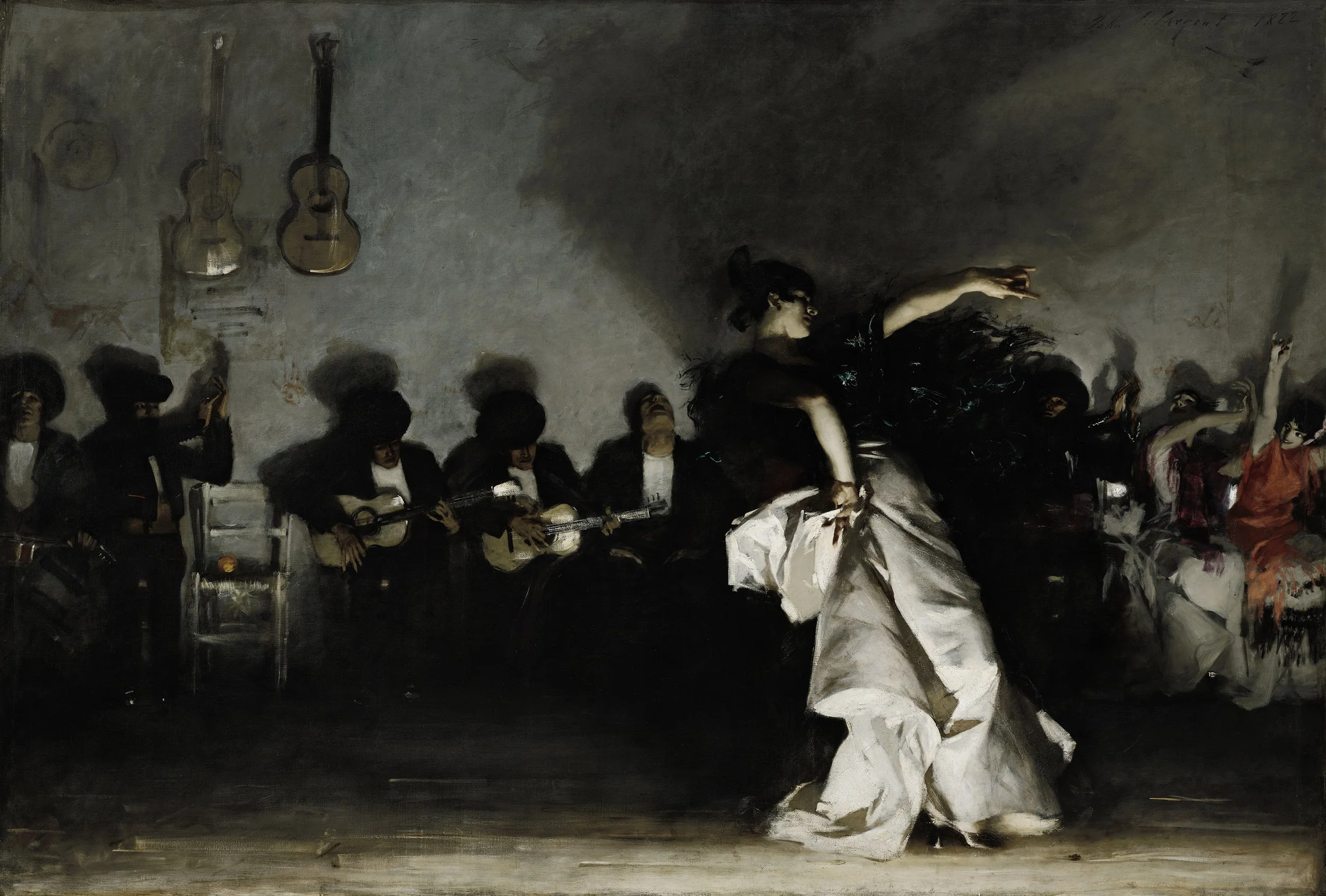
El Jaleo.—John Singer Sargent
Beyond technical proficiency lies the "magic" of music—the ability to transform silent symbols into a vibrational field that evokes deep human emotion. This course explores the musician’s role as a "magician" and "steward" of an ancient technology that predates language itself. Students will learn to embrace the sacred responsibility of transmitting culture, identity, and empathy across generations.
I: The Musician as Magician
Focusing on the transition from preparation to "unleashing the magic."
1.1 The Threshold of Performance
Cultivating the sense of self.
The importance of space and advocacy in performance.
1.2 Alchemy and the Score
Decoding the "inscrutable symbols" of notation.
Transforming parchment and ink into a vibrational field.
Case Study: The emotional weight of Schubert’s Second Piano Trio.
1.3 Ennobling the Artist
Stepping into the role of the musical alchemist.
The "Sacredness" of the performer’s power.
II: The Ancient Technology of Sound
Exploring the historical and prehistoric roots of music.
2.1 Music Before Language
Music as the first tool for communicating the human experience.
The role of the Bard and the Shaman in antiquity.
2.2 Stewardship of Tradition
Standing in a lineage older than Western notation.
The responsibility of intergenerational practice.
2.3 Beyond the Calendar
Music as a message sent from the deep past to the far future.
Vibrational meaning-making across time.
III: Transmission of Identity and Soul
Analyzing how music carries culture and empathy across borders.
3.1 Case Study: Dvořák and the Bohemian Spirit
Creating under the yoke: Art as a tool of identity in the Austro-Hungarian Empire.
The "Czech Aesthetic" as a global transmission.
3.2 The Global Symphony
How local identities (e.g., a Wisconsin orchestra) can experience foreign worlds through sound.
Communicating what cannot be spoken: The visceral body experience.
3.3 Radical Empathy
Using music to witness commonality in the human "vital life force."
Celebrating strangeness: Honoring cultural differences through performance.
-
Add a short summary or a list of helpful resources here.