

III: Culture - The Beloved Community
Now that we’ve learned how to center ourselves in a state of musical alignment, how do we bring our music out into the world? It begins with finding your host—your cultural representative and social advocate.
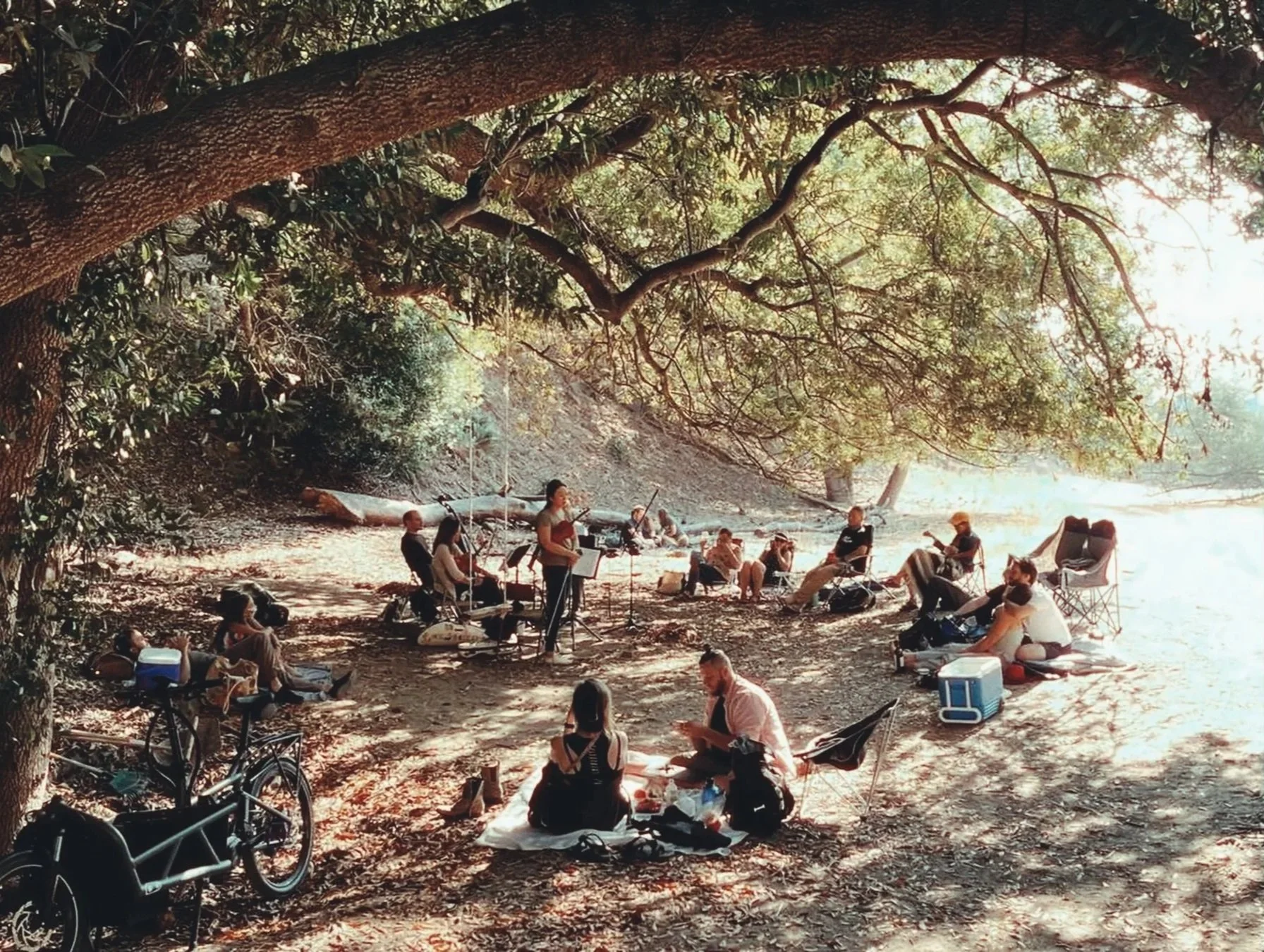
Outdoor groupmuse in Berkeley, CA
I. Performance as Ritual
From Self to Space: Moving from "Part One" (centering the self) to "Part Two" (bringing the craft into the world).
Music as a Presupposition: Music is a performance art that requires a specific Time and Place to exist.
The Energy of Intent: The intentions of those who manage a space—whether artistic or extractivist—will be felt by the audience, even if only subtly.
II. Choosing the Ideal Host
The Role of the Host: Your job is to "present the magic"; the host’s job is to "hold the space" and manage the hospitality.
Alignment of Vision: You must feel a physical sense of ease and transparency when communicating your vision to your host.
The Body as a Compass: Listen to your intuition. If you feel tension or find yourself "holding back" during initial conversations, there is a misalignment.
III. Identifying Red Flags
Transactional Motives: The host wants to use your performance to impress their own patrons or clients rather than serving your message.
Lack of Reverence: The host treats music as "fancy wallpaper" or background noise rather than the centerpiece of the gathering.
Incompetence: Unreliability, slow communication, or a "herding cats" feeling indicates they will not be a supportive partner on show day.
IV. Host as Community Builder
The "Impresario" Myth: A host doesn't need to be a classical music expert; they need to be a Community Ambassador.
Dedicated Organizers: Look for people who are skilled at bringing people together (e.g., farmers' market organizers or community leaders).
The Evolutionary Purpose: A great host understands that the primary goal of the event is to foster togetherness and collective change.
-
Add a short summary or a list of helpful resources here.