

II: Ritual - Setting the Stage
Curating and preparing the space for your event is as important an element of the evening as the music itself.
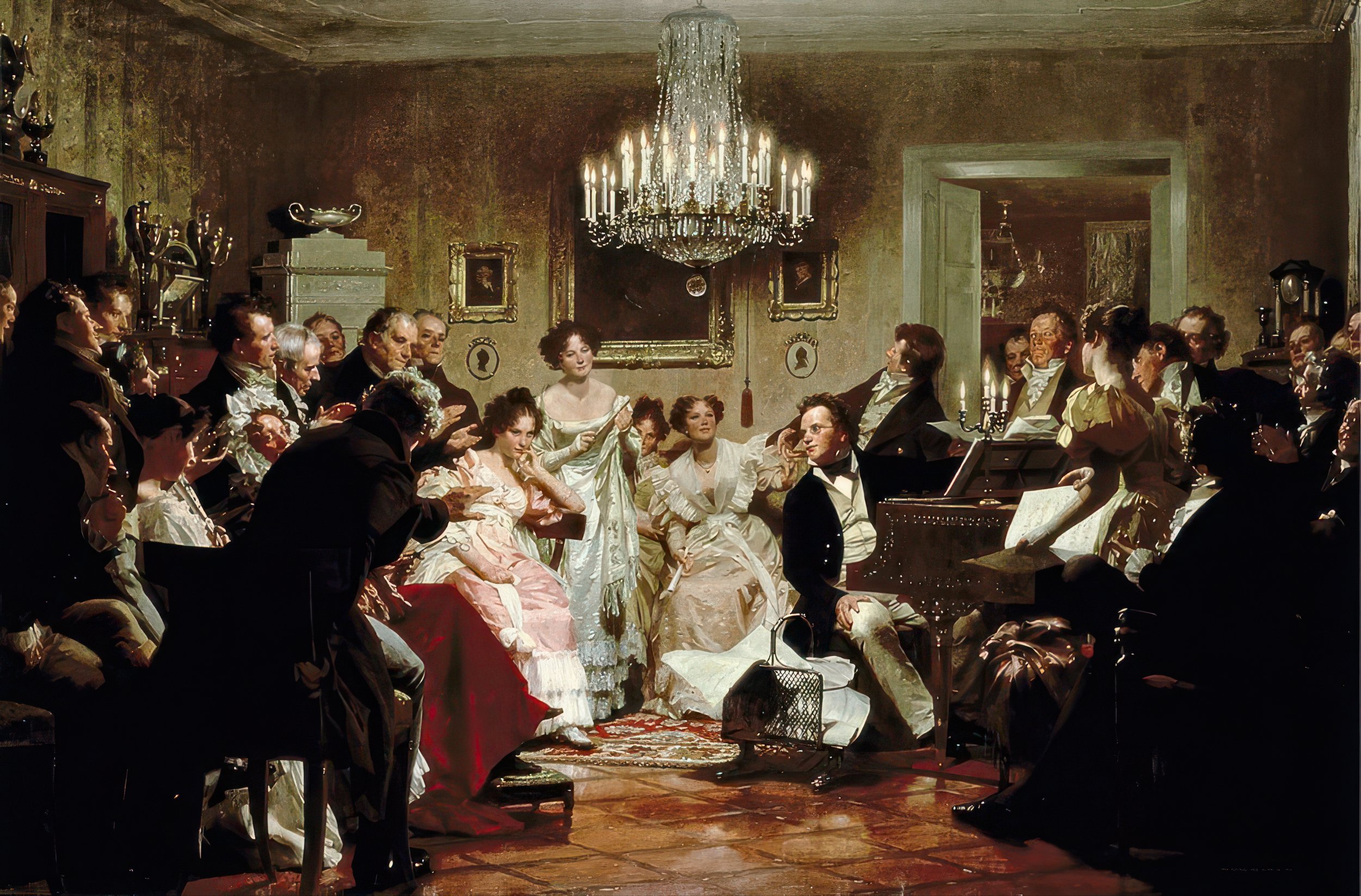
A Schubertiade.—Julius Schmid
I. A Philosophy of the Musical Transmission
Shifting the Paradigm: Moving from a "night out" to a living local community practice.
From Root to Fruit: Redefining performance as a community ritual rather than an exception to daily life.
Breaking the "Box": Understanding how traditional formal structures (like Carnegie Hall or church pews) can create "forces of resistance" for the audience.
II. Atmospheric Architecture
Lighting as a Cue: * Identifying "Red Flags": Avoiding the sterile effect of fluorescent beams.
Ancestral Cues: Using firelight and candles to invite an expanded sense of consciousness.
The Sensory Space: How the look and feel of a room impacts "audience availability."
III. Seating and Physical Agency
The "Factory Farm" vs. The Unique Individual: Why rigid rows of chairs make audiences feel interchangeable.
Inviting Motion: Setting up spaces that allow for grooving, swaying, and natural responses to rhythm.
Non-Traditional Seating: * Encouraging personal items (yoga mats, meditation pillows).
Utilizing the floor and unconventional proximity (e.g., sitting beneath the piano).
IV. Nourishment and Hospitality
The Host-Performer Alignment: Getting on the same page regarding "offerings."
Managing the Hunger Factor: Why 7:00 PM concerts require a food strategy.
Models of Shared Abundance: * The Potluck Model.
BYOB vs. Provided Refreshments.
Water and basic necessities.
V. Expectation Management
Clear Communication: How to tell your audience what to bring and how to "be" in the space.
The "Comportment" Problem: Reducing audience anxiety about when to clap, cough, or sit still.
Fullness and Reception: Creating an environment where the audience can bring their "full selves" to receive your gift.
-
Add a short summary or a list of helpful resources here.